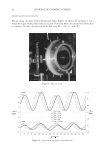
JOURNAL OF COSMETIC SCIENCE 242 hexane extraction. Aliquots of the lipid extract were reacted with a silylation (MSHFBA, Macherey & Nagel) reagent to form their trimethylsilylester derivatives and the fatty acids, namely 18-methylicosanoic acid, were analyzed by gas-liquid chromatography/ mass-spectrometry coupling (GC-MS). Tridecanoic acid was applied as internal standard for quantitative measurements. Duplicate sub-samples of each lipid extract were prepared and analyzed by GC-MS. FLUORESCENCE MICROSCOPY The fl uorescence microscopic investigation was performed with a scanning photometer micro- scope MPM03, Zeiss, Jena, Germany). The fl uorescence labeling of the proteins was carried out with fl uorescein isothiocyanate (FITC) isomer I (Sigma, St. Louis, USA) (14,15). SCANNING FORCE MICROSCOPY Scanning force microscopy (SFM) studies were conducted using a Nanoscope llla from Dig- ital Instruments operating in the tapping mode. Standard silicon cantilevers were used (PPP-NCH from Nanosensors) with a spring constant k ≈ 42 Ν/m and an oscillation fre- quency f0 ≈ 330 kHz. Height and phase images were recorded simultaneously at a scan rate of 1 Hz. All measurements were performed at amplitude A0 of the freely oscillating canti- lever of 30–50 nm. Set-point amplitudes Asp were in the range of 0.85–0.95A0 and 0.35– 0.45A0, corresponding to light-tapping and hard-tapping conditions, respectively (16). DYNAMIC CONTACT ANGLE MEASUREMENTS The determination of the dynamic contact angles was performed by the Tensiometer K14 (Krüss GmbH, Hamburg, Germany). The hair perimeter L was determined by immers- ing the hair fi ber in n-heptan (99%), which shows total wettability (Θ=0). Advancing contact angle was measured in distilled water at 20°C. The immersion rate was 1mm/min in root-tip orientation at the maximum immersion depth of 1mm. PSEUDO-STATIC CONTACT ANGLE MEASUREMENTS AND DETERMINATION OF DROPLET RESORPTION TIME A droplet of 25 μl of distilled water was placed by using a micro-pipette on a parallel aligned and fi xed hair strand of 2 g weight and 18 cm length. The side of the droplet is recorded by digital camera (D40 F/3.5-5.6, Nikon co., Japan). Camera perspective is a perpendicular to the hair fi ber axes on level with the hair strand. RESULTS AND DISCUSSION AGING OF OUTER HAIR SURFACE After simulation of approximately 100 Middle European summer days (equivalent to 50 cycles of shampooing, blow drying and sun light exposure) signifi cant changes both in

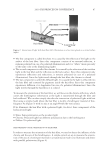
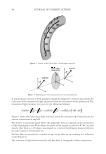
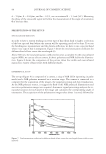
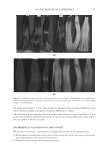
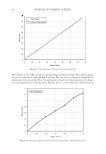
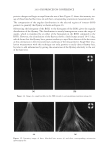
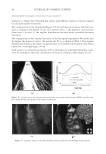
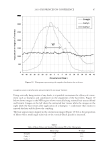
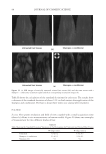
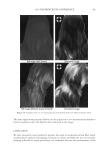
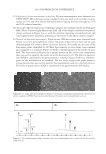
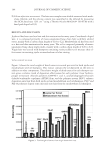
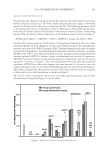
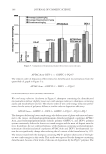
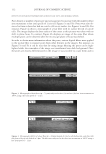
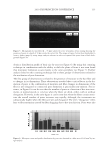
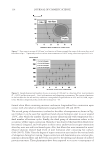
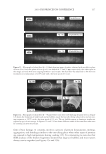
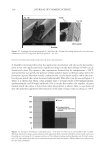
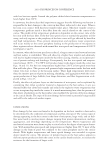
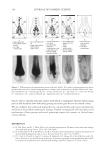
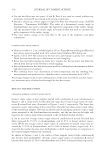
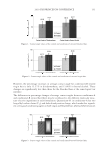
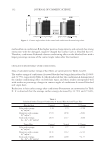
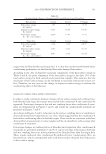
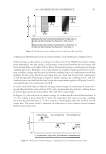
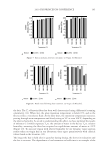
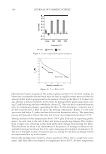
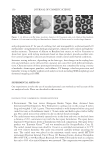
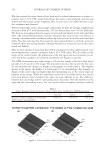
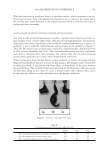
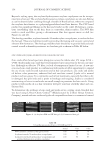
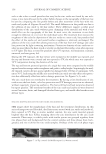
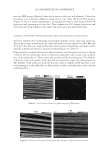
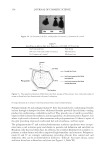
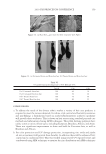
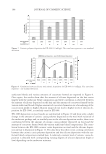
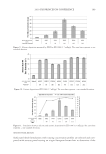
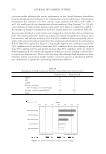
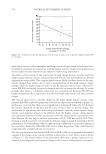
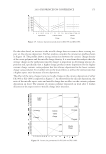
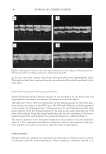
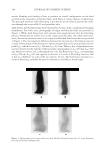
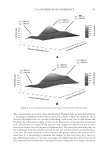
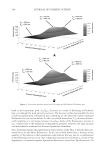
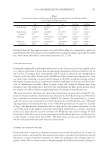
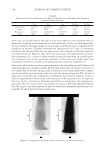
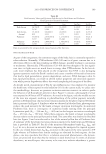
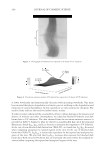
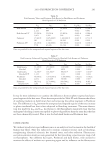
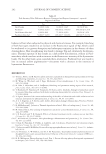
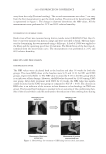
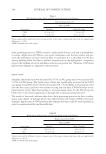
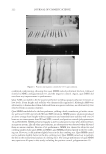
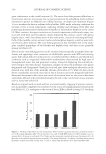
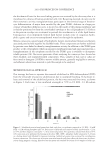
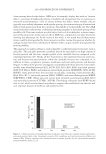
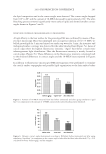
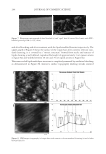
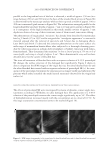
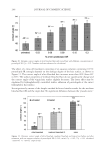
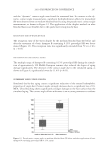
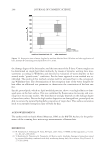
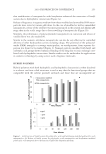
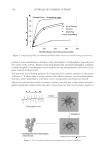
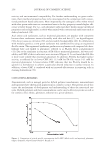
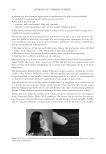
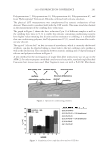
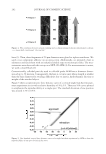
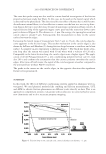
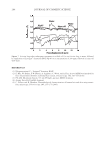
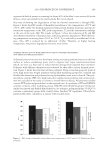
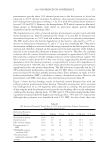
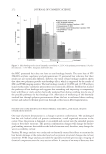
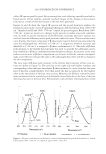
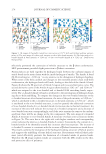
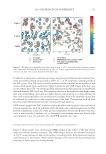
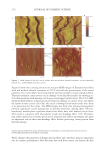
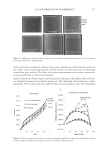
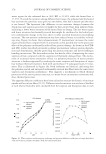
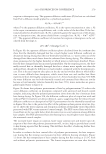
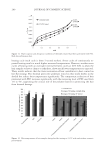
2010 TRI/PRINCETON CONFERENCE 243 the lipid composition and in the contact angle were detected. The contact angle dropped from 106° to 68° and the content of 18-MEA decreased by approximately 24%. The ultra bleaching process removed signifi cantly more surface lipids and showed smaller contact angles shown in Figures 5 and 6. DETECTION OF SURFACE CHANGES RELATED TO PROTEOLIPIDS A high affi nity to the hair surface for the proteolipid SR was confi rmed by means of fl uo- rescence microscopy. Hair was immerged into an aqueous solution of 0.15 % FITC-la- belled proteolipid for 5 min and rinsed out under tap water for 3 min. An intensive and widespread surface coverage was detected for the ultra bleached hair (Figure 7a). Areas of cuticle edges show the highest fl uorescence intensity. “Aged” hair shows a much more inhomogeneous light distribution. Here the fl uorescence intensity is mainly located at cuticle edges (Figure 7b). These differences in the fl uorescence intensity correspond well to the obtained differences in contact angles and the 18-MEA losses reported in Figures 5 and 6. In addition to fl uorescence microscopy SFM investigations were performed to visualize the cuticle surface topography and possible lipid organization at the hair surface before Figure 5. Amount of 18-MEA extracted from hair before (untreated) and after aging simulation (“aged hair”) in comparison to the amount of 18-MEA extracted after ultra bleaching (ultra bleached). Figure 6. Dynamic contact angles determined according to Wilhelmy before (untreated) and after aging simulation (“aged hair”) in comparison to the contact angle of ultra bleached hair (ultra bleached) (**p 0.01 calculated between “before aging” and the samples).
Purchased for the exclusive use of nofirst nolast (unknown)
From: SCC Media Library & Resource Center (library.scconline.org)