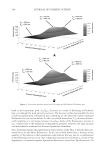
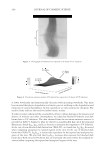
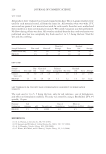
JOURNAL OF COSMETIC SCIENCE 100 orientation of the birefringence axis of the hair fi ber, for each pixel of the image. The measurement operates on single fi ber, hair trees, and full head, for laboratory and in-vivo applications. Thanks to near-infrared illumination, every type of hair can be analyzed, from blond to dark, straight to curly. Application for shampoo/conditioner evaluation is demonstrated. In-vivo measurement on real model can also be done as the image acquisi- tion is fast enough as it takes about one second. This technique permits to study precisely the infl uence of the orientation of hair fi ber on the visual appearance. It opens numerous potential applications for product development, product evaluation and claim substan- tiation. This new sensor opens the door to the defi nition of new measurement procedures and new parameters in order to fully quantify the visual appearance of hair. This tech- nique has been patented (Patent pending: application US12/567,579). REFERENCES (1) S. Hariharan, S. A. Sathyakumar, and P. Ganesan, Measuring of fi bre orientation in nonwovens using image processing, www.fi bretofashion.com (2) Y. J. Han, Y. J. Cho, W. E. Lambert, and C. K., Identifi cation and measurement of convolutions in cot- ton fi ber using image analysis, Artifi cial Intelligence Review, 12(1–3), 201–211 (1998). (3) K. E. Duckett and C. C. Cheng, The detection of cotton fi ber convolutions by the refl ection of light, Textile Res. J. 42, 263–268 (1972). (4) R. K. Curtis and D. R. Tyson, Birefringence: Polarization microscopy as a quantitative technique of human hair analysis, J. Soc. Cosmet. Chem., 27, 411–431 (1976). (5) A. C. Brown, R. B. Belser, R. G. Crounse, and R. F. Wehr, A congenital hair defect: Trichoschisis with alternating birefringence and low sulfur content, J. Invest. Dermatol., 54, 496–509 (1970). (6) Tjitske van Kampen, Optical properties of hair, Masters project, January 1, 1997.

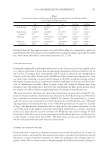
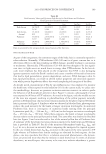
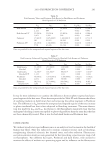
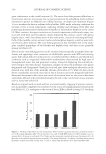
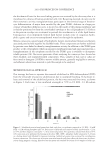
J. Cosmet. Sci., 62, 101–108 (March/April 2011) 101 Linking enhanced deposition agent functionality with aesthetic performance PAQUITA ERAZO-MAJEWICZ, CATHLEEN ROBERTS-HOWARD, EUGENE OLDHAM, CRAIG LYNCH, JOHN GRAHAM, COURTNEY R. USHER, and SURENDRA JONEJA, Ashland Aqualon Functional Ingredients, Ashland, Inc., Ashland Research Center, 500 Hercules Rd, Wilmington, DE 19808. Synopsis This study examines the cationic polymers 1) guar hydroxypropyltrimonium chloride polymers (GHPTC), 2) acrylamidopropyltrimonium chloride/acrylamide copolymer (APTAC/Acm), 3) polyquaternium polymers (PQ-10, PQ-7, PQ-67), and 4) a new polymer system approach for their a) deposition effi ciency (as measured by quantifying oils deposited on virgin hair) and b) ability to deliver good wet and dry lubricity to the hair from a cleansing formulation as measured by comb energy and friction characteristics of the hair samples. Conditioning polymer technology approaches 1) acrylamidopropyltrimonium chloride/acrylamide copoly- mer, 2) a guar hydroxypropyltrimonium chloride polymer, and 3) the new polymer system approach deliver superior deposition of natural conditioning oils and dimethicone materials from anionic/amphoteric surfac- tant cleansing formulations. These new polymer technologies offer formulators the ability to improve unifor- mity of deposition as well as deposition effi ciency of conditioning agents onto hair, and target the desired hair lubricity. INTRODUCTION The function of conditioning shampoo is to cleanse the hair and to deposit active ingre- dients, conditioning agents, fragrances, and other materials onto the hair or scalp. Effec- tive deposition of conditioning ingredients is associated with the formation of a polymer-surfactant coacervate complex formed from the shampoo on dilution with water (1). Acrylamidopropyltrimonium chloride/acrylamide copolymer and guar hydroxypro- pyltrimonium chloride polymers have been shown to enhance deposition of dimethicone and dimethicanol silicone oils onto hair (2). The deposition performance of these poly- mers for natural oils such as jojoba and meadowfoam seed oil is of interest given the movement in the marketplace towards natural ingredients. OBJECTIVE This study examined guar hydroxypropyltrimonium chloride(GHPTC) polymers, an acryl- amidopropyltrimonium chloride/acrylamide copolymer(APTAC/Acm), polyquaternium-10, © 2010 Ashland/Hercules
Purchased for the exclusive use of nofirst nolast (unknown)
From: SCC Media Library & Resource Center (library.scconline.org)