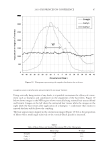
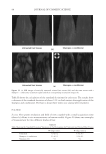
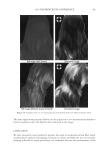
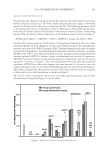
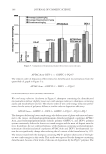
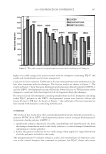
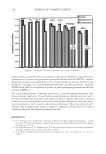
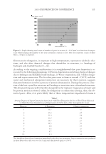
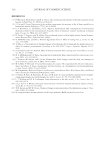
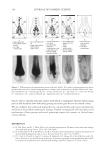
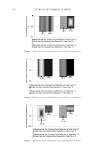
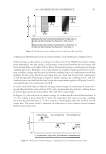
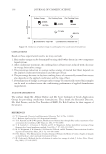
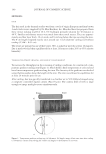
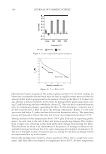
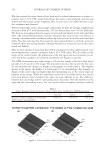
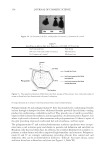
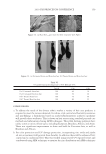
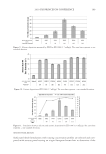
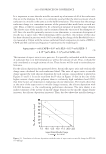
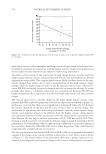
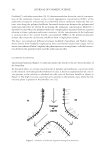
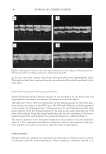
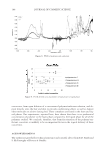
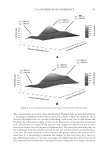
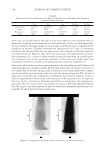
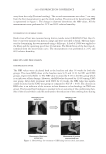
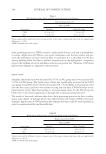
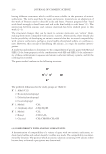
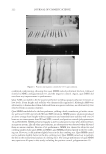
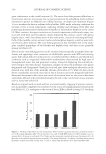
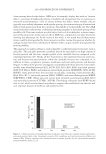
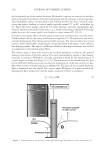
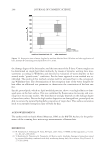
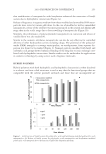
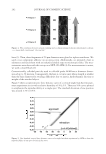
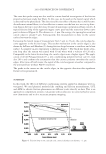
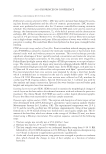
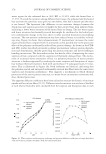
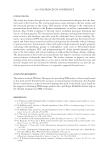
JOURNAL OF COSMETIC SCIENCE 256 toxicity and environmental compatibility. For further understanding on green surfac- tants, their interfacial properties have to be investigated in the comparison with conven- tional petroleum based surfactants. More importantly, the synergistic effect when mixed with other green surfactants or conventional ones is the key property towards higher effi - ciency at lower dosage. For e.g., acyl glutamate surfactants have shown unique interfacial properties such as high surface activity when mixed with conventional surfactants such as dodecyl maltoside (36). Acyl amino acid surfactants, such as myristoyl glutamate, are popular with consumers because these surfactants interact favorably with skin and hair (37), are hypoallergenic (38), do not cause eye irritation (39), and are readily biodegradable (40). In collaboration with modular genetics a new green surfactant was synthesized by using an engineered Bacillus strain. The engineered synthetase produces an acyl amino acid composed of a beta- hydroxy fatty acid linked to glutamate, referred to as FA-Glu (fatty acid-glutamate) (41). Due to the similarity in structure of FA-Glu to myristoyl glutamate, the water sol- ubility and CMC of these surfactants were measured (Figure 4). It was found that FA-Glu is more water soluble than myristoyl glutamate. In addition, FA-Glu has higher surface activity, as refl ected by its lower CMC (41) (1.3 mM for FA-Glu versus 14.1 mM for myristoyl glutamate). A lower relative CMC indicates that less FA-Glu should be re- quired in a formulation to achieve a particular desired reduction in surface tension. In addition, a lower CMC is correlated with an increased effectiveness in removing soils in cleaning formulation (39). CONCLUDING REMARKS Nanomaterials, such as nanogel particles, hybrid polymer nanodomains, nanoemulsions and liposomes have shown good applications in cosmetic science. The present article dis- cusses the mechanisms of development and understanding of these the nano-sized sys- tems. Hybrid polymers and their nanoemulsions can be used a delivery systems as well as for cosmetic effect (shine, glossiness, softness) on a given substrate. Figure 4. Comparison of critical micelle concentration for Fa-GLU (fi lled circle) and myristoyl glutamate (empty diamond), adapted from Gabriel O. Reznik et.al.

2010 TRI/PRINCETON CONFERENCE 257 Nanoparticles are discussed as delivery systems while bilayers of liposomes can be related to skin membranes. Also modifi cation of the nanogel particles with functional groups has a signifi cant impact on its interaction with the active molecules. The observed interac- tion of attributes with the liposomes can be correlated to the penetration of attributes through skin. The emergence of “greener” surface active agents and its applications in cosmetic industry has opened new avenues for research. Though there are considerable advantages of nanomaterials for cosmetics delivery, some of the emerging nanomaterials need to be further studied for their toxicity. ACKNOWLEDGMENTS The authors acknowledge the fi nancial support from the NSF Center for Particulate & Surfactant Systems (CPaSS), a joint NSF I/UCRC undertaking between the University of Florida, Gainesville, and Columbia University. REFERENCES (1) V. Normand, S. Avison, and A. Parker, Modeling the kinetics of fl avour release during drinking, Chemical Senses, 29, 235–245 (2004). (2) C. Quellet, M. Schudel, and R. Ringgenberg, Flavors and fragrance delivery system, Chimia, 55, 421– 428 (2001). (3) L. Ouali and D. Latreche, Polymeric particles and fragrance delivery systems (2004). (4) P. Somasundaran and S. Chakraborty, Preparation of polymeric nanoparticles and nanogels for extraction and release fragrance and bioactive molecules (2006). (5) S. A. Wissing and R. H. Müller, Cosmetic applications for solid lipid nanoparticles (SLN), Int. J Phar- maceut., 254, 65–68 (2003). (6) E. Mathiowitz, M. Kreitz, and L. Brannon-Peppas, Encyclopedia of Controlled Drug Delivery (John Wiley & Sons, New York, 1999). (7) N. Baek and K. Park, Natural polymer gels with fast responses, Refl exive Polymers and Hydrogels, 85–96 (2004). (8) E. G. Lundquist, W. Devonport, and J. P. Will, Polymeric nanoparticles in consumer products, Eur. Patent EP 1447074 (2004). (9) M. Guzman, J. Molpeceres, F. Garcia, M. R. Aberturas, and M. Rodriguez, Formation and characteriza- tion of cyclosporine-loaded nanoparticles, Pharmaceut. Sci., 82(5), 498–502 (1993). (10) H. Mizushima, K. Kaneko, and Y. Ozeki, Manufacture of drug-encapsulated nanoparticles (2006). (11) D. Dupeyron, M. Gonzalez, V. Saez, J. Ramon, and J. Rieumont, Nano-encapsulation of protein using an enteric polymer as carrier., IEE Proceedings: Nanobiotechnology, 152(5), 165–168 (2005). (12) V. R. Muzykantov and T. Dziubla, Antioxidant polymer nanocarriers for use in preventing oxidative injury, U.S. Patent Appl. 20060127386 (2006). (13) P. Somasundaran, S. C. Mehta, and P. Purohit, Silicone emulsions, Adv. Colloid Interface Science (in press). (14) P. Somasundaran, T. H. Wines, S. C. Mehta, N. Garti, and R. Farinato, Emulsions and Their Behavior (in press). (15) F. Liu, P. Somasundaran, and C. C. Gryte, Polyacrylamide microgel synthesis, modifi cation, and charac- terization, 222nd ACS National Meeting, Chicago, IL, August 26–30, 2001. (16) P. Deo and P. Somasundaran, Interactions of hydrophobically modifi ed polyelectrolytes with nonionic surfactants, Langmuir, 21(9), 3950–3956 (2005). (17) P. Somasundaran, S. Chakraborty, P. Deo, N. Deo, and T. Somasundaran, Nanoparticles for cosmetics and personal care formulations, Skin Delivery Systems, 247–256 (2006). (18) G. Blume and E. E. Teichmueller, Liposomes with anti-oxidants and their protective effi cacy against UV-radiation, SOFW J., 125(1), 12–14 (1999). (19) N. Naito and T. Isshiki, Cosmetics and riposomes, Riposomu Oyo no Shintenkai, 644–650 (2005).
Purchased for the exclusive use of nofirst nolast (unknown)
From: SCC Media Library & Resource Center (library.scconline.org)