JOURNAL OF COSMETIC SCIENCE 258 (20) M. N. Jones, I. G. Lyle, and M. Kaszuba, Cosmetic conjugates of liposomes with lectins, Eur. Patent EP 0566368 (1993). (21) N. Deo and P. Somasundaran, Mechanism of mixed liposome solubilization in the presence of sodium dodecyl sulfate, Colloids Surf. A, 186(1-2), 33–41 (2001). (22) N. Deo and P. Somasundaran, Electron spin resonance study of phosphatidyl choline vesicles using 5-doxyl stearic acid, Colloids Surf B., 25(3), 225–232 (2002). (23) A. Nel, T. Xia, L. Mädler, and N. Li, Toxic potential of materials at the nanolevel, Science, 311, 622–627 (2006). (24) P. E. Ross, Tiny toxins, Technology Rev., 109(2), 66–69 (2006). (25) D. B. Warheit, B. R. Laurence, K. L. Reed, D. H. Roach, G. A. M. Reynolds, and T. R. Webb, Comparative pulmonary toxicity assessment of single-wall carbon nanotubes in rats, Toxicolog. Sci., 77, 117–125 (2004). (26) G. Oberdtörster, Z. Sharp, V. Atudorei, A. Elder, R. Gelein, W. Kreyling, and C. Cox, Translocation of inhaled ultrafi ne particles to the brain, Inhalation Toxicol, 16(6-7), 437–445 (2004). (27) E. Oberdörster, Manufactured nanomaterials (fullerenes, C60) induce oxidative stress in the brain of juvenile largemouth bass, Environ. Health Perspect., 112(10), 1058–1062 (2004). (28) L. Yang and D. Watts, Particle surface characteristics may play an important role in phytotoxicity of alumina nanoparticles, Toxicol. Lett., 158, 122–132 (2005). (29) J. D. Fortner, D. Y. Lyon, C. M. Sayes, A. M. Boyd, J. C. Falkner, E. M. Hotze, L. B. Alemany, Y. J. Tao, W. Guo, K. D. Ausman, V. L. Colvin, and J. B. Hughes, C60 in water: Nanocrystal formation and mi- crobial response, Environ. Sci. Technol., 39(11), 4307–4316 (2005). (30) C. M. Sayes, A. M. Gobin, K. D. Ausman, J, Mendez, J. L. West, and V. L. Colvin, Nano-C60 cytotox- icity is due to lipid peroxidation, Biomaterials, 26(36), 7587–7595 (2005). (31) C. M. Sayes, F. Liang, J. L. Hudson, J. Mendez, W. Guo, J. M. Beach, V. C. Moore, C. D. Doyle, J. L. West, W. E. Billups, K. D. Ausman, and V. L. Colvin, Functionalization density dependence of single- walled carbon nanotubes cytotoxicity in vitro, Toxicol. Lett., 161, 135–142 (2006). (32) F. Liu, P. Somasundaran, and C. Gryte “Novel Polyacrylamide Nanogels for Drug Binding and Drug Delivery,” in Polymeric Materials Science and Engineering 89 (2003), pp. 235. (33) P. Purohit, P. Somasundaran, and R. Kulkarni, Study of properties of modifi ed silicones at solid-liquid interface: Fabric-silicone interactions, J. Colloid Interface Sci. (2006). (34) M. D. Berthiaume and A. D. Baum, J. Soc. Cosmet. Chem., 48(1), 1 (1997). (35) R. M. Hill, Silicone Surfactants, Surfactant science series (Marcel Dekker, New York, 1999). (36) Industry University Center Report, CPaSS, July 2010 (Columbia-UFL internal report). (37) I. A. Nnanna, G. Y. Cheng, and J. Xia, “Potential Applications of Protein-Based Surfactants,” in Pro- tein-Based Surfactants: Synthesis, Physiochemical Properties and Applications (CRC Press, Taylor & Francis Group, Oxfordshire, UK, 2001). (38) K. Sakamoto, “Current Market Developments and Trends in Amino Acid and Protein-Based Surfactants,” in Protein-Based Surfactants: Synthesis, Physiochemical Properties and Applications (CRC Press, Taylor & Francis Group, Oxfordshire, UK, 2001). (39) M. Husmann, K. Menting, H. Rieckert, H. Ring, J. Wiesse, and W. Zinser, Secondary fatty acid amide derivatives: Amino-acid based surfactants for household, industrial and personal care applications, SOFW J., 130, 22–28 (2004). (40) M.R. Infante, L. Pérez, A. Pinazo, P. Clapés, and M.D-C. Morán, “Amino Acid-Based Surfactants,” in Novel Surfactants: Preparation, Applications and Biodegradability, 2nd ed. (Marcel Dekker, New York, 2003). (41) G. O. Reznik et al., Use of sustainable chemistry to produce an acyl amino acid surfactant, Appl. Micro- biol. Biotechnol., 86(5) 1387–1397 (2010). (42) P. Somasundaran, P. Purohit, N. Gokarn, and R. D. Kulkarni, Silicone emulsions: Interfacial aspects and applications, Household and Personal Care J., 3 (2010).

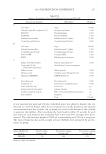
J. Cosmet. Sci., 62, 259–264 (March/April 2011) 259 From conditioning shampoo to nanomechanics and haptics of human hair CLAUDIA WOOD, ALBERT BUDIMAN SUGIHARTO, EVA MAX, and ANDREAS FERY, BASF SE (C.W., A.B.S.), and University of Bayreuth, Physical Chemistry II (E.M., A.F.), Germany. Synopsis Shampoo treatment and hair conditioning have a direct impact on our wellbeing via properties like combabil- ity and haptic perception of hair. Therefore, systematic investigations leading to quality improvement of hair care products are of major interest. The aim of our work is a better understanding of complex testing and the correlation with quantitative parameters. The motivation for the development of physical testing methods for hair feel relates to the fact that an ingredient supplier like BASF can only fi nd new, so far not yet toxico- logically approved chemistries for hair cosmetics, if an in-vitro method exists. In this work, the effects of different shampoo treatments with conditioning polymers are investigated. The employed physical test method, dry friction measurements and AFM observe friction phenomena on a mac- roscopic as well as on a nanoscale directly on hair. They are an approach to complement sensoric evaluation with an objective in-vitro method. INTRODUCTION Haptics refer to the tactile sense: External objects or forces are noticed at contact with the body, esp. with hands and fi ngertips. In the skin, there are cutaneous sensual organs with tactile receptors. Their density is highest at the tip of the tounge and of the fi n- gers, which enables to differentiate fi ne structures. The skin on the back has the lowest density of tactile receptors. Tactile quality is noticed and evaluated in sensory assess- ments, where it can be distinguished with expressions like “luxury of touching soft, fl owing hair”. Many hair cosmetic products such as shampoos, conditioning rinses and even hair sprays claim haptic attributes on their packaging like the suppleness of silk, cashmere, and vel- vet or claim attributes like smooth, sleek, silky, and soft. METHODS AND RESULTS In BASF’s application lab, the sensoric or subjective evaluation of hair after various treat- ments is according to a ranking system: “hand mark” of 1=very good to 3=weak, bad. Different attributes of wet and dry hair are ranked as follows:
Purchased for the exclusive use of nofirst nolast (unknown)
From: SCC Media Library & Resource Center (library.scconline.org)