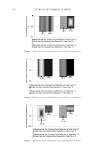
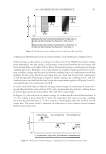
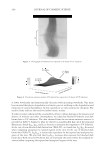
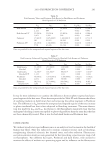
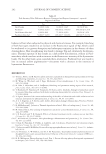
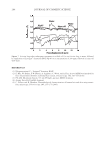
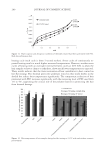
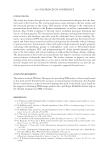
JOURNAL OF COSMETIC SCIENCE 160 for cuticle damages. The Zn does not overshadow the treatment. By having a fi ne dis- tribution of zinc oxide across the hair shafts, color protection and damage protection are obtained, without negatively impacting aesthetics. The hairs still feel and look natural as observed by expert panelists. The type of protection and conditioning at- tributes can be specifi cally targeted to curly hair, such as Brazilian and African as well as any color-treated hair. c. By using polyquaternium-10 or 67 into a hair care treatment, there are improvements to the feel, smoothness and antifrizz repair. Using SEM and AFM there is indications of hair repair after treatments. This is critical for tightly curled hair types, including African and Brazilian. d. Overall, many of the needs for this diverse and growing market segment can be met by utilizing a combination of products, with targeted benefi ts depending on the hair type. ACKNOWLEDGMENTS The authors thank Robert Antrim, Kalidah Diamond, Susan Jordan, Kinjal Joshi, Terri Powell, Curtis Schwartz, David Sutton, Rosalind Toth, and Li Zhang of the Dow Chemical Company. REFERENCES (1) M. Starch, Cosmet. Toiletr, 114, 55–60 (1999). (2) C. Reich and C. R. Robbins, J. Soc, Cosmet Chem., 44, 221–234 (1993). (3) I. Reeth, M. Starch, and J. Decaire, Dow Corning Corp. (2000). (4) J. Lim, M. Chang, and M. Park, J. Cosmet. Sci., 57, 475–485 (2006). (5) N. Starostina, M. Brodsky, and S. Prikhodko, J. Cosmet Sci., 59, 225–232 (2008). (6) B. Bhushan, G. Wei, and P. Torgeson, Ultramicroscopy, 105, 248–266, (2005). (7) B. Bhushan and C. LaTorre, Ultramicroscopy, 105, 155–175 (2005). (8) N. Lechocinski and P. Clémenceau, Bossa Nova Technologies, LLC (2007). (9) B. Bhushan, H. Fuchs, and C. LaTorre, Applied Scanning Probe Methods IV, 35–103 (2006).

J. Cosmet. Sci., 62, 161–177 (March/April 2011) 161 Use of statistical modeling to predict the effect of formulation composition on coacervation, silicone deposition, and conditioning sensory performance of cationic cassia polymers CAROLE LEPILLEUR, JOHN MULLAY, CAROL KYER, PAM McCALISTER, and TED CLIFFORD, Lubrizol Advanced Materials, Inc., Noveon® Consumer Specialties, 9911 Brecksville Road, Brecksville, OH 44141. Synopsis Formulation composition has a dramatic infl uence on coacervate formation in conditioning shampoo. The purpose of this study is to correlate the amount of coacervate formation of novel cationic cassia polymers to the corresponding conditioning profi les on European brown hair using silicone deposition, cationic polymer deposition and sensory evaluation. A design of experiments was conducted by varying the levels of three surfactants (sodium lauryl ether sulfate, sodium lauryl sulfate, and cocamidopropyl betaine) in formulations containing cationic cassia polymers of different cationic charge density (1.7 and 3.0m Eq/g). The results show formulation composition dramatically affects physical properties, coacervation, silicone deposition, cationic polymer deposition and hair sensory attributes. Particularly, three parameters are of importance in determin- ing silicone deposition: polymer charge, surfactant (micelle) charge and total amount of surfactant (micelle aspect ratio). Both sensory panel testing and silicone deposition results can be predicted with a high confi - dence level using statistical models that incorporate these parameters. INTRODUCTION Common conditioning shampoos are formulated with cationic polymers such as cationic cellulose or cationic guar derivatives which are compatible in the shampoo formula, but become incompatible upon dilution with water. The literature suggests that upon sham- poo application, foaming, washing and rinsing, such cationic polymers form a complex with anionic and amphoteric surfactants that phase separates from the bulk solution, at surfactant concentrations below their critical micelle concentration (cmc). This phase separation or coacervation is known also as the “Lochhead effect” (1). The phase separa- tion upon dilution has been mainly explained in the literature through coulombic attrac- tion between anionic function of the surfactant and the cationic groups of the polymer. Goddard et al. (2) described that, at low surfactant concentration (below the cmc), anionic surfactants condense on the polycations. The resulting ion pair converts the cationic sites into hydrophobe-substituted sites. These hydrophobic interactions within and between
Purchased for the exclusive use of nofirst nolast (unknown)
From: SCC Media Library & Resource Center (library.scconline.org)