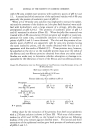
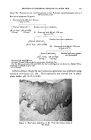
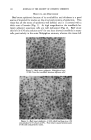
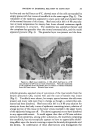
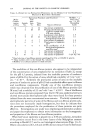
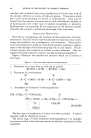
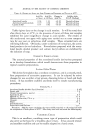
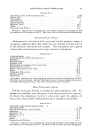
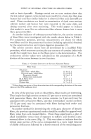
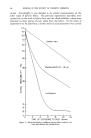
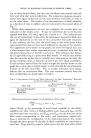
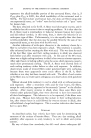
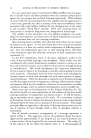
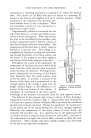
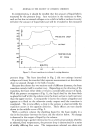
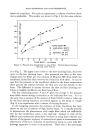
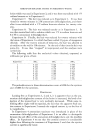
ACETYLATED LANOLIN DERIVATIVES 347 The third reaction described is typical of the procedure we have developed to modify lanolin by acylation of hydroxyesters. An acetyl radical re- places the hydrogen of the hydroxyl group resulting in an acetylated droxyester which, in this case, might be called the acetate of cholesteryl a hydroxy-palmitate. It is interesting to note that the hydrophilic proper- ties of the lanolin hydroxyesters are lost as a result of this reaction. The acyl radical need not be limited to acetic since we have successfully used propionic, benzoic and related acid radicals. This presentation, however, is limited mainly to a discussion of the acetylated derivatives. Acetates are widely distributed in nature both as salts and as esters. They have been identified as constituents of perspiration. They are used both internally and externally in such varied products as aspirin and desoxy- corticosterone acetate U.S.P. In addition, there is abundant evidence that acetic acid is metabolized and serves as a food (8). Acetates have been used for years in antiperspirants, deodorants, perfumes and flavors. Greenberg and Lester in their book entitled "Handbook of Cosmetic Mate- rials" (9) state that there is no evidence of allergic responses (to acetic acid) on theoretical grounds there should be none." It has been well established that acetates are basic building blocks from which compounds such as cholesterol, certain hormones, and vitamins are biosynthesized. Table 2 presents data comparing a typical U.S.P. lanolin to its acetylated derix ative.* TABLE 2--COMPARATIVE DATA ON LANOLIN AND ACETYLATED LANOLIN* Lanolin U.S.P. Acetylated Lanolin* Ester no. 95 110 Acid no. Approx. 1 Approx. 1 Iodine no. 27 27 Hydroxyl no. 32 2 Water sol. acids (U.S.P.) Neutral to litmus Neutral to litmus Melting point (U.S.P.) 39øC. 36øC. Specific gravity 0.935 at 25øC. 0.935 at 25øC. Color Pale yellow Pale yellow Odor Typical Practically odorless Mineral oil solubility 0.5% 10% Emulsification w/o None "Feel" on the skin Tacky Waxy * Modulan. T.M. It will be noted that, as a result of the acetylation, the hydroxyl number drops from 32 to 2. Other changes are: an increase in the ester number from 95 to 110 and a decrease in the melting point by about 3øC. The loss of free hydroxyls in acetylated lanolin renders the product hydrophobic, and its physical properties are affected accordingly. The modified product * Modulan--Trade Mark of American Cholesterol Products, Inc.

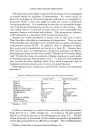
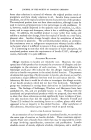
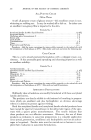
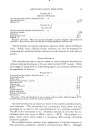
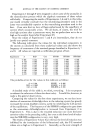
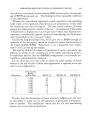
348 JOURNAL OF THE SOCIETY OF COSMETIC CHEMISTS forms clear solutions in mineral oil whereas the original product tends to precipitate and form cloudy solutions in oil. Lanolin forms waterAn-oil emulsions, one of the typical and best known characteristics of this product. The acetylated product does not form these emulsions, although it may be used in waterAn-oil preparations in low percentages to add emollience. It is, however, readily dispersed in the opposite type of emulsion, i.e., oil-in- water, and in soaps and shampoos, where it has a stabilizing effect on the foam. In addition, the modified product is waxy rather than tacky, and exhibits a marked odor change, from that typical of lanolin to a very faint, pleasant odor. Another change brought about by acetylation of lanolin is the increase in plasticity. The acetylated product retains an ointment- like consistency even at refrigerator temperatures whereas lanolin stiffens to the point where it is difficult to remove it from a collapsible tube. It is interesting to note that with the exception of water absorption, the acetylated product meets the requirements of lanolin U.S.P., although, of course, chemically it is quite different. ALLS•O•C REACTIONS Allergic reactions to lanolin are relatively rare. However, the wide- spread use of this product has increased the awareness of allergists and der- matologists to the existence of such reactions. A 1950 publication by Sulzberger and Lazar (10) indicated that the allergen responsible for sen- sitivity to lanolin was present in the mixed alcohol fraction. The presence of substantial quantities of hydroxyesters in lanolin, also known as wool fat, constitutes a major difference between wool fat and human skin fat. Our laboratory felt that it would be of value to investigate the allergic activity of our lanolin products which did not have free hydroxyls. Sulzberger's group was interested in testing these derivatives on lanolin-sensitive pa- tients. The findings of Sulzberger, Warshaw and Herrmann have been published (11, 12), and are probably known to you. Working with the acetylated and propionylated products which we prepared, they were able to show that these substances evoked significantly lower incidence of posi- tive skin reactions than did the original lanolin. Recently Everall and Truter (13) isolated the sensitizing factor as a yellow, glassy solid which appeared to be an impurity in the alcohol fraction. After acetylation of this substance, the product gave a negative result on patch testing. ACETYLATED LANOLIN ALCOHOLS As an extension of our investigation of acetylated lanolin, we carried out the same type of reaction on lanolin alcohols. These constitute approxi- mately 50 per cent oflanolin from which they may be separated by a series of steps involving saponification, extraction and purification. Lanolin alcohols consist of sterols, aliphatic alcohols, triterpenes, and a small per-
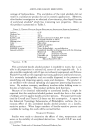
Purchased for the exclusive use of nofirst nolast (unknown)
From: SCC Media Library & Resource Center (library.scconline.org)