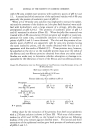
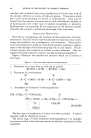
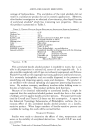
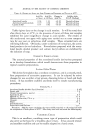
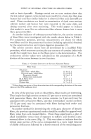
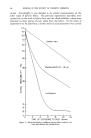
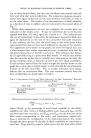
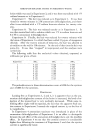
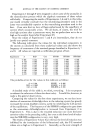
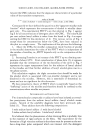
ACETYLATED LANOLIN DERIVATIVES 349 centage of hydrocarbons. The acetylation of the total alcohols did not result in a satisfactory product for use in cosmetic applications. However, after further investigation we obtained a low-viscosity, clear liquid fraction of acetylated alcohols* which has interesting new properties. Data on this product is presented on Table 3. TABLE 3--TYPICAL DATA ON LIQUID FRACTION OF ACETYLATED LANOLIN ALCOHOLS* Acid no ......................... 0.35 Hydroxyl no ..................... 2.0 Ester no ........................ 190.0 Soluble acids .................... Neutral to litmus by U.S.P. XIV method Viscosity ....................... 40 secon',ds Saybolt at 100øF. Melting point ................... Liquid at room temperature Color ........................... Pale yellow Odor ........................... Practically odorless Specific gravity .................. 0. 867 at 25øC. Solubility in water ............... None (hydrophobic)--no emulsification General solubility ................ Completely miscible in all proportions with the following: Mineral oil Ethanol 95% Castor oil Isopropyl myristate Vegetable oils Isopropyl palmirate Isopropanol Butyl stearate Silicone fluid #555 (DC) * Acetulan. T.M. This acetylated lanolin alcohol product is insoluble in water, but is sol- uble in all proportions in mineral oil, castor oil and vegetable oils. It is also miscible completely with 95 per cent ethanol, isopropanol, and Silicone Fluid #555 aswell as with isopropyl myristate, palmirate and butyl stearate. It is extremely hydrophobic and yet readily dispersed in the presence of emulsifying and dispersing agents, soaps and shampoos. The product is an emollient with unusual spreading and apparent penetrating character- istics. By modern concepts, emolliency involves either holding water to the skin or lubrication. This product performs both functions. Because of its chemical relationship to acetylated lanolin, it might be expected that the acetylated alcohol product would also have a low order of allergic activity against lanolin-sensitive persons. The paper previously cited by Everall and Truter (13) bears out this assumption. A report by the Industrial Toxicology Laboratories of Philadelphia confirms the in- nocuous effect of this acetylated lanolin alcohol product on a lanolin- sensitive patient. When larger numbers of lanolin-sensitive persons are available for testing, this work will be carried further. STABILITY STUDIES Studies were made to determine the effects of time, temperature and water on the stability of acetylated derivatives. Lanolin U.S.P. was used as a control. * Acetulan--Trade mark of American Cholesterol Products, Inc.

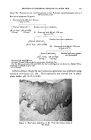
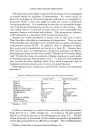
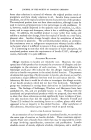
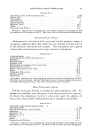
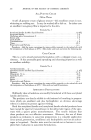
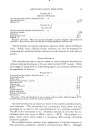
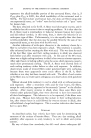
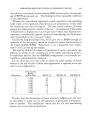
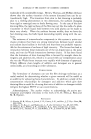
350 JOURNAL OF THE SOCIETY OF COSMETIC CHEMISTS T^sLF• 4--Evv•cT or Ac•Nc oN Acre NursER •N PRES•NC• OV W^T• ^• 45øC. Acid No. Acid No. Change in Soluble Acids at Start at 30 Days Acid No. (U.S.P. Method) Acetylated lanolin 0.96 1.01 4-0.05 Neutral to litmus Acetylated lanolin alcohols 0.19 0.24 4-0.05 Neutral to litmus Lanolin U.S.P. 0.77 0.82 4-0.05 Neutral to litmus Table 4 gives data on the change in acid number. It will be noted that after thirty days at 45øC., in the presence of water, all three test samples exhibited the same insignificant change in acid number. The results of this accelerated test agree with aging tests carried out at room tempera- ture for one year on anhydrous shelf samples. These extended tests are still being followed. Obviously, under conditions of normal use, the acety- lated products do not hydrolyze. Formulations prepared with the acety- lated lanolin alcohol product and sodium lauryl sulfate are stabilized by the inclusion of soap. COSMETIC FORMULATIONS The unusual properties of the acetylated lanolin derivatives prompted us to develop formulations which would demonstrate these properties in typical cosmetic preparations. Lotion Oil-in-Water This lotion formulation has a medium consistency, and is a smooth, emol- lient preparation of attractive appearance. It can be adapted by minor changes for use as either a hair groom, cleansing lotion or hand and body lotion. It has excellent stability and lends itself to simple manufacturing procedures. Formula No. 1 Acetylated lanolin alcohols (liquid fraction) ..................................... 8.0% Stearic acid ................................................................. 2.0 Glyceryl monostearate, neutral ................................................. 5 Amerchol L-101 ............................................................. 8.0 Mineral oil, 70 vis ........................................................... 17.0 Microcrystalline wax, 170 m. p ................................................. 4.0 Glycerin .................................................................... 4.0 Water ...................................................................... 56.1 Triethanolamine .............................................................. 4 Preservative and Perfume ..................................................... q. s. Procedure: Add the water containing the water-soluble materials to the melted oils with the temperature of both phases of 85øC. Mix slowly until cool and remix the following day. VANISHING CREAM This is an emollient, vanishing cream type of preparation which could also serve as the basis for a brushless shave cream. It has smooth texture and excellent stability and can be readily adapted to a hand cream.
Purchased for the exclusive use of nofirst nolast (unknown)
From: SCC Media Library & Resource Center (library.scconline.org)