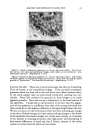
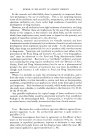
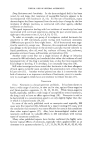
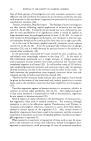
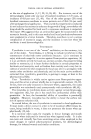
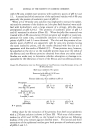
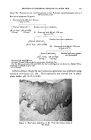
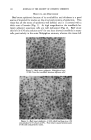
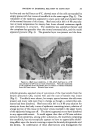
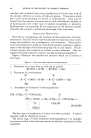
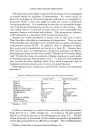
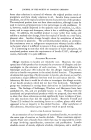
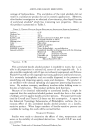
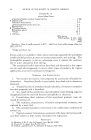
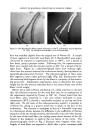
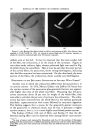
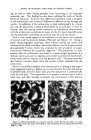
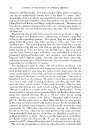
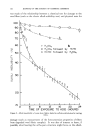
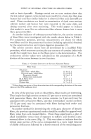
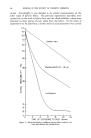
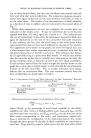
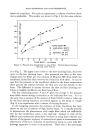
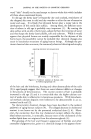
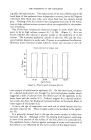
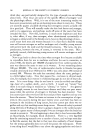
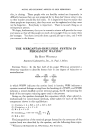
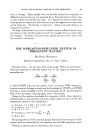
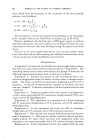
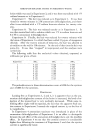
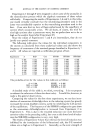
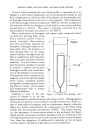
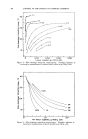
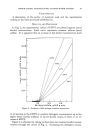
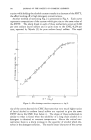
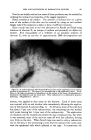
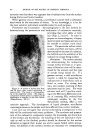
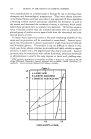
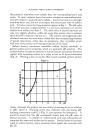
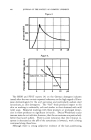
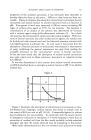
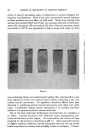
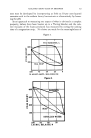
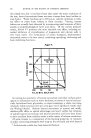
FOAM TRANSITIONS AND FOAM PERSISTENCE 375 below the transition. For such an experiment, a column of uniform diam- eter is preferable. The results are shown in Fig. 3 for the same solution o 40 ,• I i o o 20 / • • ß unextrocted, :56.0øC ' • ø 0 " , 44.0øC I0 ß ex.?roc?ed0 •6. OøC • • 44. OøC 2 4 6 8 I0 12 14 16 FLOW RATE - ml/minute Figure 3.--Pressure drop (liquid held) vs. rate of flow. Vertical distance between inlet and outlet 42.6 cm. as in Fig. 2. The upper curve refers to the slow draining foam, the lower curve to the fast draining foam. Also presented are data at the same temperatures for 0.025 per cent solution of Duponol ME from which the. unsulfated alcohol has been removed by extraction with ether. It can be seen that the presence of the unsulfated alcohol at the lower temperature alters greatly the relation between the flow rate and the density in the foam. The difference in density between the slow and fast draining con- ditions is roughly twofold at any fixed rate of flow. The line connecting points At and At' gives the change in the pressure drop which occurs during a transition at the indicated flow rate. It is at the same time a measure of the amount of liquid which is shed or taken up by the foam during transition and which appears as the hump or trough (Fig. 2) in an experiment with a column of varying diameter. In the foregoing discussion the existence of foam transitions has been shown by the use of columns of high density foam. It is equally possible to demonstrate the phenomenon with single films which are sufficiently thin for the interference colors to be observed. Indeed, in view of the difficult and cumbersome procedures involved in using foam columns and because of the greater economy of material and speed of measurement the observation of the rate of descent of interference bands in a test tube film drainage apparatus is much to be preferred. There also is the advantage

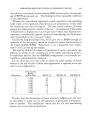
376 JOURNAL OF THE SOCIETY OF COSMETIC CHEMISTS of greater accuracy in fixing the transition temperature. With the use of this technique many measurements of film drainage transition temperatures on a great variety of systems have been reported (1) as well as a detailed examination of one important group of materials, the long chain alcohol sulfates to which long chain alcohols have been added (1, 2). The differing behaviors of slow and fast draining foams and single films are properties of the molecular structure of the surface layers. Because of adsorption these layers are rather different in composition from the under- lying bulk solution. Slow drainage is believed to be due to a well-ordered surface structure of considerable viscosity. Brown, Thuman, and McBain (4) have shown that the presence of unsulfated alcohol can confer an ex- traordinarily high surface viscosity upon solutions of sodium lauryl sulfate. It seems almost certain that an abrupt change in surface viscosity must occur at the transition temperature, as stressed by Miles, Shedlovsky and Ross (5) and by Sporck (6). The disappearance of the slow draining con- dition must be due to the disruption of the well-ordered surface postulated. In agreement with this view, there appear to be severe steric limitations upon the materials which give rise to slow draining films. At least two types of surface-active components must be present, and these must be capable of extensive interaction and association. Long, straight hydro- carbon chains, which readily adlineate and provide considerable van der Waals energy for association favor high transition temperatures, as do small, terminal polar groups capable of hydrogen bonding. Often through selective adsorption, the presence of adequate and very likely comparable amounts of each component in the surface layers can be ensured by the presence in the bulk solution of very small amounts of one component, the additive. The soaps and fatty alcohol sulfates normally being accompanied either by hydrolysis products or by unsulfated material provide optimum combinations of molecular species. Commercial alkylaryl sulfonates and ethylene oxide condensates of alkylphenols have branched chains their solutions do not produce slow draining foams with common additives. It was emphasized that with foams stabilized by means of suitable surface-active agents, drainage does not lead to spontaneous collapse. And of course the drainage rate is only one of many characteristics of foam and its associated system. Bubble size, the composition and molecular constitution of the bulk solution, suspended or emulsified soils, and the adsorbed layers at air or oil interfaces are also of importance. However drainage and foam persistence are not unrelated. The time scale seems much extended for slow draining foams and in a sense they age at a slower rate than the fast draining foams. Once a foam is past its initial period of formation, drainage seems to be a necessary precursor for collapse, and those foams for which the drainage rate is much slower retain for a longer time a resistance to outside destructive forces.
Purchased for the exclusive use of nofirst nolast (unknown)
From: SCC Media Library & Resource Center (library.scconline.org)