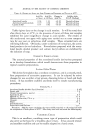
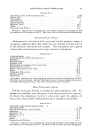
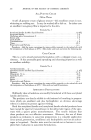
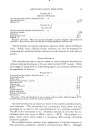
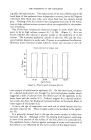
THE CHEMISTRY OF THE AGING SKIN 377 The writer remembers with pleasure and appreciation the many dis- cussions and the criticism of J. Ross and G. D. Miles on the subjects of foam and surface-active materials. REFERENCES (1) Miles, G. D., Ross, J., and Shedlovsky, L., 7. Arm. Oil Chemists' Soc., 27, 268 (1950). (2) Epstein, M. B., Wilson, A., Jakob, C. W., Conroy, L. E., and Ross, J., 7. •im. Chem. Soc., 58, 860 (1954). (3) Epstein, M. B., Ross, J., and Jakob, C. W., 5 e. Colloid Sci., 9, 50 (1954). (4) Brown, A. G., Thuman, W. G., and McBain, J. W., Ibid., 8, 491 (1953). (5) Miles, G. D., Shedlovsky, L., and Ross, J., •7. Phys. Chem., 49, 93 (1945). (6) Sporck, C. R., 7. •im. Oil Chemists' Soc., 30, 190 (1953). THE CHEMISTRY OF THE AGING SKIN*,• By P•.T•.R FL•.scH, M.D., Ph.D. Department of Dermatology, University of Pennsylvania School of Medicine, Philadelphia, Pa. THE LITERATURE ON THE chemistry of senile skin reveals how frag- mentary is our knowledge in this field and how much basic information is needed to understand such an everyday phenomenon as the aging of the skin. From the few available data no coherent picture emerges and it is impossible to correlate the chemical findings with the morphological obser- vations. Before enumerating the chemical changes which the skin under- goes when it becomes old, it will be useful to define some of the terms em- ployed. The word "aging" in its strictest sense should be applied to the change from adulthood to old age only. The process whereby a child turns into an adult is more properly referred to as "maturation," although in every- day usage the term "aging" would be appropriate in this instance too. In the medical literature the term "aging" is used in both senses. The cos- roetic industry is primarily concerned with the features which distinguish senile from adult skin and in this paper only these differences will be dis- cussed. "Skin" is one of the most loosely used terms in medical and biochemical literature. It has been applied to whole skin, as well as to epidermis alone or even to horny scales obtained from physiological or pathological mate- rial. It is essential that the three main layers of the skin, namely the horny and cellular layers of the epidermis and the corium or dermis, be treated as separate entities and called by their proper designations. The * Presented at the May 13, 1955, Meeting, New York City. • Work supported by United States Public Health Service Grant #G-4257.

THE CHEMISTRY OF THE AGING SKIN 377 The writer remembers with pleasure and appreciation the many dis- cussions and the criticism of J. Ross and G. D. Miles on the subjects of foam and surface-active materials. REFERENCES (1) Miles, G. D., Ross, J., and Shedlovsky, L., 7. Arm. Oil Chemists' Soc., 27, 268 (1950). (2) Epstein, M. B., Wilson, A., Jakob, C. W., Conroy, L. E., and Ross, J., 7. •im. Chem. Soc., 58, 860 (1954). (3) Epstein, M. B., Ross, J., and Jakob, C. W., 5 e. Colloid Sci., 9, 50 (1954). (4) Brown, A. G., Thuman, W. G., and McBain, J. W., Ibid., 8, 491 (1953). (5) Miles, G. D., Shedlovsky, L., and Ross, J., •7. Phys. Chem., 49, 93 (1945). (6) Sporck, C. R., 7. •im. Oil Chemists' Soc., 30, 190 (1953). THE CHEMISTRY OF THE AGING SKIN*,• By P•.T•.R FL•.scH, M.D., Ph.D. Department of Dermatology, University of Pennsylvania School of Medicine, Philadelphia, Pa. THE LITERATURE ON THE chemistry of senile skin reveals how frag- mentary is our knowledge in this field and how much basic information is needed to understand such an everyday phenomenon as the aging of the skin. From the few available data no coherent picture emerges and it is impossible to correlate the chemical findings with the morphological obser- vations. Before enumerating the chemical changes which the skin under- goes when it becomes old, it will be useful to define some of the terms em- ployed. The word "aging" in its strictest sense should be applied to the change from adulthood to old age only. The process whereby a child turns into an adult is more properly referred to as "maturation," although in every- day usage the term "aging" would be appropriate in this instance too. In the medical literature the term "aging" is used in both senses. The cos- roetic industry is primarily concerned with the features which distinguish senile from adult skin and in this paper only these differences will be dis- cussed. "Skin" is one of the most loosely used terms in medical and biochemical literature. It has been applied to whole skin, as well as to epidermis alone or even to horny scales obtained from physiological or pathological mate- rial. It is essential that the three main layers of the skin, namely the horny and cellular layers of the epidermis and the corium or dermis, be treated as separate entities and called by their proper designations. The * Presented at the May 13, 1955, Meeting, New York City. • Work supported by United States Public Health Service Grant #G-4257.
Purchased for the exclusive use of nofirst nolast (unknown)
From: SCC Media Library & Resource Center (library.scconline.org)