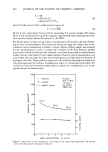
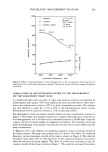
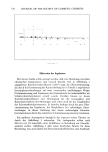
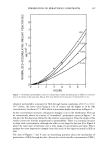
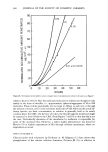
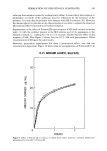
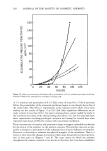
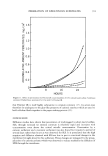
246 JOURNAL OF THE SOCIETY OF COSMETIC CHEMISTS namic viscosity was not much affected by the specific volume and was approximately 15 to 20 poise. The loss tangent for the foams, a parameter expressing energy dissipation, was calculated to be about 0.3. The interrelation between the viscoelasticity of the foam and the specific volume suggests that the viscoelasticity of soap foam is de- pendent on the diameter of bubble and film thickness. ACKNOWLEDGMENT We would like to acknowledge the continuing guidance and encouragement of Drs. S. Ohta, Director, and T. Mitsui, Associate Director of Shiseido Laboratories, throughout the course of this work. REFERENCES (1) B. Derjaguin, Die elastischen eigenschaften der sch2ume,Kolloid-Z., 64, 1 (1933). (2) B. Derjaguin and E. Obuchov, Untersuchungen tiber die mechanischen eigenschaften disperser systeme und oberfl•ichenschichten: II. die elastischen eigenschaften und dispersit•it der sch•iume, Kolloid-Z., 68, 243 (1934). (3) J. O. Sibree, The viscosity of froth, Trans. Faraday Soc., 30, 325 (1934). (4) G. V. Scott and W. E. Thompson, Measurement of foam consistency, J. Amer. Oil Chem. Soc., 29, 386 (1952). (5) J.J. Bikerman, "Foams," Springer-Verlag, New York (1973).

J. Soc. Cosmet. Chem., 29, 247-263 (May 1978) The quantitative analysis of bergapten in perfumes S. T. ZAYNOUN Division of Dermatology, American University of Beirut Hospital, Beirut, Lebanon. Received May 26, 1977. Synopsis The Candida albicans phototoxicity test of Daniels and the spectrophotometric method of Cieri were adapted for the QUANTITATIVE ANALYSIS of BERGAPTEN (5-methoxypsoralen) and other photoac- tive psoralens in solutions such as PERFUMES. The Candida albicans test is simple and reproducible and has important advantages over the spectrophotometric method. Of a total of 108 perfumes investigated 57.4% contained bergapten in concentrations ranging from 0.00004 to 0.01080%. The significance of the presence of bergapten in perfumes and its relationship to skin hyperpigmentation is discussed. INTRODUCTION In a previous study, Zaynoun, Johnson and Frain-Bell (1) have shown that a number of bergamot-containing perfumes produced erythema and subsequent hyperpigmentation following application to normal human skin and irradiation with long wave ultraviolet light (UVA). The bergamot response is due to a phototoxic reaction induced by bergapten or 5-methoxypsoralen (5-MOP), the only significant photoactive component of bergamot oil (2,3). Positive responses to perfumes and small concentrations of bergamot oil were reported in patients with Poikiloderma of Civatre and a possible relationship between the hyperpigmentation on the sides of face and neck and the use of perfumes containing significant quantities of bergamot oil was suggested (1). As occurs with other psoralens, the response to bergapten is related to several factors, primarily the quantity applied and the dose of UVA delivered to the skin (4). Hence, it is considered important to determine the presence and concentration of 5-MOP in perfumes and advise against the use of those containing significant quantities of 5-MOP, particularly in individuals who have a tendency to develop a phototoxic response to small concentrations of the psoralen. In this paper, two methods for the quantiration of 5-MOP in perfumes are described and the 5-MOP content of 108 perfumes reported. MATERIALS AND METHODS Oil of bergamot (Coty), pure 5-MOP (Unilever Research Laboratories) and pure xanthotoxin or 8-methoxypsoralen (8-MOP) (Sigma Chemical Company) were ob- 247
Purchased for the exclusive use of nofirst nolast (unknown)
From: SCC Media Library & Resource Center (library.scconline.org)