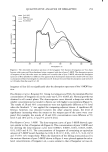
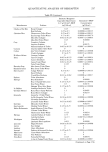
J. Soc. Cosmet. Chem., 29, 247-263 (May 1978) The quantitative analysis of bergapten in perfumes S. T. ZAYNOUN Division of Dermatology, American University of Beirut Hospital, Beirut, Lebanon. Received May 26, 1977. Synopsis The Candida albicans phototoxicity test of Daniels and the spectrophotometric method of Cieri were adapted for the QUANTITATIVE ANALYSIS of BERGAPTEN (5-methoxypsoralen) and other photoac- tive psoralens in solutions such as PERFUMES. The Candida albicans test is simple and reproducible and has important advantages over the spectrophotometric method. Of a total of 108 perfumes investigated 57.4% contained bergapten in concentrations ranging from 0.00004 to 0.01080%. The significance of the presence of bergapten in perfumes and its relationship to skin hyperpigmentation is discussed. INTRODUCTION In a previous study, Zaynoun, Johnson and Frain-Bell (1) have shown that a number of bergamot-containing perfumes produced erythema and subsequent hyperpigmentation following application to normal human skin and irradiation with long wave ultraviolet light (UVA). The bergamot response is due to a phototoxic reaction induced by bergapten or 5-methoxypsoralen (5-MOP), the only significant photoactive component of bergamot oil (2,3). Positive responses to perfumes and small concentrations of bergamot oil were reported in patients with Poikiloderma of Civatre and a possible relationship between the hyperpigmentation on the sides of face and neck and the use of perfumes containing significant quantities of bergamot oil was suggested (1). As occurs with other psoralens, the response to bergapten is related to several factors, primarily the quantity applied and the dose of UVA delivered to the skin (4). Hence, it is considered important to determine the presence and concentration of 5-MOP in perfumes and advise against the use of those containing significant quantities of 5-MOP, particularly in individuals who have a tendency to develop a phototoxic response to small concentrations of the psoralen. In this paper, two methods for the quantiration of 5-MOP in perfumes are described and the 5-MOP content of 108 perfumes reported. MATERIALS AND METHODS Oil of bergamot (Coty), pure 5-MOP (Unilever Research Laboratories) and pure xanthotoxin or 8-methoxypsoralen (8-MOP) (Sigma Chemical Company) were ob- 247

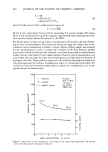
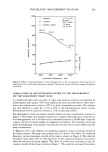
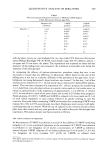
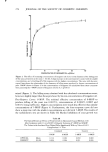
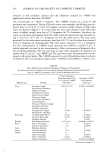
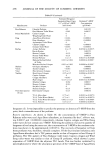
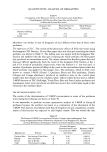
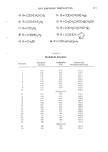
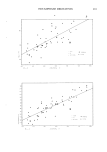
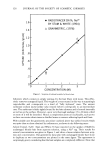
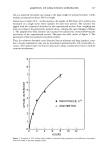
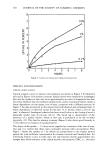
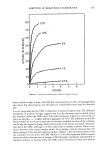
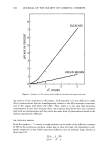
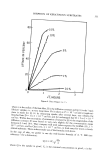
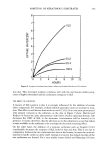
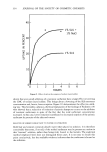
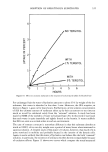
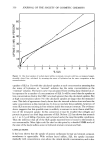
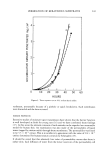
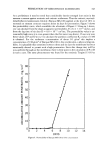
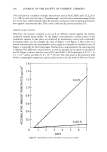
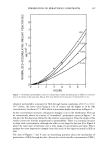
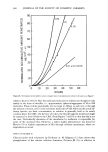
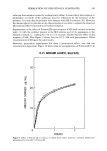
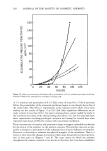
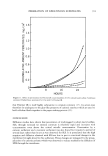
248 JOURNAL OF THE SOCIETY OF COSMETIC CHEMISTS tained. The 5-MOP content of this sample of bergamot oil was previously determined with the use of a spectrophotometric technique and was found to be 0.27 g/100 ml (2). Random samples of perfumes were supplied by local stores during the years 1974 to 1976. Two methods for the quantitative analysis of 5-MOP in perfumes were used: the Candida albicans phototoxicity test (5) and the spectrophotometric test (6). THE CANDIDA ALBICANS PHOTOTOXICITY TEST The test consists of the application of test substances to Sabouraud's dextrose agar plates • (2.5 to 3 mm uniform agar thickness) streaked with Candida a/b/cans and sub- sequent exposure to UVA duplicate plates were kept in the dark as control. Phototoxic substances are then identified by the presence of a clear zone of killing of the yeast around the discs in the 'irradiated plate greater than that obtained in the con- trol nonirradiated plate. DOSE-RESPONSE RELATIONSHIP It was first of all important to find out whether the test was useful for the quantitative assay of 5-MOP and other psoralens. An attempt was made, therefore, to derive dose- response curves which relate the concentration of the psoralen used to the diameter of the killing zone. Various concentrations of the bergamont oil, pure 5-MOP and pure 8-MOP in ethanol were prepared. Aliquots of 2 /xl of each of these solutions were spotted on 20 x 20 cm aluminium-backed, thin-layer chromatography silica gel plates, thickness 0.25 mm (E. Merck). The plates were processed by the ascending method with hexane-ethyl acetate (75:25) to a distance of 8 cm from the origin, allowed to dry and viewed under ultraviolet light (Camag ultraviolet viewer, peak 366 nm). The fluorescent 5-MOP band in bergamot oil was identified by its yellowish-green fluorescence and its Rf, which was identical to that of standard 5-MOP. The 5-MOP fractions of bergamot oil spots were marked and the silica gel containing them was scraped onto clean paper and added to Sabouraud's dextrose agar plates freshly seeded with C. a/b/cans each spot occupying a circle 8 to 10 mm in diameter. Since the size of the killing zone varies with the thickness of the agar (5,7) and possibly with other fac- tors as well, it was considered important when comparing the phototoxic effects of psoralens to apply similar quantities of each compound to the same agar plate. In these experiments, therefore, concentrations were chosen so that a similar range of quan- tities of 5-MOP derived by TLC from bergamot oil, pure 5-MOP and 8-MOP were ap- plied to each agar plate (Table I). For example, 0.00025 to 0.001% solutions of pure 5-MOP and 8-MOP and the equivalent of 0.00034 to 0.00135% 5-MOP present in 0.125 to 0.5% bergamot oil (which contains 0.27% 5-MOP) were used in plate 1. Similarly, 0.0025 and 0.005% pure 5-MOP and 8-MOP and 0.0027 and 0.0075% 5-MOP in bergamot oil were applied to plate 2. Concentrations of 40% bergamot oil and 0.1% pure 5-MOP and 8-MOP were applied to two separate plates because of the large killing zones produced. One set of plates was kept in the d•rk and another set, •Myocological peptone (Oxoid L 40) 10 g, Agar No. 1 (Oxoid L 11) 15 g, Dextrose 40 g/litre pH ap- proximately 5.6.
Purchased for the exclusive use of nofirst nolast (unknown)
From: SCC Media Library & Resource Center (library.scconline.org)