284 JOURNAL OF THE SOCIETY OF COSMETIC CHEMISTS inexpensive and widely applicable methods for assessing the fate and consequences of materials applied to human skin in situ are now available. Some of the situations prompting wider application of these methods are the following. Concerns have been expressed by the American Medical Association that traditional vegetable and animal cosmetic products are safe but inefficient, and new products derived from synthetic compounds are capable of inducing dermatitis more readily (!). These concerns can be addressed by direct experimental techniques. Hazel Bishop has cautioned that, although necessarily safeguarding their existence by "the bread and butter techniques available to them," manufacturers of cosmetics who wish to share in the continued growth of the cosmetic industry must perform additional serious scientific research "which holds the key to the prestige--and the profits--which go with the dramatic new scientific find" (2). The type of research introduced here fits one of Bishop's categories "more likely to pay-off": creation of a chemical product to which one can validly apply exciting, yet unexploited claims, attracting potential customers. Even if the motives of professional concern and enhancement of profit were not operating, the mounting pressures from consumer research organizations, supplying well documented arguments to receptive committees of federal legislators, force the increased attention of cosmetic and skin treatment producers to unambiguous proofs of their product safety and efficacy. In particular, the generally held belief that cosmetics stay on the skin, reflecting the im- penetrable nature of the stratum corneum surface, has been convincingly challenged by the recitation of research results showing very high systemic absorption of topically ap- plied chemicals the protection of cosmetic preparations from the scientific and regula- tory scrutiny that many other products have been subjected to will no longer be tolerated (3). Citing the routine exposure to skin-damaging strong soaps and de- tergents, one recent legislative brief also challenged the new generation of synthetic plastic resins (in skin-stripping agents and cosmetic "beauty masks") as further de- teriorating already permeable skin (3), suggesting these products be banned by the Food & Drug Administration. Techniques for judging epidermal retention of such ma- terials are described here. Natural polymeric extracts now incorporated in various cos- metic and wound-healing preparations, including proteoglycan preparations claimed to have both cosmetic and wound-healing properties (4), may also be more carefully studied in situ. The subject of epidermal wound healing has received more attention than has the subject of cosmetic improvement of human skin (5), but advances in the in situ evaluation of chemical influence on skin quality (6) and of measurement in vivo of the skin's moisture balance (7) suggest a growing willingness of the cosmetic industry to address the very real problems at hand. The main purpose of this report is to expand the use and acceptance of two additional in situ methods for noninvasive characterization of skin chemistry (before and after the application of cosmetic preparations, or in various states of damage) by demonstrating the actual experimental yield of these methods in both cosmetic testing and wound- healing contexts. METHODS AND MATERIALS All of the measurements reported here were carried out in a constant temperature-- constant humidity, clean room, free of dust and maintained at 2 IøC and 40% relative

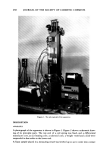
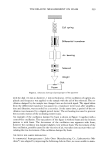
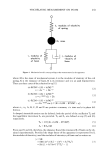
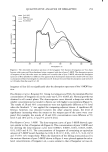
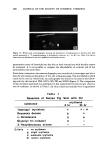
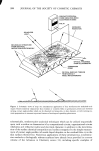
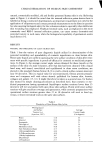
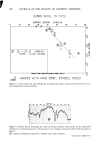
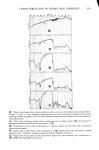
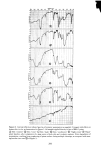
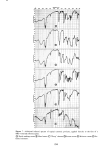
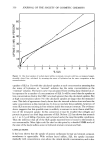
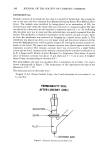
CHARACTERIZATION OF HUMAN SKIN CHEMISTRY 285 humidity. Volunteer human subjects whose skin was to be characterized were, after their skin cleansing by a standardized technique described below, allowed at least 30 min equilibration with the clean room's atmospheric conditions prior to the initiation of any measurements on their skin. Contact angles with diagnostic fluids of known high purity and representing a range of surface tensions, molecular sizes and relative polar- to-dispersion-force interaction potentials, were measured and plotted according to the widely accepted techniques of Zisman (8). The resulting contact angle data plots yielded values of "critical surface tension" known to correlate well with the true outer- most atomic constitution of organic surfaces, with their coefficients of friction, their qualities of adhesion and degrees of roughness (9)., Similar studies of almost a decade ago, which were the pioneering efforts using contact angle techniques applied to cos- metically modified human skin, were mostly limited to measurements with droplets of water and acetone/water mixtures. These early studies showed striking relative dif- ferences in skin quality after various cosmetic treatments or cleaning procedures, but probably did not yield accurate data for the actual surface energetics of "clean" and modified skin surfaces (10). Surface-specific infrared spectra of the natural, cosmetically treated, wounded and sub- sequently healed skin of volunteer human subjects were acquired by the internal reflection spectroscopic technique described by Harrick (11). A special mirror assembly, which was made to order for our purposes (12), allowed the mounting of internal reflection prisms in a horizontal plane rather than in the vertical plane common to all other internal reflection spectroscopic accessories. The necessary internal reflec- tion prisms, constructed of the thallium bromide salt, KRS-5, or of pure germanium, were acquired from the same source (12). Infrared spectra were recorded on both Perkin-Elmer Models 457 and 700 spectrophotometers, but only traces produced on the latter instrument are included here to allow ready intercomparison among the many figures provided. The cosmetics that were spectrally characterized both before and after their application to human skin were of internationally distributed brands and were applied according to the written instructions provided by the suppliers. They are representative of products with similar generic functions widely distributed by the cos- metic industry. Epidermal skin profiling in depth, after the induction of mild epidermal wounds, was accomplished by the "Scotch tape stripping" technique commonly used in the study of epidermal wound healing (5). Prior to the initiation of any experimental series, the skin areas to be tested were gently washed with a standard liquid hand soap, thoroughly rinsed, towel dried and allowed to equilibrate with the clean room at- mosphere. Figure 1 illustrates the quite comfortable posture taken up by the volunteers during the recording of infrared spectroscopic signatures of their natural and treated skin zones. Contact angle measurements were obtained on the lateral regions of the same subjects' fingers, or the ventral surfaces of their forearms, supported--as in the spectroscopic device--on a horizontal stage of a contact angle goniometer. Figure 2 provides schematic drawings of the position of the horizontal prism mount in a record- ing spectrophotometer, together with sketches of the ventral surface of a subject's forearm upon the prism face during analysis, and an indication of the material trans- ferred (insensible perspiration, cosmetic residues, cellular debris and/or serous exu- dates from wounded tissue) on the prism face after the approximately 10-min period of contact required for recording of the entire infrared spectral trace. Figure 3 illustrates,
Purchased for the exclusive use of nofirst nolast (unknown)
From: SCC Media Library & Resource Center (library.scconline.org)