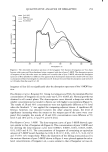
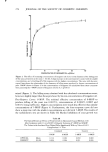
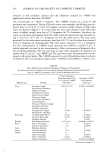
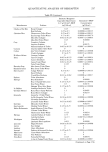
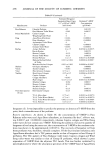
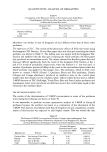
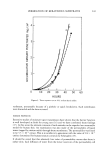
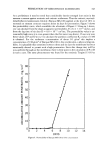
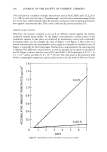
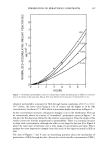
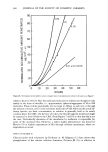
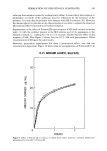
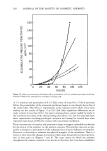
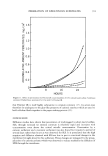
QUANTITATIVE ANALYSIS OF BERGAPTEN 261 perfumes did not affect the spectrophotometric determination since such an effect was cancelled by a similar degree of contamination of the 5-MOP band of the bergamot oil used as reference. It is apparent from the results of the present experiments that the C. albicans phototoxicity test can indeed be useful for the determination of the concentration of photoactive psoralens in solutions such as perfumes. It is sensitive to 5-MOP, 8-MOP and bergamot oil in quantities of 0.01/zg, 0.05/zg and 0.005/zl respectively. A greater degree of accuracy was obtained when quantities smaller than 0.27/zg 5-MOP (0. bergamot oil) were applied to each test site on the agar plate. The volume of each perfume chosen for testing depended therefore on the concentration of 5-MOP in that perfume and had to be adjusted to give a final quantity in the range of 0.0135 to 0.27 /zg (0.005 to 0. !/zl bergamot oil). Using the yeast phototoxicity test, 5-MOP was found to be five times more photoactive than 8-MOP, although photopatch testing carried out on human skin showed that 8-MOP is slightly more active than 5-MOP (2). The difference was originally suspected to be due to relative diffusion of the psoralens in agar. Preliminary results, using a tur- bidmetric test in which diffusion of the psoralens does not affect the determination, support these findings however. The cause of the discrepency between the in vitro and in vivo tests is not clear, although factors which affect absorption and penetration of the chemical into the skin may play an important role. A discrepancy between the two systems was also noted with quinoline methanols (9), tetramethylthiurammonosul- phide (! 0) and tribromosalicylanilide (11). Although it is easier in the C. albicans test to avoid the use of the TLC procedure by ap- plying the whole perfume on filter discs, TLC is considered an essential step in this test because it uncovers the nature of the photoactive component. In addition, TLC improves the sensitivity of the test since the diameter of the killing zone produced by the bergapten TLC fraction is significantly larger than that obtained with the filter paper disc containing the whole perfume. The larger killing zone was originally thought to be due to a better diffusion of 5-MOP from silica gel than from filter paper discs. However, the difference became more apparent when silica gel containing the whole perfume was compared with silica gel containing only the 5-MOP fraction, sug- gesting that the difference in zone size might have been due to incomplete release of 5-MOP from the other constituents of the perfume. Although no thorough investiga- tions were performed to assess the effects of the impurities of the bergapten TLC frac- tion of Group B perfumes on the results of C. albicans test, it was considered unlikely that the impurities could greatly hinder the diffusion of 5-MOP. The preliminary results of the recovery experiments support this assumption. Although TLC offers a number of advantages, the disc technique is useful for screening purposes when an ap- proximate estimation of the content of a known extract is required. In addition, it provides a good alternative where TLC cannot be adequately performed as with oily, greasy and semi-solid cosmetics. Direct toxicity to the yeast that has not been en- countered with bergapten TLC should always be considered when the disc technique is used and should be assessed by means of duplicate nonirradiated culture plates. The 5-MOP content of different samples of bergamot oil varies significantly and pre- vious studies demonstrated the importance of determining the bergapten concentra- tion prior to its use in photopatch testing (2). Similarly, it is important in the determi- nation of the 5-MOP content of perfumes using the C. albicans test to use bergamot oil

262 JOURNAL OF THE SOCIETY OF COSMETIC CHEMISTS with a known concentration of bergapten, since the test essentially compares the phototoxic effects of 5-MOP fraction of known dilutions of bergamot oil with 5-MOP fraction of bergamot oil present in perfumes. The results are therefore best expressed as 5-MOP content of perfumes but could well be reported as concentration of bergamot oil of known 5-MOP content. Of 108 randomly selected perfumes, 62 (57.4%) contained bergapten in concentra- tions of 0.00004% or more. The significance of the presence of 5-MOP, even in small concentrations in perfumes, and its relationship to hyperpigmentation of the sides of the face and neck have already been demonstrated (1). Photopatch testing carried out on the skin of the midback showed a positive response, consisting of erythema and sub- sequent pigmentation, to a number of perfumes and also to bergamot oil (Coty) in concentrations of 0.25% (0.00068% 5-MOP) in some normal subjects and 0.125% (0.00034% 5-MOP) in some patients with Poikiloderma of Civatte (1). Individual variation in the degree of response to 5-MOP exists and the minimal effective concentration to produce a response is affected by many factors such as the kind of ve- hicle used, the site of phototesting, the hydration of the skin, the repeated applications and irradiations and the degree of natural or sun-induced pigmentation (4). Thus, a safe concentration for each individual cannot always be exactly defined and it is therefore recommended that perfumes free from 5-MOP or those which contain an extremely low concentration (e.g., 0.00008%) be used by patients suffering from Civatte's Poikiloderma and subjects who on photopatch testing are shown to be sensitive to small concentrations of 5-MOP. It is hoped that the cosmetic industry will soon realize the noncosmetic effects of the presence of 5-MOP in natural bergamot oil and that, instead, 5-MOP-free or artificial bergamot oil will be used in perfumes. ACKNOWLEDGEMENTS I wish to thank Dr. W. Frain-Bell and Dr. B. E. Johnson, Department of Dermatology, University of Dundee, for their constant support. I also thank Mr. G. E. Thomas, Mathematics Department, University of Dundee for his assistance in the statistical analysis, and the Photographic Departments at the Ninewells Hospital, Dundee and the American University of Beirut for the illustrations. REFERENCES (1) S. T. Zaynoun, B. E. Johnson and W. Frain-Bell, A study of bergamot oil and its importance as a phototoxic agent. 3--The relationship of bergamot oil in perfumes to hyperpigmentation of the skin (in preparation). (2) S. T. Zaynoun, B. E. Johnson and W. Frain-Bell, A study of oil of bergamot and its importance as a phototoxic agent. 1--Characterization and quantitation of the photoactive component, Brit. J. DermatoL, 96, 475 (1977). (3) F. N. Marzulli and H. I. Maibach, Perfume phototoxicity, J. Soc. Cosmet. Chem., 21,695 (1970). (4) S. T. Zaynoun, B. E. Johnson and W. Frain-Bell, A study of bergamot oil and its importance as a phototoxic agent. 2--Factors which affect the phototoxic reaction induced by bergamot oil and psoralen derivatives, Contact Dermatitis, 3, 225 (1977). (5) F. Daniels, Jr., A simple microbiological method for demonstrating phototoxic compounds, J. Invest. DermatoL, 44, 259 (1965). (6) U. R. Cieri, Characterization of the steam non-volatile residue of bergamot oil and some other essential oils, J. Ass. Offic. Anal Chem., 52,719 (1969).
Purchased for the exclusive use of nofirst nolast (unknown)
From: SCC Media Library & Resource Center (library.scconline.org)