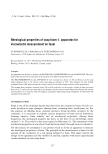
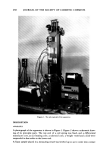
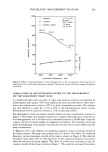
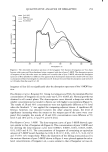
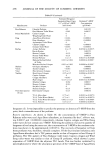
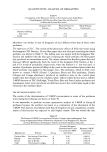
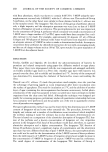
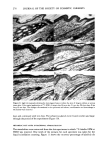
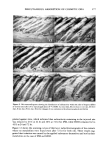
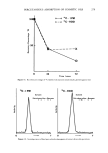
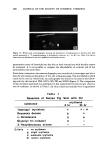
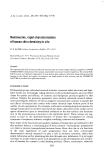
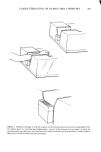
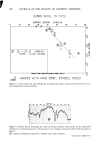
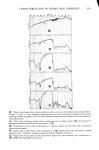
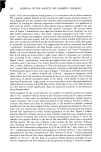
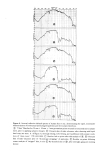
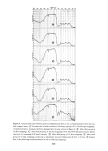
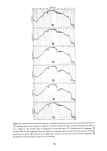
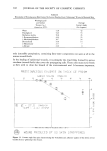
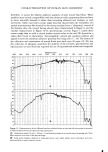
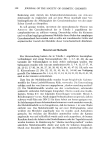
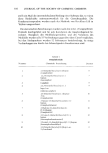
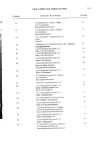
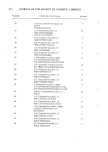
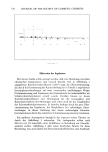
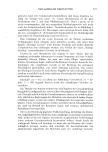
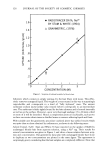
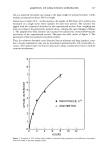
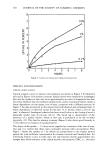
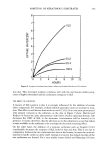
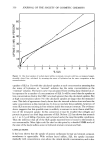
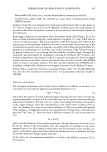
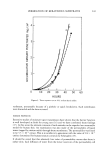
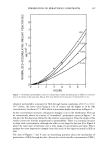
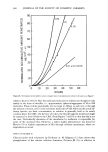
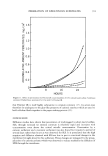
PERMEATION OF KERATINOUS SUBSTRATES 347 8 7 0 I I 0 1 2 3 4 5 6 7 HOURS Figure 7. Normalized permeability curves for sodium lauryl sulfate permitting data at different concentra- tions to be shown on the same plot. Data at 10% were divided by 10, data at 0.1% divided by 0.1, etc. obtained permeability constants for SLS through human epidermis of 0.17 to 3.0 x 10 -8 cm/sec, the lower value being at 6 hr of contact and the higher at 24 hr. His concentration was about 0.7% SLS, which is somewhat higher than those in Figure 6. As the concentration increases, still greater changes occur in the membranes. This can be conveniently shown by a series of "normalized" permeation curves in Figure 7. In this plot the flux has been divided by the solution concentration. Thus the slopes of the various curves are directly proportional to permeability. There is a continual increase in slope with concentration, although the effect is not large for the first 8 hr. Figure 8 shows the same type of behavior over a wide range of concentration and time. This is perhaps the most impressive example from this study of the vigorous attack by SLS on skin. The data of Figures 7 and 8 raise an interesting question about the mechanism of penetration of SLS through the skin. Above the critical micelle concentration (CMC),

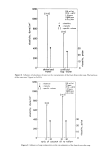
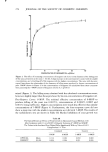
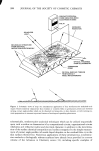
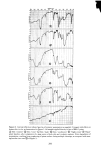
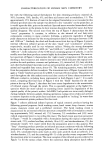
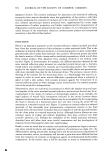
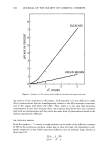
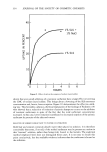
348 JOURNAL OF THE SOCIETY OF COSMETIC CHEMISTS 90 80 z ,,, 70 z • 60 o o 50 - 40 ro 30 N 20 • 10 o z lO% O.Ol and 0.001% 0 I I I 0 10 20 30 40 50 60 HOURS Figure 8. Normalized permeability curves at longer times. Calculation procedure is the same as in Figure 7 which is about 0.24% for SLS, the surfactant molecules in solution are thought to exist mainly in the form of micelies, i.e., approximately spherical aggregates of 50 to 100 molecules. These entities presumably are too large to diffuse as such into or through the stratum corneum, and it is the monomer molecules of SLS which are the actual dif- fusing species yet their concentration in solution is generally held to be nearly constant above the CMC. On the face of it then, the flux through the membrane might be expected to level off above the CMC. From Figures 7 and 8 it is clear that this is not the case. Undoubtedly alteration of the membrane by surfactant is responsible for some of the increased flux. However, a rather similar phenomenon was found by Mysels (19) in dialysis experiments of SLS through cellulose membranes, where no degradation occurred. EFFECT OF POLYMER JR Clinical studies with volunteers by Professor A.M. Kligman (11) have shown that preapplication of the cationic cellulose derivative, Polymer JR (13), is effective in
Purchased for the exclusive use of nofirst nolast (unknown)
From: SCC Media Library & Resource Center (library.scconline.org)