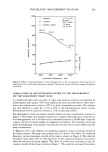
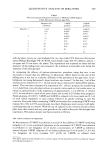
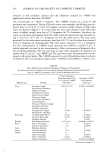
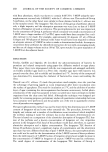
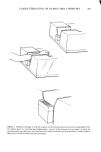
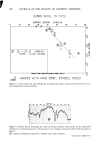
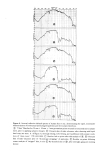
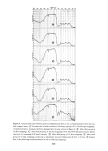
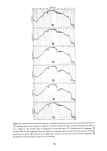
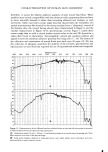
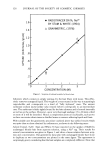
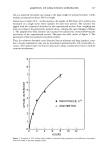
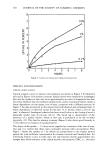
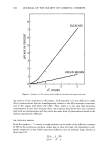
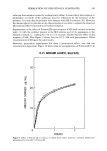
CHARACTERIZATION OF HUMAN SKIN CHEMISTRY 287 Figure 2. Schematic drawings of (top) the position of the horizontal prism mount protruding slightly from the sample space of a recording spectrophotometer, (center) of the forearm of a test subject in place for spectral analysis and (bottom) a close-up view of the residue usually left on the prism face for further analysis after the in situ skin chemistry has been ascertained

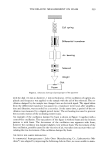
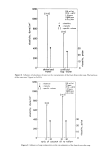
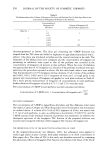
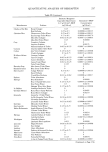
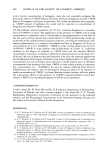
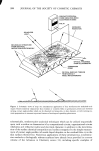
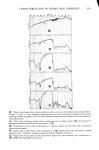
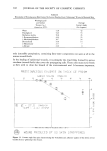
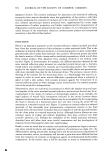
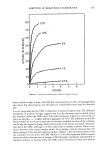
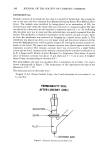
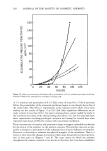
288 JOURNAL OF THE SOCIETY OF COSMETIC CHEMISTS CONTACT POTENTIAL FROM VIBRATING REED ELECTRODE STUDIES INFRARED RADIATION POLARIZED L,G.T l•'-' •-, OPTICAL THICKNESS ,• • ',•' • FROELLTENSION ,-•'• GERMANIUM PRISM CRITICAL SURFACE FROM CONTACT ANGLE MEASUREMENTS Figure 3. Schematic views of (top) the simultaneous application of four nondestructive analytical tech- niques which sensitively characterize skin residues or cosmetic films on germanium prisms and (bottom) varying contact angle profiles which can be observed on living skin, on skin deposits, or with varying cos- metic preparations to measure important features of wetting and spreading phenomena schematically, nondestructive analytical techniques which can be utilized sequentially upon such a residue to characterize it by compositional criteria, organizational criteria (thickness and refractive index) and electrical character, in addition to the determina- tion of the surface chemical composition and surface energetics by the simple measure- ment of contact angle profiles (of sessile liquid droplets on the residual films or on the skin surfaces themselves). Numerous applications of these simultaneous, nondestruc- tive methods to biologically relevant surfaces have already been provided in a recent volume of the Advances in Chemistry series (13), including specific examples of
Purchased for the exclusive use of nofirst nolast (unknown)
From: SCC Media Library & Resource Center (library.scconline.org)