j. Soc. Cosmet. Chem., 37, 409-428 (November/December 1986) Odorants related to human body odor E. P. KOSTER, J. s. JELLINEK, N. D. VERHELST, J. MOJET, and M. R. I. LINSCHOTEN, Psychological Laboratory, Ryksuniversiteit, Sorbonnelaan 16, 3594CA Utrecht, Netherlands (E.P.K., N.D.V.,J.M., M.R.I.L.), and Dragoco, D-3450 Holzminden, West Germany (J. S.J. ). Received July 23, 1986. Synopsis Using a T-shirt test design described by M. Schleidt and co-workers with young female (n = 29) and male (n = 30) respondents, the relations between concentration, odor intensity, odor pleasantness, and sex attribution were studied for female and male perspiration, androstenol (I, a natural ingredient of perspira- tion), for two synthetic androstenol analogues (II and III), and for cyclopentadecanolide, a synthetic musk. It was found that the synthetic analogue III and, to a lesser extent, II exhibit patterns similar to the natural stimuli. Cyclopentadecanolide was perceived more as a feminine perfume. INTRODUCTION There is a notion that body odor may play a role in human interactions, not only in the sense of repulsion by the smell of unwashed, sweaty bodies and clothing but also in the sense of sexual attraction and of individual recognition. This notion is not new (la). However, the evidence supporting it has been, until recent years, largely anecdotal. Practices such as the use of a perspiration-drenched handkerchief as an aphrodisiac, reported for peasant populations in several European countries, have been based on tradition and belief (lb). During the past decade, a number of studies have been con- ducted in which human reactions to human body odors have been tested under con- trolled conditions. Some of these were conducted with body odors in their natural form others involved two pure substances which have been identified in human perspiration and urine: 5o•-androst- 16-ene-3o•-ol and 5o•-androst- 16-ene-3-one (2). Well before these recent studies were undertaken, Paul Jellinek (3) postulated the cen- tral importance to perfumery of odorants with odor qualities reminiscent of human body odor. He proposed the following theses: 1. The function of perfumes worn by women is to enhance the wearers' sexual attrac- tion to the opposite sex. 2. Perfumes perform this function by virtue of their content of "erogenous" odorants. 3. These odorants, which are to be found primarily in perfume materials of animal origin (musk, civet, ambergris, castoreum) but also in essential oils and extracts from plants and among synthetic aromatic chemicals, owe their erogenous effect to the similarity of their odor to some aspect of human body odor. 4. These odorants exert an erogenous effect only if used at low levels. 4O9

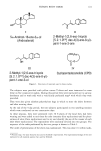
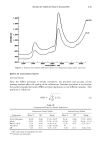
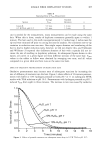
410 JOURNAL OF THE SOCIETY OF COSMETIC CHEMISTS Although these theses have not been universally accepted among perfumers, they have had considerable influence on perfumery practice. A few studies have been reported to test their validity. Paukner (4a) found that adding increasing concentrations of an "erogenous complex of civet, synthetic ambergris, and synthetic musk" to a lavender-type perfume brought its position in a three factor semantic differential analysis increasingly close to the position of "the ideal erogenous fragrance." Steiner (4b) presented, in very brief flashes (V•70 to •/250 sec.), ambiguous slides in which a picture of a nude woman and a cityscape were superimposed, to a group of 25 males aged 20-39 years. In half of the cases the subjects viewing the pictures were also exposed to a perfume which they had previously selected as being sexually stimulating. In the presence of the perfume, significantly more respondents reported seeing the woman than in the absence of perfume. The purpose of the present study was to study the reactions of untrained subjects to the odors of several aromatic chemicals related to human body odor, when these chemicals were presented under conditions where they might be taken for actual human body odors. Using actual human body odors and 5c•-androst-16-ene-3-ol (I) as comparison stimuli, we hoped to establish in what ways the synthetic chemicals were similar and how they differed from these natural stimuli. We adopted the design of M. Schleidt's T-shirt experiment (5) but replaced part of the shirts that had actually been worn by test subjects by clean shirts that had been treated with androstenol (I) or with the aromatic chemicals we wanted to study, at various concentrations. We selected the following chemicals: 2-Methyl-1(2,6-exo-tricyclo [5.2.1.02'6] dec-4(3)-ene-8-yl)-pent- 1-ene-3-ol (III), synthetic aromatic chemicals first prepared in the laboratories of Dra- goco, with odor descriptions similar to those of androstenol (6) and cyclopentadecano- lide (IV), a macrocyclic lactone found in ambrette seed oil and closely related in struc- ture to key ingredients of natural musk and civet tincture, which has been used for many decades in fine perfumery as a musk-type odorant (Figure 1). We were particularly interested in exploring the following questions: Is it at all possible to fool respondents into believing that the odor of chemical- treated shirts is human body odor? Schleidt (5) had found that sex attribution was possible and that her subjects could correctly identify the sex of the wearer of a given shirt to a statistically significant degree. Is sex attribution possible also for the aromatic chemicals studied? If so, to what sex are they attributed? Schleidt also found that strong body odors were predominantly judged as unpleasant and that they were predominantly attributed to male wearers. Do the same patterns prevail with the aromatic chemicals studied? METHOD Test subjects were 30 men and 29 women, aged 18 to 30, all student volunteers at the University of Utrecht. For participating in the test, they received a modest monetary reward (Fl. 35,--), or some academic credit. They were not prescreened in any way. There was only one among them who had trouble smelling many of the stimuli his ratings were counted along with those of the other participants.
Purchased for the exclusive use of nofirst nolast (unknown)
From: SCC Media Library & Resource Center (library.scconline.org)