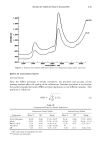
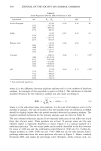
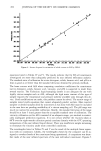
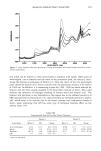
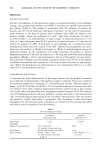
PARABEN PERMEATION THROUGH MODEL MEMBRANES 431 abens were examined to verify identity and establish purity. Each paraben exhibited characteristic UV scans (Coleman 571 Spectrophotometer, Perkin Elmer, Oak Brook, IL), melting points, and HPLC (Zorbax ODS-3 column, Dupont, Wilmington, DE mobile phase consisted of methanol:water 40:60 v/v retention times with only single peaks detected. The solvents utilized were purified water, polyethylene glycol 400 (PEG 400), propylene glycol, and glycerin (Fisher Scientific). Non-reinforcing polydimethylsiloxane sheeting (Silastic ©, Dow Corning Corporation, Midland, MI) was used as the diffusive barrier. Commercial grade material containing silica filler (0. 0254-cm thick, 23.4% w/w filler) and custom-made sheeting (0. 127-cm thick, 0% and 23.4% w/w filler 0.219-cm thick with 23.4% w/w filler) were utilized. VEHICLE SOLUBILITIES The saturation concentration of each paraben in the selected solvents was determined. Aqueous mixtures were prepared on a w/w basis. Excess solute was added to each sol- vent and allowed to equilibrate for at least one week at 37 --- 0.2øC with periodic vortexing. An aliquot of the solution was removed via a glass luer syringe and quickly filtered (Millipore Corporation, 0.45 btm) into a constant temperature flask. The samples were then spectrophotometrically analyzed at 254 nm for solute content after appropriate dilution with methanol. Absorbance values were converted to corre- sponding concentrations by interpolation from the linear portion of a standard calibra- tion curve for the solute. A minimum number of four replicates for each system were measured. MEMBRANE SOLUBILITIES Polymer/solvent partition coefficients for the parabens were determined. Custom-made membranes containing 0% and 23.4% w/w filler were presoaked in methanol for about 24 hours to extract interfering species. The membranes were then allowed to air dry. Accurately weighed samples of membrane (approx. 200 rag) were placed into saturated solutions of each paraben for selected solvents. The determinations were performed in triplicate. The samples were periodically vortexed and maintained at 37 - 0.2øC by immersion in a heated water bath. After equilibration for at least two weeks, the mem- branes were removed from the saturated solution and carefully rinsed with a methanol- water mixture to remove adhering solute. They were then placed into individual screw- cap test tubes containing exactly twenty milliliters of methanol and sealed. At least one week was allowed for complete extraction of the paraben from the membrane, which was carried out at room temperature with periodic shaking. An UV analysis of the methanol solute extracts yielded the total amount of solute present in the membrane. The partition coefficient was defined as the ratio of the equilibrium concentration of solute in the membrane to that in the solvent. PERMEATION STUDIES Calibrated horizontal diffusion cells (Figure 1), maintained at 37 - O. IøC, were used to perform the permeation studies. Polydimethylsiloxane membranes were carefully mounted between two half-cells to assure a tight seal with the formation of two separate

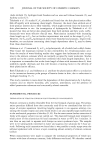
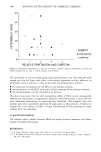
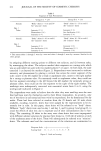
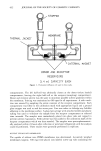
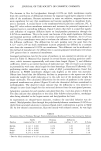
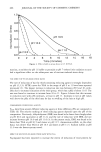
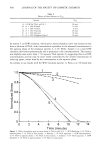
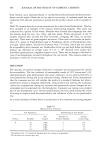
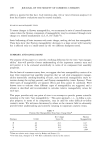
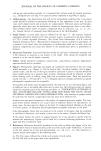
432 JOURNAL OF THE SOCIETY OF COSMETIC CHEMISTS • STOPPER DONOR AND RECEPTOR RESERVOIRS 9.4 ml CAPACITY EACH Figure 1. Horizontal diffusion cell used in this study. compartments. The left half-cell was arbitrarily chosen as the donor (solute loaded) compartment, leaving the right half-cell as the receptor (sampling) compartment. Donor and receptor solvent was the same to minimize possible solvent gradients within the membrane. Stirring was maintained at 600 rpm for all experiments. A sink condi- tion was assured by sampling the entire contents of the receptor compartment. Each compartment was filled to the calibration mark with appropriate liquid and a ground glass stopper was used to seal the access port. Care was taken to dislodge any bubbles adhering to the membrane surface. A glass luer syringe with attached needle and plastic tubing was used to withdraw the sample from the receptor compartment at selected time intervals. The samples were immediately placed into glass vials and capped to prevent solvent evaporation. Fresh solvent was then added to the calibration mark of the receptor compartment which was then resealed. The samples were spectrophotometric- ally analyzed within 24 hours after collection or were kept refrigerated until the analysis could be performed. These studies were generally performed in triplicate. SOLVENT UPTAKE INTO MEMBRANES The uptake of solvent into PDMS membranes was determined. Accurately weighed membranes (approx. 500 mg) were placed into labeled screw-cap vials containing the
Purchased for the exclusive use of nofirst nolast (unknown)
From: SCC Media Library & Resource Center (library.scconline.org)