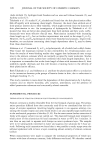
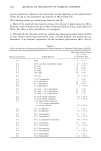
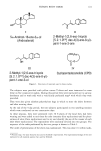
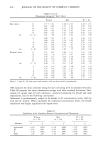
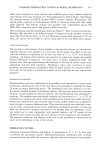
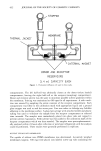
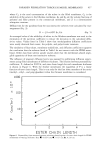
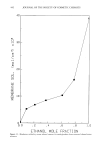
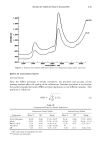
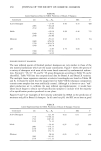
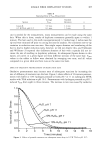
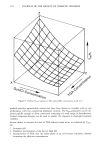
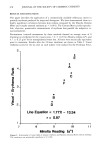
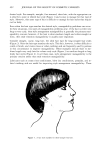
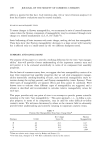
494 JOURNAL OF THE SOCIETY OF COSMETIC CHEMISTS Figure 3. A hair style suitable for short-curly hair. manageability problems are generally associated with keeping the hair in place (style retention manageability). For example, a person with thin-fine hair generally has diffi- culty wearing a style that requires fullness or body. Other examples of suboptimal compatibility between hair type and style include straight hair where a wavy to curly style is desired and curly/kinky hair for straight to wavy hair styles. People with curly hair, however, generally experience fewer style retention problems than people with straight hair because of increased fiber-fiber interactions. Curly/kinky/hair, however, is difficult to arrange in place. For most cases with straight to wavy hair, style retention manageability problems are more prevalent and generally more serious than style arrangement manageability. Treatments such as body waves, curly permanents, or hair relaxers are therefore used to increase style retention manageability in addition to improving style retention. These products function by changing the fiber curvature to make the hair type more consistent with the desired style. Flyaway hair. Another manageability problem sometimes noted by both people whose hair type matches or does not match the desired style is flyaway hair. Flyaway is the condition during combing or brushing where fibers of an assembly separate due to the repulsive forces of static charge. Flyaway is climate-dependent and most distressing at low relative humidities (6). With regard to hair type, flyaway is of less concern for very curly to kinky hair (7) and of greatest concern for medium length, straight, fine hair.

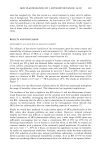
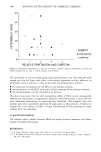
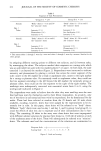
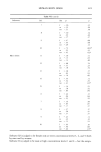
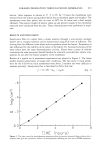
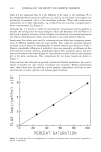
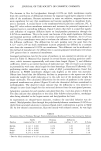
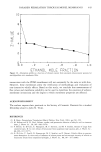
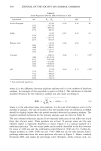
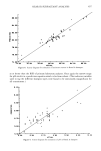
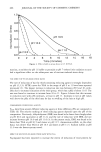
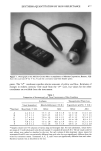
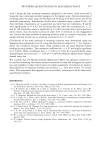
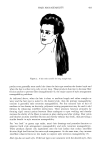
HAIR MANAGEABILITY 495 Figure 4. A hair style suitable for medium length very curly (kinky) hair. METHODS TO EVALUATE MANAGEABILITY STYLE ARRANGEMENT MANAGEABILITY TESTS We recommend two types of tests to evaluate different aspects of style arrangement manageability: ß dry hair combability tests ß wet hair combability tests Garcia and Diaz (7) have already pointed out that combability is "closely associated with manageability," and our intent here is to clarify that association. As described previously, style arrangement manageability is the ease of arranging hair into any par- ticular style. This operation consists of moving a device such as a comb, brush, or pick through the hair to untangle and to arrange the fibers of an assembly to the optimum position for the desired style. Generally, greater work and greater forces are involved in moving the styling device through the fibers than in moving the hair to the position consistent with the desired style. Therefore, it seems reasonable to consider quantitative combing methods as one measure of style arrangement manageability. Several procedures have been described to quantitatively evaluate combability of hair tresses (7-9). Combing hair simply involves the ease or difficulty of moving a comb
Purchased for the exclusive use of nofirst nolast (unknown)
From: SCC Media Library & Resource Center (library.scconline.org)