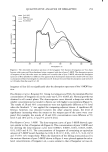
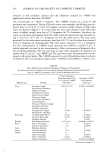
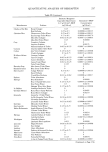
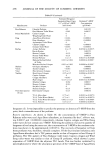
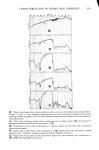
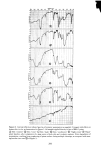
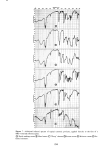
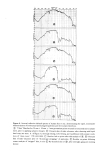
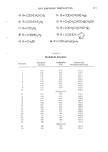
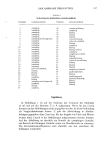
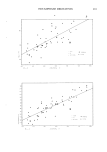
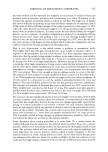
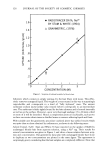
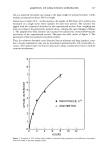
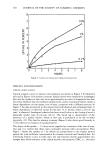
260 JOURNAL OF THE SOCIETY OF COSMETIC CHEMISTS with Brut aftershave, which was shown to contain 0.00729% 5-MOP using the spec- trophotometric test and only 0.00068% with the C. albicans test. The results of Group A perfumes, on the other hand, were similar to those obtained with the C. albicans test in the samples tested. The bergapten TLC fraction of this group of perfumes showed only a slight impurity and the absorption spectrum was very close to that of 5-MOP fraction of bergamot oil used as reference. The spectrophotometric test was impractical for the assessment of Group A perfumes which contained very small concentrations of 5-MOP since a large number of 25/zl TLC spots would have been required for a reli- able estimate to be made. For example, approximately 60 aliquots (25 /zl) of Ritual Cologne and 500 aliquots of Intimate toilet water would have been required to obtain an adequate amount of 5-MOP in order to make a determination feasible. Attempts to concentrate these perfumes by chloroform extraction did not yield encouraging results and the use of a larger volume such as 100/zl TLC spots resulted in a poor separation of 5-MOP from the adjacent bands. DISCUSSION Fowlks, Griffith and Oginsky (8) described the photosensitization of bacteria by psoralens and related compounds using paper-disc diffusion method on agar plates. Filter paper discs were impregnated with the test compounds and arranged uniformly on freshly solidified agar layer in a Petri dish. Another agar layer with bacteria was poured over the discs, left to solidify and incubated at 37øC. Activity of the compound was determined by measuring the diameter of bacteria-free zones surrounding the discs. Daniels' use of C. albicans (5) made this procedure much simpler, since the yeast has the advantage of growing rapidly at room temperature after direct inoculation onto the surface of agar plates. The need for incubation at 37øC and the addition of another layer of agar containing the microorganisms thus became unnecessary. Lethal photo- sensitization of the yeast was assumed to have occurred since many attempts to replate organisms from the clear zone had failed. Although the technique was designed pri- marily for screening purposes, preliminary studies of quantitative relationship between furocoumarins were performed and the possible use of the test in quantitative estima- tions ofpsoralens was suggested. The spectrophotometric method was used by Cieri (6) for the determination of 5-MOP content of bergamot oil and some other essential oils. The procedure, however, was lengthy and tedious and a number of modifications were introduced which simplified the method, making it easier for ordinary day-to-day laboratory determinations (2). The test is based on a comparison of the ultraviolet absorption of bergapten TLC frac- tion of the perfume and a known concentration of bergamot oil. Any impurities present in the bergapten TLC band of the perfume would lead, therefore, to a greater ultraviolet absorption and a higher concentration. The bergapten TLC fraction of Group B perfumes showed a significant degree of contamination and the absorption spectrum was very different from that of pure 5-MOP. Hence, the spectrophotometric test could not be used for the determination of the 5-MOP content of these perfumes. Even the mild impurity of 5-MOP fraction of bergamot oil produced a slight increase in the concentration of 5-MOP in bergamot oil as pure 5-MOP was used as a reference. The small degree of contamination of the bergapten TLC fraction of Group A

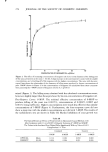
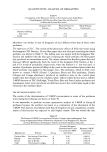
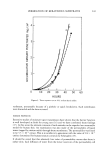
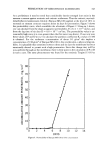
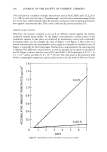
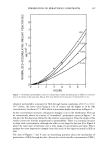
QUANTITATIVE ANALYSIS OF BERGAPTEN 261 perfumes did not affect the spectrophotometric determination since such an effect was cancelled by a similar degree of contamination of the 5-MOP band of the bergamot oil used as reference. It is apparent from the results of the present experiments that the C. albicans phototoxicity test can indeed be useful for the determination of the concentration of photoactive psoralens in solutions such as perfumes. It is sensitive to 5-MOP, 8-MOP and bergamot oil in quantities of 0.01/zg, 0.05/zg and 0.005/zl respectively. A greater degree of accuracy was obtained when quantities smaller than 0.27/zg 5-MOP (0. bergamot oil) were applied to each test site on the agar plate. The volume of each perfume chosen for testing depended therefore on the concentration of 5-MOP in that perfume and had to be adjusted to give a final quantity in the range of 0.0135 to 0.27 /zg (0.005 to 0. !/zl bergamot oil). Using the yeast phototoxicity test, 5-MOP was found to be five times more photoactive than 8-MOP, although photopatch testing carried out on human skin showed that 8-MOP is slightly more active than 5-MOP (2). The difference was originally suspected to be due to relative diffusion of the psoralens in agar. Preliminary results, using a tur- bidmetric test in which diffusion of the psoralens does not affect the determination, support these findings however. The cause of the discrepency between the in vitro and in vivo tests is not clear, although factors which affect absorption and penetration of the chemical into the skin may play an important role. A discrepancy between the two systems was also noted with quinoline methanols (9), tetramethylthiurammonosul- phide (! 0) and tribromosalicylanilide (11). Although it is easier in the C. albicans test to avoid the use of the TLC procedure by ap- plying the whole perfume on filter discs, TLC is considered an essential step in this test because it uncovers the nature of the photoactive component. In addition, TLC improves the sensitivity of the test since the diameter of the killing zone produced by the bergapten TLC fraction is significantly larger than that obtained with the filter paper disc containing the whole perfume. The larger killing zone was originally thought to be due to a better diffusion of 5-MOP from silica gel than from filter paper discs. However, the difference became more apparent when silica gel containing the whole perfume was compared with silica gel containing only the 5-MOP fraction, sug- gesting that the difference in zone size might have been due to incomplete release of 5-MOP from the other constituents of the perfume. Although no thorough investiga- tions were performed to assess the effects of the impurities of the bergapten TLC frac- tion of Group B perfumes on the results of C. albicans test, it was considered unlikely that the impurities could greatly hinder the diffusion of 5-MOP. The preliminary results of the recovery experiments support this assumption. Although TLC offers a number of advantages, the disc technique is useful for screening purposes when an ap- proximate estimation of the content of a known extract is required. In addition, it provides a good alternative where TLC cannot be adequately performed as with oily, greasy and semi-solid cosmetics. Direct toxicity to the yeast that has not been en- countered with bergapten TLC should always be considered when the disc technique is used and should be assessed by means of duplicate nonirradiated culture plates. The 5-MOP content of different samples of bergamot oil varies significantly and pre- vious studies demonstrated the importance of determining the bergapten concentra- tion prior to its use in photopatch testing (2). Similarly, it is important in the determi- nation of the 5-MOP content of perfumes using the C. albicans test to use bergamot oil
Purchased for the exclusive use of nofirst nolast (unknown)
From: SCC Media Library & Resource Center (library.scconline.org)