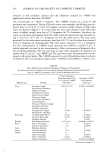
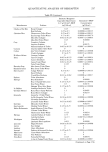
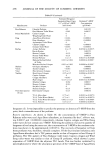
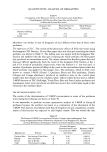
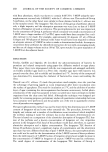
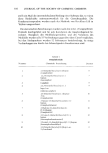
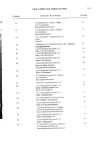
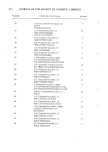
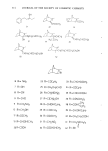
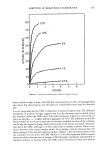
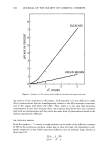
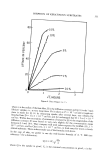
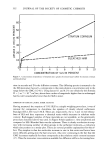
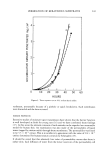
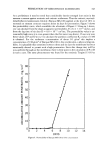
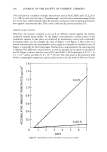
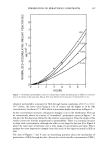
262 JOURNAL OF THE SOCIETY OF COSMETIC CHEMISTS with a known concentration of bergapten, since the test essentially compares the phototoxic effects of 5-MOP fraction of known dilutions of bergamot oil with 5-MOP fraction of bergamot oil present in perfumes. The results are therefore best expressed as 5-MOP content of perfumes but could well be reported as concentration of bergamot oil of known 5-MOP content. Of 108 randomly selected perfumes, 62 (57.4%) contained bergapten in concentra- tions of 0.00004% or more. The significance of the presence of 5-MOP, even in small concentrations in perfumes, and its relationship to hyperpigmentation of the sides of the face and neck have already been demonstrated (1). Photopatch testing carried out on the skin of the midback showed a positive response, consisting of erythema and sub- sequent pigmentation, to a number of perfumes and also to bergamot oil (Coty) in concentrations of 0.25% (0.00068% 5-MOP) in some normal subjects and 0.125% (0.00034% 5-MOP) in some patients with Poikiloderma of Civatte (1). Individual variation in the degree of response to 5-MOP exists and the minimal effective concentration to produce a response is affected by many factors such as the kind of ve- hicle used, the site of phototesting, the hydration of the skin, the repeated applications and irradiations and the degree of natural or sun-induced pigmentation (4). Thus, a safe concentration for each individual cannot always be exactly defined and it is therefore recommended that perfumes free from 5-MOP or those which contain an extremely low concentration (e.g., 0.00008%) be used by patients suffering from Civatte's Poikiloderma and subjects who on photopatch testing are shown to be sensitive to small concentrations of 5-MOP. It is hoped that the cosmetic industry will soon realize the noncosmetic effects of the presence of 5-MOP in natural bergamot oil and that, instead, 5-MOP-free or artificial bergamot oil will be used in perfumes. ACKNOWLEDGEMENTS I wish to thank Dr. W. Frain-Bell and Dr. B. E. Johnson, Department of Dermatology, University of Dundee, for their constant support. I also thank Mr. G. E. Thomas, Mathematics Department, University of Dundee for his assistance in the statistical analysis, and the Photographic Departments at the Ninewells Hospital, Dundee and the American University of Beirut for the illustrations. REFERENCES (1) S. T. Zaynoun, B. E. Johnson and W. Frain-Bell, A study of bergamot oil and its importance as a phototoxic agent. 3--The relationship of bergamot oil in perfumes to hyperpigmentation of the skin (in preparation). (2) S. T. Zaynoun, B. E. Johnson and W. Frain-Bell, A study of oil of bergamot and its importance as a phototoxic agent. 1--Characterization and quantitation of the photoactive component, Brit. J. DermatoL, 96, 475 (1977). (3) F. N. Marzulli and H. I. Maibach, Perfume phototoxicity, J. Soc. Cosmet. Chem., 21,695 (1970). (4) S. T. Zaynoun, B. E. Johnson and W. Frain-Bell, A study of bergamot oil and its importance as a phototoxic agent. 2--Factors which affect the phototoxic reaction induced by bergamot oil and psoralen derivatives, Contact Dermatitis, 3, 225 (1977). (5) F. Daniels, Jr., A simple microbiological method for demonstrating phototoxic compounds, J. Invest. DermatoL, 44, 259 (1965). (6) U. R. Cieri, Characterization of the steam non-volatile residue of bergamot oil and some other essential oils, J. Ass. Offic. Anal Chem., 52,719 (1969).

QUANTITATIVE ANALYSIS OF BERGAPTEN 263 (7) D. W. Owens, J. M. Gligsman, R. G. Freeman and R. Carnes, Biological action spectra of 8-methoxypsoralen determined by monochromatic light. J. Invest. Dermatol., 51,435 (1968). (8) W. L. Fowlks, D. G. Griffith and E. L. Oginsky, Photosensitization of bacteria by furocoumarines and related compounds, Nature, 181, 571 (1958). (9) A. E. Ison and C. M. Davis, Phototoxicity of quinoline methanols and other drugs in mice and yeast, J. Invest. Dermatol., 52,193 (1969). (10) R. Muller and J. C. Mitchell, Psoralen-type phototoxicity of tetramethylthiuram-monosulphide for Candida albicans not for mouse or man, J. Invest. Dermatol., 56, 340 (1971), letter to the editor. (11) F. Kobayashi, Y. Wada and N. Mizuno, Comparative studies on phototoxicity of chemicals, J. Dermatol., 1, 93 (1974).
Purchased for the exclusive use of nofirst nolast (unknown)
From: SCC Media Library & Resource Center (library.scconline.org)