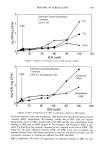
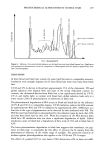
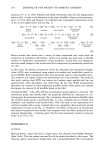
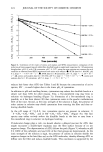
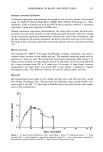
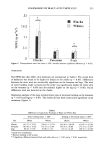
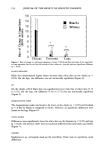
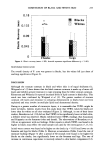
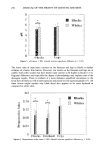
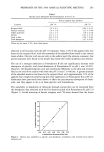
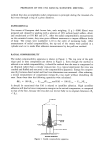
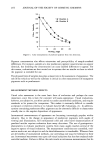
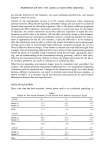
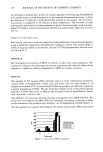
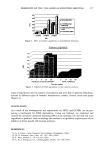
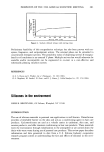
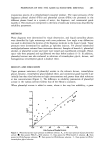
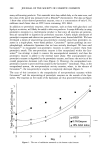
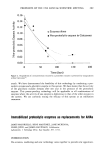
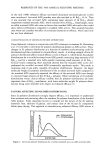
PREPRINTS OF THE 1996 ANNUAL SCIENTIFIC MEETING 289 0.16 16 ' 0.12 o 0.10 0.08 0.06 0.04 0.02 0.00 Enzymes alone Non-proteolytic enzyme in Catezomes 0 50 100 150 200 Time (days) Figure 2. Degradation of a non-proteolytic enzyme by a proteolytic enzyme is prevented by encapsulation within Catezomes attack. We have demonstrated the feasibility of this technology by combining a pro- teolytic enzyme and a glycolytic enzyme in this system. We have shown that the activity of the glycolytic enzyme remains after one year in the presence of the proteolytic enzyme. This patent-pending technology will be applicable to all combinations of enzymes where the activity of one enzyme is deleterious to that of the other enzyme in the system. We are currently testing the efficacy of this system as an exfoliation treatment. Immobilized proteolytic enzymes as replacements for AHAs JAMES MAIORIELLO, RENE MARTINEZ, JANE MCKENNA, CHRIS JUDD, and JAMES HAYWARD, Collaborative Laboratories, 3 Technology Drive, East Setauket, NY 11733. INTRODUCTION On occasion, marketing and new technology come together to provide new opportuni-

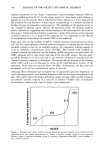
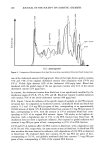
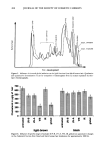
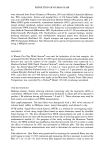
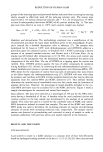
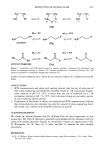
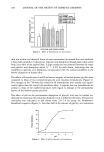
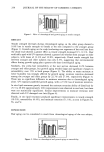
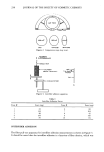
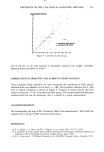
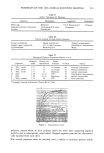
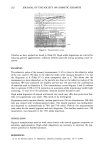
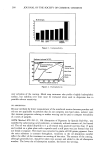
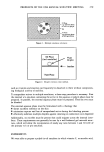
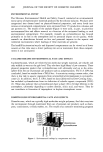
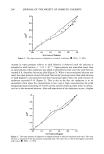
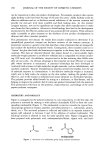
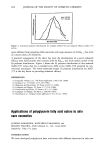
290 JOURNAL OF THE SOCIETY OF COSMETIC CHEMISTS ties for innovation in skin care product development. For example, products that contain alpha hydroxy acids have been the rage of the past four years. Alpha hydroxy acids are effective exfoliants and act to facilitate natural exfoliation of the stratum corneum and provide the end-user with more youthful and fresh looking skin. As this product category matures, new active ingredients are sought that allow manufacturers to make new claims for their products. Advances in biotechnology have lead to the development of processes for the efficient production of non-animal-derived enzymes. These advances make it possible to place enzymes on the forefront of new product developments in skincare and other consumer products. This presentation will discuss the results from studies conducted to determine if an immobilized proteolytic enzyme can facilitate turnover of the stratum corneum. A proteolytic enzyme is a generic term that describes a class of proteins that are nonspecific and catalyze the hydrolysis of peptide bonds. Consequently, these enzymes could act to "loosen" the glue that holds the keratinocytes together in the horny layer of the stratum corneum. The data we obtained showed that papain bound to a water-soluble high- molecular-weight polymer is an effective exfoliant and is comparable to lotions contain- ing 10% lactic acid. As exfoliants, enzymes tend to be less irritating than AHAs since they are not acidic. An obvious advantage is that enzymes are most effective at neutral pHs where irritation is minimized. A patented technology has been developed to covalently link enzymes to high-molecular-weight materials, such as carbohydrates, and synthetic polymers. Enzyme immobilization provides several key benefits over the use of unbound enzymes in a formulation: 1) the effective molecular weight is increased, which acts to help retain the enzyme on the skin surface, making the product more effective, and 2) the enzyme is stabilized and cannot denature in a formulated product. The polymer provides added benefit by acting as a thickener, or film-former, and by helping to improve the aesthetic feel of a skin care product formulated with the material. This presentation will focus on the synthesis, characterization, and biology of the novel papain-polymer conjugates. CHEMISTRY AND BIOLOGY Papain is conjugated to the polymer substrate in a two step process. In the first step, the polymer is activated by treating it with carbonyl diimidazole (CDI) to form the corre- sponding imidazolide (Figure 1). The imidazolide is reactive towards the typical func- tional groups present in enzyme, peptides, and other proteins (i.e., carboxylate, amines, thioIs, etc.). The activated polymer is collected and added to an aqueous solution of papain (pH adjusted to between 9 and 10 by addition of sodium hydroxide). The resulting mixture is allowed to react for some specified time. Papain conjugates have been prepared with polyacrylic acid, carboxymethylcellulose, alginic acid, and hyal- O o R•011 CDI.• Irnidazolide Figure 1. Activation of a carboxylate group using carbonyl diimidazole.
Purchased for the exclusive use of nofirst nolast (unknown)
From: SCC Media Library & Resource Center (library.scconline.org)