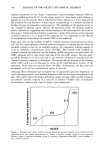
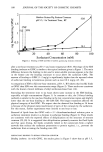
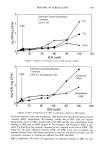
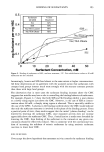
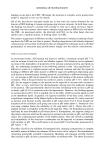
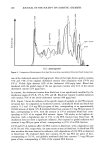
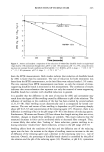
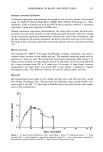
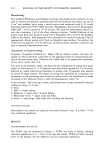
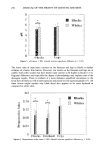
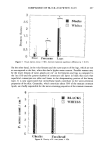
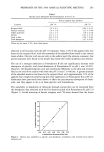
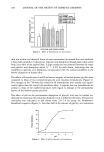
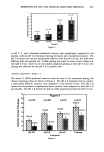
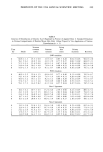
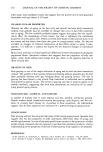
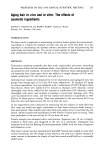
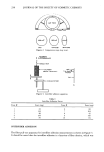
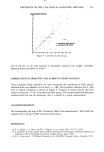
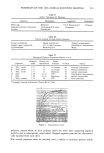
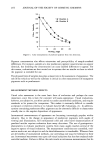
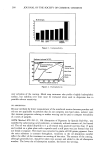
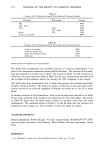
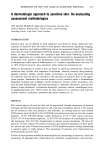
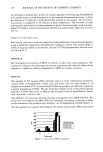
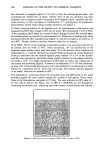
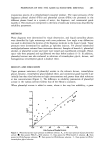
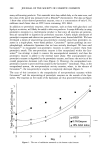
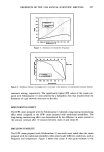
PREPRINTS OF THE 1996 ANNUAL SCIENTIFIC MEETING 243 Table I Glycolic Acid Absorption From Formulation A (5% G.A.) Percent applied dose absorbed Location pH 3.0 pH 7.0 Receptor fluid 2.6 + 0.7 0.82 + 0.31 Stratum corneum 5.8 -+ 2.8 1.22 + 0.40 Viable epidermis 6.6 -+ 2.5 0.8 + 0.28 Dermis 12.2 + 1.4 0.63 + 0.16 Total in skin 24.6 + 4.0 2.64 -+ 0.64 Total absorption 27.2 -+ 3.3 3.47 -+ 0.93 Values are the mean - S.E. from three donors. observed in all locations with the pH 3.0 emulsion. Only 2.6% of the applied dose was found in the receptor fluid, with the remainder of the absorbed dose found in the various layers of skin. Glycolic acid was not only in the surface layer (the stratum corneum), but greater amounts were found in the deeper skin layers (the viable epidermis and dermis). The use of a stronger surfactant in Formulation B did not significantly increase total absorption of glycolic acid (total absorption of Formulation B at pH 3 was 34.8%). However, the absorbed glycolic acid was distributed differently in the skin and receptor fluid at the end of the studies with both the pH 3.0 and 7.0 vehicles. A greater amount of the absorbed material was found in the receptor fluid, with approximately 12% of the applied dose completely penetrating skin after application in Formulation B at pH 3.0. Surfactants have previously been shown to affect the percutaneous absorption of chem- icals, and they appear to do so in these glycolic acid formulations. The variability in absorption of chemicals through normal skin can be examined from the absorption data obtained with the five donors studied with Formulation B, pH 3.0 (Figure 1). Initial screening of barrier integrity with 3H-water showed that the donor SO u 40 o o • 3o 20 0.0S ß i i ! ! i 0.10 0.1S 0.20 0 25 0.30 0.3S S TrJtJitcd Water Pentuition (20 min. Test) Figure 1. Human skin variability in glycolic acid absorption: Correlation with tritiated water barrier integrity test.

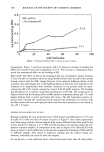
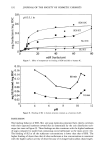
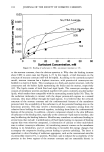
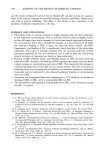
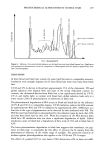
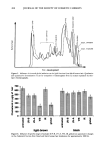
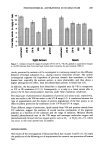
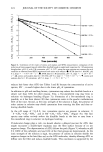
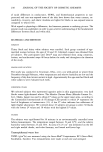
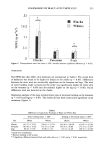
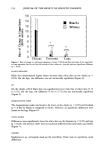
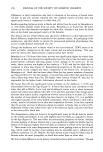
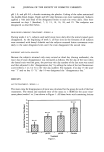
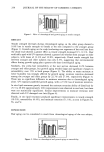
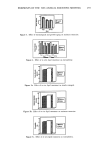
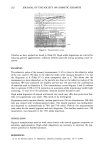
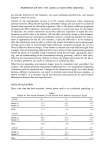
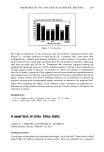
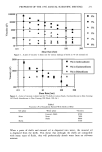
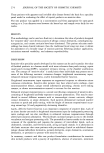
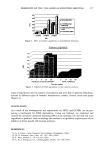
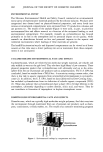
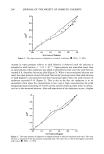
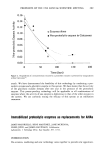
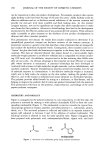
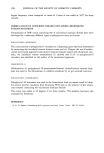
244 JOURNAL OF THE SOCIETY OF COSMETIC CHEMISTS 1.2 K 1.0 vz 0.8 0 u • o.6 -,I • 0ø4 uJ fi 0.:2 0.0 • Control • FORM A (pH3) / • ALOE EXFOLIAN]' • PONDS AGE DEF.Y • FORM A (pH [I-T-TI FORM B (pH 3) GLYCOLIC ACID FORMULATIONS Figure 2. Effect of formulations on skin barrier. skin was within our historical limits of water permeation for normal skin and exhibited a three-fold variability in absorption. Glycolic acid absorption through donor skin varied from 24 to 44% of the applied dose. A high correlation was observed between the water and glycolic acid absorption values (r 2 = 0.92) for each donor, indicating that the variability in glycolic acid absorption was associated with the normal variability in the barrier properties of human skin. The effects of Formulations A and B on barrier integrity of hairless guinea pig skin were compared to those of two commercial glycolic acid emulsion formulations (Figure 2). The averages of the 3H-water Kp values for all formulations were similar and signifi- cantly higher than the control (no emulsion) value. It appears that our formulations are similar to those of the marketed products with regard to damage to the permeability barrier of the hairless guinea pig skin. The effect of pH on the percutaneous absorption of glycolic acid may be further un- derstood by examining the ionization of glycolic acid at different pH values. The percent ionization was calculated at pH values from 2.0-7.0 by using the Henderson- Hasselbach equation (Figure 3). Less than half of the amount of glycolic acid unionized lOO 80 l0 40 20 i 0 2
Purchased for the exclusive use of nofirst nolast (unknown)
From: SCC Media Library & Resource Center (library.scconline.org)