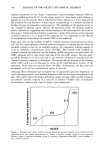
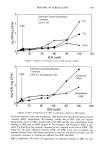
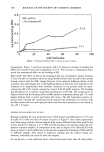
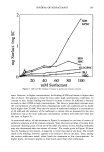
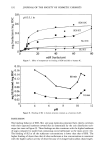
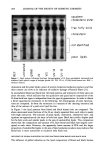
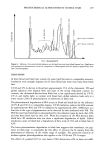
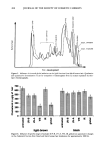
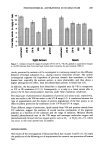
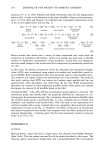
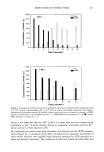
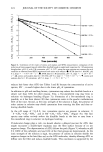
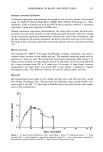
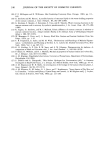
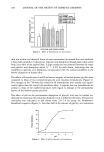
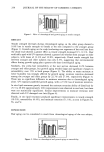
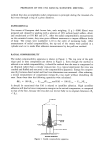
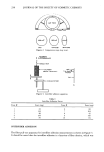
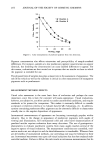
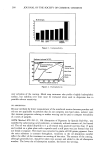
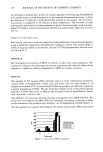
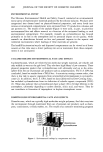
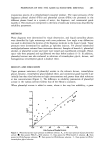
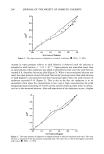
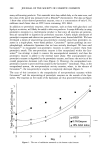
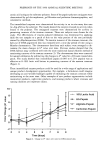
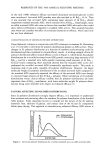
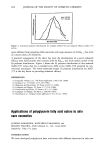
PREPRINTS OF THE 1996 ANNUAL SCIENTIFIC MEETING 263 (2) Personal communication with John Mazzaca Corporation, August 29, 1996. (3) Tayca Corporation, Micro Titanium Dioxide, product brochure. (4) Titan Kogyo, Ultrafine Titanium Dioxide, product brochure. (5) Sumitomo Osaka Cement Co., Ltd., Ultrafine Zinc Oxide, product brochure. (6) S. Monte, Ken-React Refirences Manual, 2 (1993). Measurement of the appearance of pearlescent effect systems JAMES B. CARROLL, JR., Engelhard Corporation. INTRODUCTION Instrumental measurements of the color and appearance of both pigments and products incorporating them are becoming more important as manufacturers strive to control raw material and final product quality. Pearlescent pigments, due to their unique optical properties, pose special problems to color evaluators in their effort to characterize and quantify pearlescent pigments, cosmetics, and packaging materials. The complexity of measuring pearlescent systems is further complicated by the variety of applications in which they are used, the diverse nature of the measurement apparatus, and its impact on the measurement results and the varying importance of the different color attributes. SAMPLE EFFECTS The evaluation of appearance can take many forms, both visual and instrumental. Each method can be applied to any sample, packaged or applied cosmetic products, and molded plastic items, or can be exemplary, existing not as a final product but rather as a surrogate form of the sample to demonstrate compliance to a specification in a simplified system such as a drawdown, stepchip, loose powder, etc. General require- ments exist for each sample type in order to make useful measurements of color. Understanding and meeting these requirements in a reproducible manner is a necessity for useful color measurements. Due to the fact that materials incorporating pearlescent pigments exhibit goniochro- maticity, obtaining useful appearance information goes beyond merely controlling com- position. The sample area being examined must be flat so as to present a fixed and defined angle of illumination and viewing. Sample production and application must also be controlled, especially factors that can alter pigment platelet orientation causing changes in color intensity and hue as well as color travel and flop. These effects are especially prevalent in package systems due to flow orientation (Figure 1 below), as well as in paste and pressed cosmetics. Failure to achieve these goals can result in ill-defined measurement conditions leading to non-reproducible or misleading measurements.

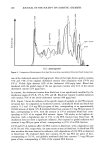
264 JOURNAL OF THE SOCIETY OF COSMETIC CHEMISTS 70 60 50 e 40 • 30 r• 20 10 --•,- Direction A []- Direction B 0 I I • I 0 10 20 30 40 Viewing Angle Figure 1. Color measurements of pearlized polymer from two directions. Pigment concentration also affects orientation and perceptibility of sample-standard differences. For instance, samples at a low pearlescent pigment concentration can appear identical, but doubling the concentration can cause marked differences to appear. For this reason, evaluations are best carried out in systems that are similar to those in which the pigment is intended for use. The physical form of samples also plays a major role in the assessment of appearance. The role of the vehicle as well as the substrate is critical in color measurements of transparent pigments such as pearlescence. MEASUREMENT METHOD EFFECTS Visual color assessment is the most basic form of evaluation and perhaps the most important, since this is how the customer will assess appearance. Visual evaluations, however, are subjective, are often carried out under uncontrolled conditions, and require standards to be present for comparison. This makes it extremely difficult to transfer acceptance or rejection criteria or to evaluate data for QC evaluations, etc. In addition, systems containingpearlescent effect pigments can be extremely difficult to characterize visually due to the angular dependence of appearance. Instrumental measurements of appearance are becoming increasingly popular within industry. Due to the change in appearance of pearlescent pigments with angles of viewing and illumination, full instrumental color and color travel characterization of pearlized articles requires evaluation from many directions. The use of goniospectro- photometers to evaluate pearlescent systems from many angles resolves several of the negative aspects of visual evaluation. The measurement conditions are controlled, eval- uation results are not subjective and the data/information is transferable. Whereas these are all benefits of instrumental methods, one overriding rule must be followed in their use: Instrumental measurements must agree with visual evaluations that have been conducted under controlled conditions. Failure to follow this rule results in extraneous measurements that do
Purchased for the exclusive use of nofirst nolast (unknown)
From: SCC Media Library & Resource Center (library.scconline.org)