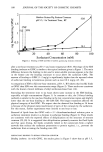
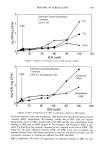
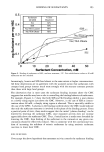
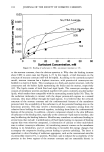
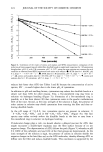
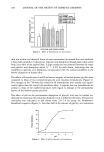
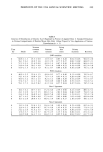
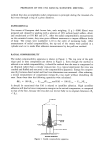
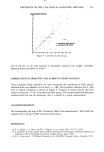
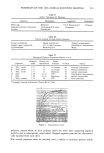
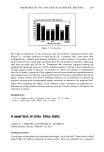
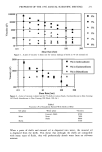
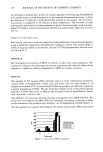
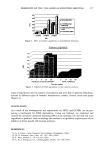
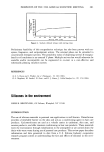
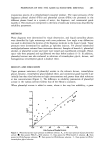
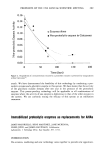
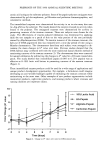
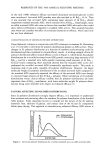
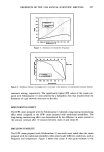
PREPRINTS OF THE 1996 ANNUAL SCIENTIFIC MEETING 281 Figure 4. Sodium chloride release with stirring time. Preliminary feasibility of this encapsulation technique has also been proven with en- zymes, fragrances, and antiperspirant actives. The external phase can be extended to concentrated detergent systems. The possibility exists of dispersing several X-encapsu- lated-in-oil emulsions in an external Y phase. Multiple actives that would otherwise be unstable and/or incompatible can be engineered to co-exist in a cost-effective and esthetically pleasing emulsion system. REFERENCES (1) S.S. Davis and I. Walker, Int. J. Pharmaceut., 17, 203 (1983). (2) S. Magdassi, M. Frenkel, N. Garti, and R. J. Kasan, J. Colloid Interface Sci., 97, 374 (1984). Silicones in the environment GENE R. BROWNING, GE Silicones, Waterford, NY 12188. INTRODUCTION The use of silicone materials in personal care applications is well known. Dimethicone provides a breathable barrier on the skin and acts as a conditioning agent in hair care products. Cyclomethicones are used as a volatile carrier in underarm, skin care, and suncare products, and offer transient conditioning in hair care products. These materials enter the environment through volatilization to the atmosphere or are carried down the drain with waste water during use of personal care products. This review paper describes information and data generated to date from a U.S. Silicone Industry cooperative research program aimed at understanding the fate and effects of silicones in the envi- ronment.

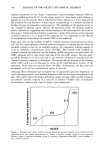
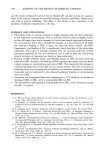
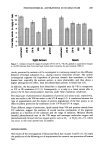
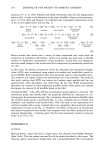
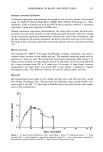
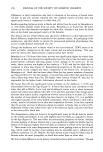
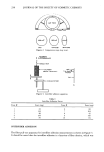
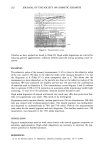
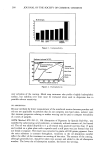
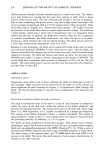
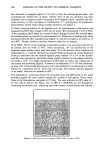
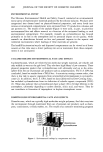
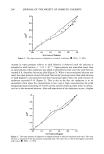
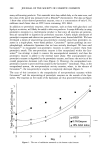
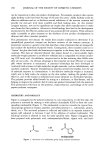
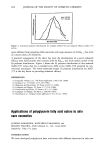
282 JOURNAL OF THE SOCIETY OF COSMETIC CHEMISTS ENVIRONMENTAL ENTRY The Silicones Environmental Health and Safety Council conducted an environmental entry survey of representative materials produced by the silicone industry. Products were categorized into classes based on physical/chemical properties, and entry levels into various environmental compartments were estimated from '93 production volumes and use patterns (1). The results of the analysis (Figure 1) were used, in part, to prioritize environmental fate and effects research as a function of the estimated loading to each environmental compartment. For example, research on cyclomethicone has focused primarily on its fate in the atmosphere and its potential impact on air quality, while research on dimethicone focused on fate and potential impacts in the aquatic and terrestrial environments where loadings of these materials are greatest. The landfill/incineration/recycle and dispersed compartments can be viewed as of lower concern at this time since a direct pathway into air or wastewater from these compart- ments is not anticipated. CYCLOMETHICONE ENVIRONMENTAL FATE AND EFFECTS Cyclomethicones, which are relatively low-molecular-weight materials, are volatile and only soluble in water at the ppb level. They also have high Henry's Law constants. These physical properties predict that cyclomethicones will ultimately end up in the atmo- sphere from the use of personal care products such as antiperspirants. The U.S. EPA has concluded, based on results from a TSCA Sect. 4 ecotoxicity testing consent order, that there is low risk to aquatic organisms from octamethylcyclotetrasiloxane (a cyclomethi- cone) (2). In addition, the U.S. EPA, based on data submitted by Dow Corning Corp., has excluded cyclomethicone from its definition of volatile organic compounds (VOC) (3). These data indicate that cyclomethicones have a short (10 to 30 day) lifetime in the atmosphere, ultimately degrading to carbon dioxide, silicic acid, and water. They do not contribute to formation of tropospheric or deplete stratospheric ozone. DIMETHICONE ENVIRONMENTAL FATE AND EFFECTS Dimethicones, which are typically high-molecular-weight polymers, find their way into the environment through wastewater from use of personal care products such as sham- poos, conditioners, or body washes, etc. The results of an extensive monitoring program 25.00 20.00 g o 15.oo • 10.00 • 5.00 Dimethicones 0.00 C-'yclon'•thicones Figure 1. Environmental loadings by compartment and class.
Purchased for the exclusive use of nofirst nolast (unknown)
From: SCC Media Library & Resource Center (library.scconline.org)