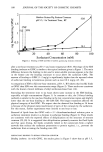
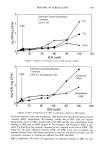
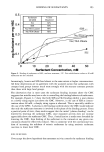
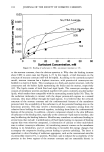
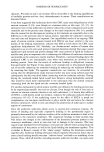
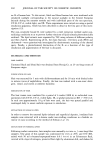
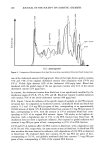
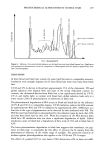
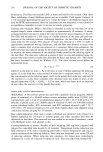
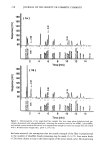
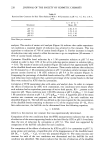
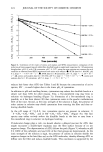
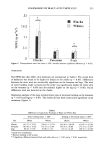
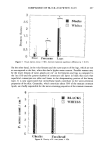
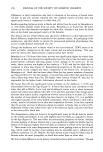
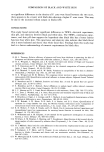
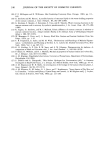
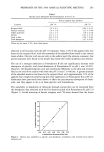
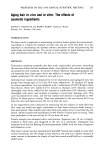
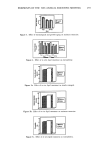
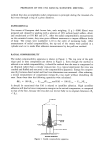
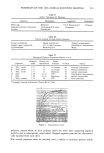
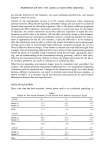
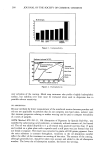
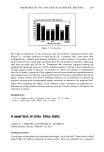
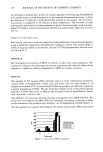
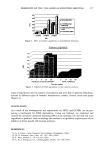
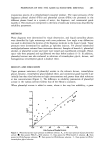
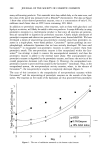
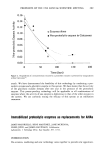
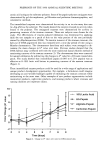
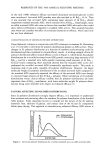
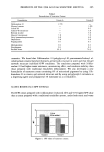
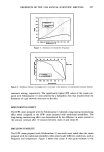
BINDING OF SURFACTANTS 193 0.5 -,- 0.4 0.3 0.2 0 Surfactant % Zein (40 mM) Dissolved SL! 62% SDS 80% Na/TEA Laurate 86% Na/TEA Oleate 92% SDS Na/TEA Laurate Na/TEA Oleate SLI 0 10 20 30 40 50 Surfactant Concentration, mM Figure 9. Binding of surfactants to HSC, one-hour treatment, 37C. Zein solubilization values at 40 mM surfactants are also included. Interestingly, laurate and SDS bind almost to the same extent at higher concentrations. All these observations are in agreement with the accepted notion that surfactants with compact head groups interact much more strongly with the stratum corneum proteins than those with large head groups. The observation that in most cases the surfactant binding increases above the CMC suggests that micelies may have a role in controlling the binding behavior of surfactants. For example, Figures 2-7 show that both SDS and SLI binding exhibit a near plateau or a slowly rising region just above the CMC. However, in the case of SDS at concen- trations above 60 mM, a sharply rising region is observed. This is especially visible in the case of the GPSC. A plateau in the binding isotherm above the CMC would indicate that only the surfactant monomer is involved in this phase of the binding process. From a practical point of view, these results suggest that the initial "plateau binding" can be lowered by lowering the surfactant CMC, since monomer activity does not increase appreciably above the surfactant CMC. Thus, if micellization is made more favorable by lowering the CMC, then binding of the surfactant to the corneum at any given con- centration should be effectively reduced. This is consistent with the conventional wis- dom of increasing the mildness of anionic surfactants by using nonionic surfactant coactives to lower their CMC. ROLE OF MICELLES If we accept the above hypothesis that monomer activity controls the surfactant binding

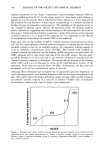
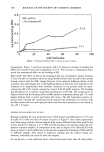
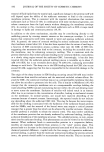
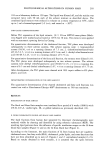
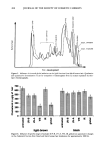
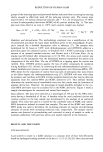
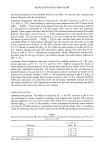
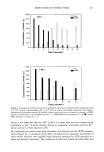
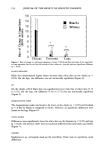
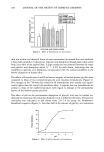
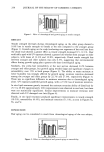
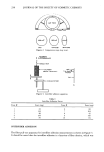
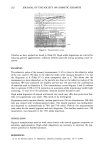
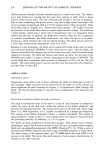
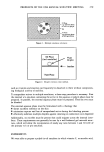
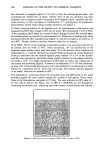
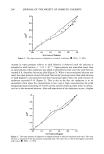
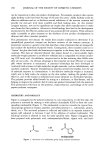
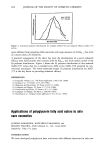
194 JOURNAL OF THE SOCIETY OF COSMETIC CHEMISTS 0.03 f Na/TEA 0.025 0.02- pte o.o15 , O.Ol 0.005 o o lO 20 30 40 50 60 Surfactant Concentration, mra Figure 10. Binding of surfactants to HSC, one-minute treatment at 37C. to the stratum corneum, then the obvious question is: Why does the binding increase above CMC in some cases (see Figures 2-7)? In this regard, a brief discussion on the structure of stratum corneum itself will be helpful. According to the currently accepted model, stratum corneum has a biphasic structure, with protein-rich corneocytes em- bedded in a matrix of lipids. This is analogous to a brick-and-mortar structure, with the corneocytes and the barrier lipids representing the bricks and the mortar, respectively (32). The lipids consist of both fluid and rigid lipids. The corneocyte envelope also consists of membrane proteins and lipids together with some covalently attached surface lipids, which makes them compatible with the surrounding matrix lipids (30). Thus, for the surfactant molecules to interact with the deeper protein-rich regions in a normal corneum, they must diffuse through the lipid regions. It is believed that the network structure of the stratum corneum and the conformational features of the membrane proteins limit the accessibility of the surfactant to all the potential binding sites on the keratinous proteins. This may involve a thermodynamic component arising from the cohesive forces holding the network together, including those from the conformational features of the proteins. In addition, a kinetic component related to the slow diffusion of surfactant to the binding sites, especially at the corneocyte-lipid matrix interface, also may be affecting the binding behavior. Micelies may contribute to surfactant binding in several ways that include: i) solubilization of fluid lipids leading to exposure of binding regions that were otherwise unexposed, ii) abstraction of calcium or other multivalent ions to reduce corneocyte adhesions, iii) introducing osmotic stresses on the membrane leading to its breakdown, and iv) contributing to favorable free-energy changes that accompany the cooperative binding process leading to protein unfolding. The latter is equivalent to direct binding of surfactant aggregates, such as the conventional micelies or premicellar clusters (33), to proteins. Processes i and ii enhance the accessibility of the proteins in the lower regions of the stratum corneum and are essentially kinetic in
Purchased for the exclusive use of nofirst nolast (unknown)
From: SCC Media Library & Resource Center (library.scconline.org)