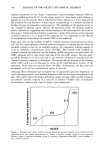
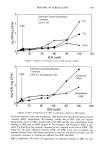
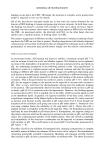
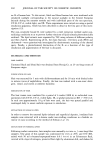
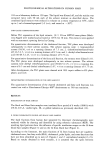
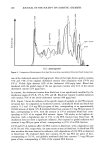
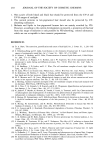
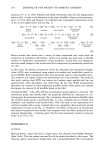
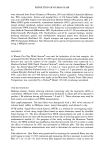
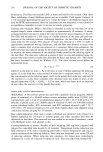
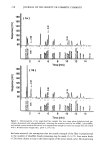
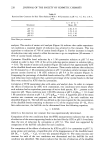
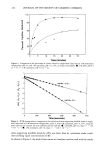
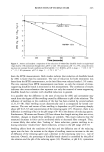
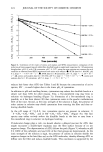
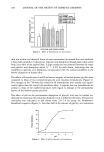
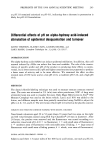
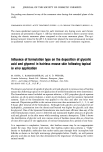
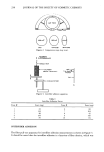
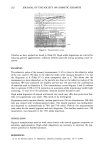
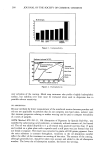
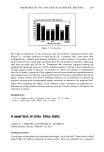
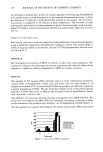
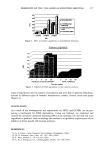
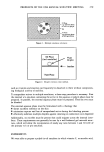
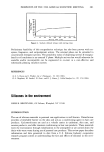
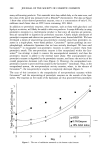
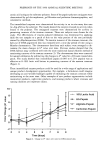
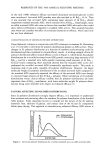
224 JOURNAL OF THE SOCIETY OF COSMETIC CHEMISTS Z -7 Half-life = 394 s Half-life = 210 s Half-life = 123 s Half-life = 93 s I I I 0 200 400 600 800 1000 Time (seconds) Figure 6. Correlation of the results of amino acid analysis and SFTK measurements: comparison of the reduction of stress-supporting and whole-fiber disulfide bonds in single-head virgin hair by 1 M ammonium thioglycolate, pH 9.4, with 1 M cysteamine, pH 7.6, 23øC, using the mean reaction rate constant for each condition as obtained from SFTK experiments and amino acid analysis. O, SFTK data for 1 M ATG, pH 9.4, slope = -7.44 X 10 -3 s- • I, SFTK data for 1 M cysteamine, pH 7.6, slope = - 3.29 X 10 -3 s-• &, amino acid analysis data for 1 M ATG, pH 9.4, slope = -5.65 X 10 -3 s-• •', amino acid analysis data for 1 M cysteamine, pH 7.6, slope = - 1.79 X 10 -3 s-• reduces hair faster than ATG (see Tables I and II) because the concentration of active species, RS-, is much higher due to the lower pK a of cysteamine. In addition to pH and swelling factors, cysteamine may reduce the disulfide bonds at a slower rate than ATG for other reasons. First, a five-membered ring may form in solution via hydrogen bonding (Figure 7a). Formation of a five-membered ring is possible, as it has been shown (40) that cysteamine exists in the gauche conformation 66% of the time. Second, as the ionic strength of the solution is high, the presence of other cations in solution may shield cysteamine from entering the fiber and thus re- ducing disulfide bonds. In the pH range of 7.0-8.0, two cysteamine species are present in solution: 1) - S - CH 2 - CH2 - NH 3 + and 2) HS- CH• - CH• - NH 3 + (Figure 7b). The first species may either actively reduce the disulfide bonds in the hair or may form a five-membered ring in solution via hydrogen bonding. If molecular charge plays a role, we should observe a delayed reaction for ATG that might encounter a double-layer repulsion near the fiber surface because of its net negative charge. The deprotonation of ATG follows the path (Figure 7c) whereby at pH 9.4 100% of the carboxylic acid and 10% of the thiol groups are deprotonated. As the ionic strength of the solution is high, the presence of cations in solution shields the negative charges in the hair fiber and on the ATG molecules, thereby allowing ATG to diffuse into the fiber and reduce disulfide bonds. This conclusion is supported by the

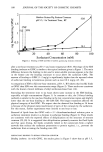
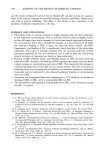
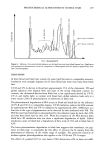
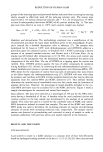
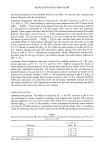
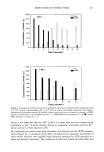
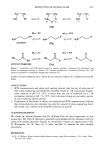
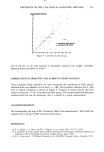
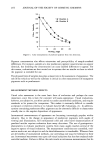
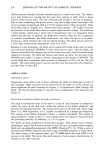
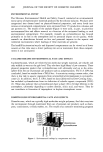
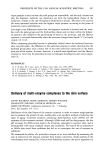
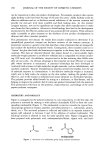
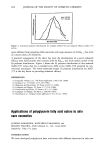
REDUCTION OF HUMAN HAIR 225 pKa• = 8.6 (7a) cysteamine (7b) H3N S- + pKa2 = 10.75 S- '- u •,•• S- O pKal = 3.7 O pKal = 10.4 HS'.PLOH _ -- HS'./LO_ _ ammonium thioglycolate (7C) _ Figure 7. Cysteamine and ATG species present in aqueous solutions: cysteamine five-membered ring formed via hydrogen bonding in solution (7a), chemical equilibria for cysteamine solutions (7b), and chemical equilibria for ammonium thioglycolate solutions (7c). results of stress-relaxation data, which do not present evidence of a delayed reaction for ATG. CONCLUSIONS 1. SFTK measurements and amino acid analysis indicate that the rate of reduction of both stress-supporting and whole-fiber disulfide bonds by 1 M ammonium thiogly- colate solution at pH 9.4, 23øC, is faster than the rate of reduction by a 1 M cysteamine solution at pH 7.6, 23øC, both solutions having an equivalent percent of active-reducing species present. 2. Comparison of the results of amino acid analysis and SFTK measurements indicate that stress-relaxation data represent not only the removal of stress-supporting disul- fide bonds, but correlate with disulfide reduction in general. ACKNOWLEDGMENTS We thank Dr. Robert Hammer and Dr. William Daly for their suggestions on this manuscript. Mr. Patrick Hanavan is gratefully acknowledged for his assistance with the amino acid analysis procedure. Finally, we would like to express our appreciation to Dr. D. Weigmann, Dr. M. Tate, Dr. L. Salce, and Mr. A. Savaides for their valuable discussions. REFERENCES (1) R. R. Wickett, Kinetic studies of hair reduction using a single fiber technique, J. Soc. Cosmet. Chem., 34, 301-316 (1983).
Purchased for the exclusive use of nofirst nolast (unknown)
From: SCC Media Library & Resource Center (library.scconline.org)