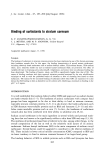
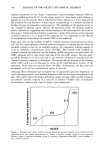
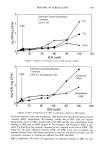
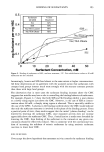
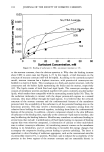
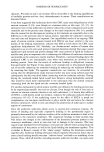
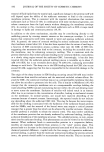
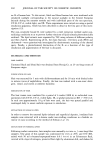
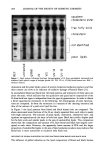
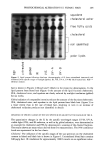
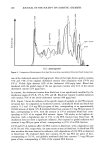
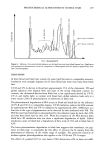
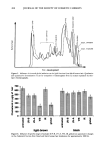
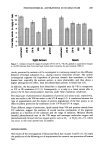
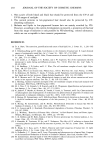
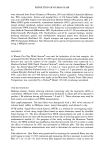
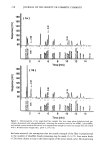
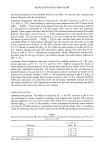
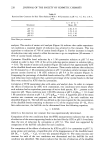
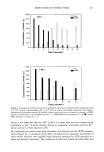
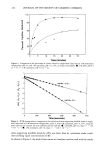
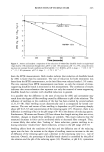
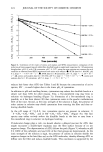
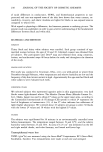
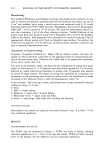
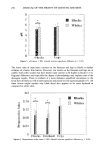
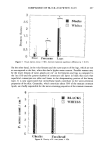
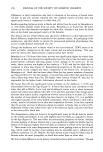
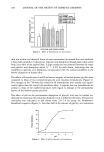
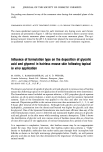
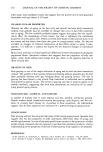
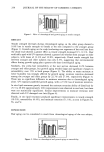
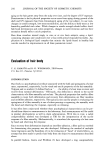
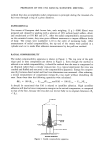
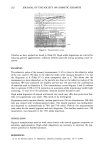
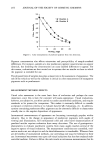
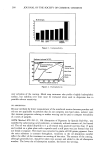
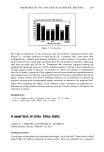
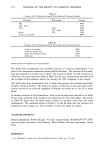
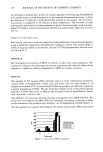
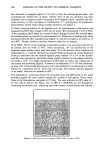
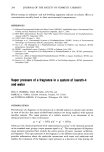
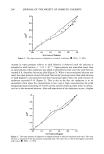
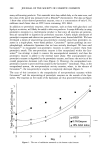
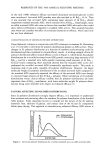
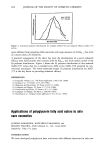
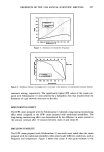
218 JOURNAL OF THE SOCIETY OF COSMETIC CHEMISTS 1 180 160 140 120 IO0 8O 6O o o •'•1 II ß ¾1 I II II II I I nil ! I I • =zoz _z• - _ (lb) Time [min] I I II II 8O 6O 4O 2O oo[ 80 60 II I I II I I I 2 4 6 8 10 12 14 Time [min] Figure 1. Chromatograms of two single-head hair samples that were vapor phase hydrolyzed and pre- column derivatized with ortho-phthaldehyde, indicating the retention times for the SCMC, cystine-MPA, and residual cystine isoindole derivatives in an untreated hair sample (la) and a hair sample that was treated with 1 M ammonium thioglycolate, pH 9.4, 23øC (lb). has been removed, the assumption that the tensile strength of the fiber is proportional to the number of disulfide bonds remaining may be made (1-3,21). Low strain levels (2%) were chosen to stay in the linear region of the stress-strain curve. By monitoring

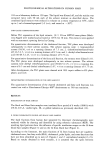
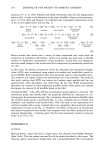
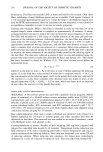
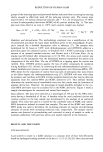
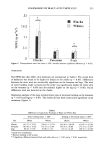
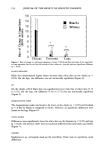
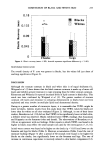
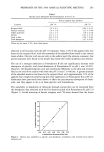
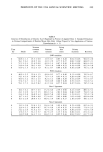
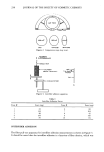
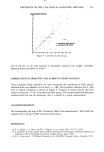
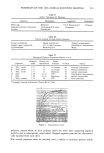
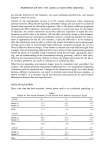
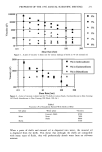
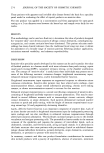
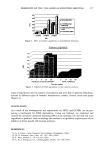
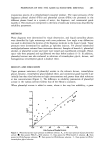
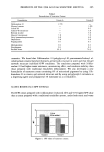
REDUCTION OF HUMAN HAIR 219 the stress-relaxation of the disulfide bonds in the fiber, the reaction rate constant and kinetic behavior may be determined. Ammonium thioglycolate. The effects of reduction by 1M ATG solutions at pH 8.0, 9.0, 9.4, and 9.5, 23øC, were studied by collecting stress-relaxation data (26). Graphs of the ln[(F t - Ff)/(F o - Ff)] vs time were prepared from data that was continuously collected for 20 minutes (a minimum of 120 data points were used to create the logarithm graphs). These graphs indicated that all four ATG solutions exhibited pseudo first-order kinetics. The results of an F-test (p = 0.05) confirmed fit to the pseudo first-order kinetic model. The reaction rate constant, k, for each condition was determined from the slopes of plots of In [(F t - Ff)/(F o - Ff)] vs time, and the mean value for each was calculated (Table I). Data analysis indicated that the reaction rate increased as the pH of the solution was increased. A 1M ATG solution reduces hair more rapidly at pH 9.4-9.5 (which is nearest the pKsi_ x of 10.4) than the same solution at either pH 9.0 or 8.0. Sodium thioglycolate has been observed to exhibit pseudo first-order kinetic be- havior at pHs 10 (1). Ammonium thioglycolate, which differs from sodium thio- glycolate only by the type of cation, also exhibits pseudo first-order kinetic behavior at pHs 10. Cysteamine. Stress-relaxation data were collected for disulfide reduction by 1 M cyste- amine solutions at pH 7.0, 7.6, 8.0, and 8.5, 23øC. Table II contains the results of stress-relaxation measurements fit to the pseudo first-order kinetic model. The fit for the model was confirmed statistically. The results indicated that the rate of reduction of disulfide bonds in human hair by a 1 M cysteamine solution increased as the pH of the solution was increased. Similar to ATG, a 1 M cysteamine solution at pH 8.5 (pKsi_x of 8.6) reduces hair more rapidly than the same solution at pH 7.0-8.0. This pH trend for ATG and cysteamine is in agreement with the previously established concept (21) that the redox potentials of thiol compounds increase with pH and that increasing the pH of the solution also affects the reaction rate constant. AMINO ACID ANALYSIS Ammonium thioglycolate. The effects of reduction by a 1 M ATG solution at pH 9.4 on the percentage of cystine cleaved at increasing time lengths were studied. The solution pH was adjusted to 9.4 in order to have 10% of the active reducing species present in solution (pKsi_ x = 10.4). In this manner, a direct comparison of percent cystine reduced over time by a ATG solution vs a cysteamine solution could be made. Also, a correlation could be determined between kinetic data from the SFTK measurements and amino acid Table I Reaction Rate Constants for Hair Fibers Reduced With 1 M Ammonium Thioglycolate at pH 8.0, 9.0, 9.4, or 9.5, 23øC Treatment k x 103 (s- l) Mean, SD pH 8.0 1.52, 0.35 pH 9.0 4.57, 1.59 pH 9.4 7.44, 1.26 pH 9.5 6.29, 0.46 Nine fibers per treatment.
Purchased for the exclusive use of nofirst nolast (unknown)
From: SCC Media Library & Resource Center (library.scconline.org)