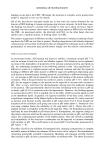
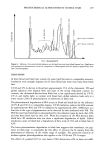
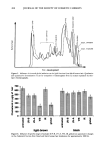
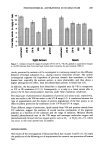
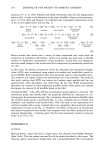
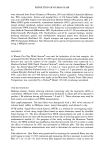
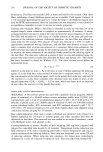
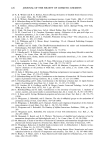
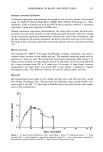
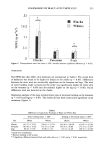
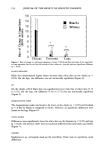
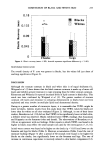
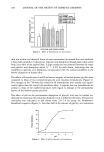
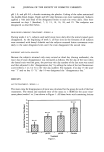
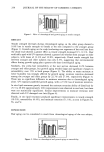
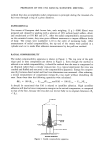
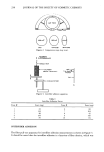
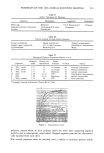
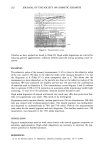
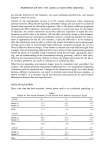
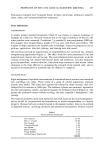
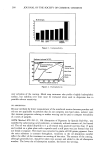
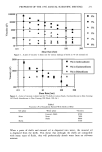
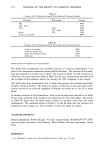
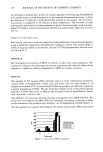
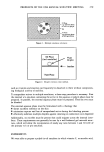
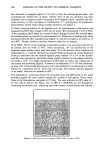
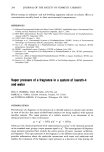
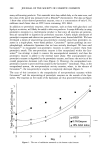
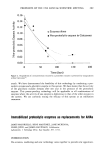
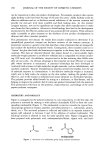
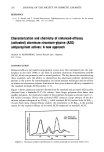
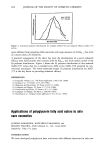
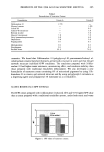
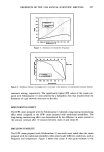
258 JOURNAL OF THE SOCIETY OF COSMETIC CHEMISTS I•ihol 1.5 mm (CHO) •0 mm (CHDI Figure 2. Compression rings (top view). RECORDING ELECTROBALANCE ,,-'-- SINGLE HAIR (40mm ß I•mm ChQ ! II I I Figure 3. Interfiber adhesion apparatus. Table I Interfiber Adhesion Forces Tress # Force (mg) Tress # Force (mg) 1 64 6 68 2 144 7 104 3 86 8 42 4 194 9 149 5 85 10 84 INTERFIBER ADHESION The fiber pull-out apparatus for interfiber adhesion measurements is shown in Figure 3. It should be noted that the interfiber adhesion is a function of fiber density, which was

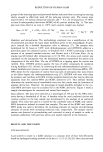
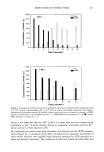
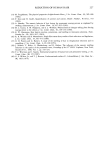
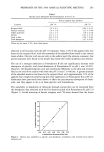
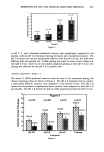
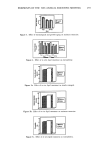
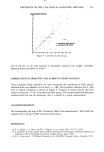
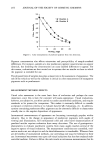
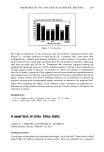
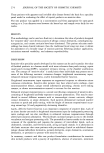
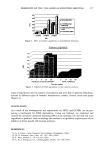
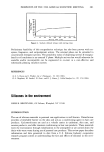
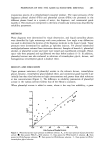
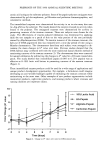
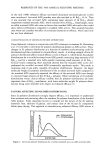
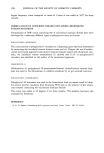
PREPRINTS OF THE 1996 ANNUAL SCIENTIFIC MEETING 259 ACTUAL BODY RATING , o i Figure 4. Correlation of body ratings. 0.25-0.29 g/cc in all cases because of reasonably constant tress weight. Interfiber adhesion forces are shown in Table I. CORRELATION OF OBJECTIVE AND SUBJECTIVE BODY RATINGS Using multiple linear regression we have attempted the correlation of body ratings obtained from two different sets of data, i.e., AE 2 and interfiber adhesion and E• and FAI. A typical correlation is shown in Figure 4. Analysis of variance shows that this model accounts for --61% of the observed body rating. The second correlation also gives similar results but has the advantage that it is based on a single measurement. ACKNOWLEDGMENTS We acknowledge the help of Ms. Hennelore Mark with measurements. This work was supported by a group of TRI Corporate participants. REFERENCES (1) P.S. Hough, J. E. Huey, and W. S. Tolgyesi, J. Soc. Cosine. Chem., 27, 571 (1976). (2) S. Kawabata, R. Postle, and M. Niwa in Objective Specification of Fabric Quality, Mechanical Properties and Performance, (The Textile Machinery Society of Japan, Kyoto, Japan, 1982). (3) M. L. Garcia and L. J. Wolfram, Presented at the 10th IFSCC Congress, Sidney, Australia, 1978.
Purchased for the exclusive use of nofirst nolast (unknown)
From: SCC Media Library & Resource Center (library.scconline.org)