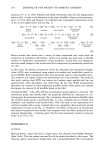
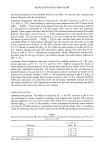
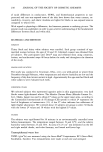
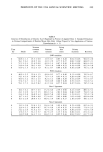
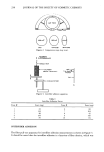
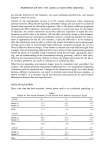
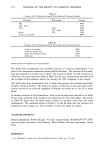
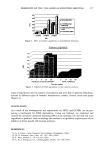
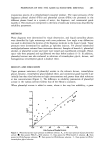
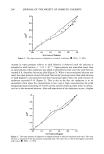
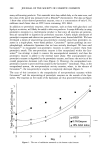
272 JOURNAL OF THE SOCIETY OF COSMETIC CHEMISTS Table II Viscosity (cP) of Emulsions Formed With Shells and Titanium Dioxide Oil phase Water phase Viscosity TiO 2 TiO2, shells TiO 2 Shells Control: no powders shells TiO2, shells TiO 2 8000 7820 8060 8600 9780 8080 Table III Viscosity (cP) of Emulsions Formed With Shells and Titanium Dioxide Control: no powders 8080 Titanium dioxide only 5700 Shells and titanium dioxide 13300 Shells only 15100 IMPACT ON THE VISCOSITY OF AN EMULSION The shells were incorporated into modified versions of a literature formulation (1) in place of the magnesium aluminum silicate (MAS) thickener. The viscosity of the emul- sion was measured at a shear rate of 10/sec. The results in Table I are for emulsions in which the only particulates are shells or MAS. In this case, incorporating the shells into the oil phase of the emulsion lowers the viscosity by 50% compared to the control. The shells were then incorporated into a similar formulation that included particulate ultrafine titanium dioxide. The results are shown in Table II. In this particular series, similar viscosities are achieved regardless of whether the shells are in the oil or water phase. In another variation of this formulation, twice as much particulate material as in Table II was used, and both of the powders were dispersed into the water phase. The results in Table III show that the shells alone increase the viscosity more than any other combination. The combined results of Tables I, II and III show that the viscosity of a formulation may change by a factor of about 3 when the shells are added. ACKNOWLEDGMENTS Sample preparation: Belford Hogate. Viscosity measurements, Brookfield © RVT DVII cone and plate viscometer: Chris Bowers, Ward Gibson. Electron microscopy: Nancy Tassi. REFERENCE (1) J. Woodruff, Cosmetics and Toiletries Worldwide (Aston, 1994), pp. 179-185.

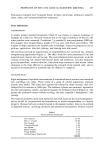
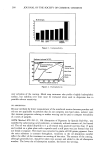
PREPRINTS OF THE 1996 ANNUAL SCIENTIFIC MEETING 273 A dermatologic approach to sensitive skin: Re-evaluating assessment methodologies ZOE DIANA DRAELOS, Department of Dermatology, Bowman Gray School of Medicine, Winston-Salem, North Carolina, and Dermatology Consulting Services, High Point, North Carolina. INTRODUCTION Sensitive skin can be defined in both subjective and objective terms. Subjective per- ceptions of sensitive skin are derived from patient observations regarding stinging, burning, pruritus, and tightness following various environmental stimuli. These symp- toms may be noticed immediately following product application or delayed by minutes, hours, or days. Furthermore, the symptoms may only result following cumulative product application or in combination with concomitant products. Approximately 50% of patients with sensitive skin demonstrate these uncomfortable symptoms without accompanying visible signs of inflammation (1). Cosmetic manufacturers note that 1% to 10% of facial cosmetic users experience these subjective perceptions (2). Objective perceptions of sensitive skin are based on physician observations. These ob- servations may include skin responses of erythema, stratum corneum desquamation, papules, pustules, wheals, vesicles, bullae, and erosions. In short, the entire repertoire of cutaneous reaction may be included in the spectrum of sensitive skin in the appro- priate patient. Sometimes the reaction pattern can be classified under a dermatologic diagnostic heading such as allergic contact dermatitis, irritant contact dermatitis, con- tact urticaria (immunologic and nonimmunologic), seborrheic dermatitis, perioral der- matitis, atopic dermatitis, eczematous dermatitis, psoriasis, rosacea, comedogenic acne, or papular/pustular acne. Other terms for skin sensitivity to cosmetics and toiletries include cosmetic intolerance syndrome and status cosmeticus (3). METHOD The unique aspects of sensitive skin can be approached through assessment of patients entering a general dermatology practice with cutaneous complaints related to the topical use of cosmetics, skin care products, and toiletries. An average practice year yielded 4920 patient visits of which 2.9% (144/4920) were adverse reactions to over-the-counter products: 19.4% (28/144) allergic contact dermatitis, 0.7% (1/144) contact urticaria, 24.3 % (35/144) acneiform eruptions, 12.5 % (18/144) incidence of comedogenesis, with the remaining 43% (62/144) characterized as irritant contact dermatitis. Of these 62 patients, 50 were selected for careful evaluation and quarterly assessment of their prod- uct use for one year. Twenty-four percent (12/50) underwent patch testing identifying a causative agent in eight patients. The remaining 42 patients were characterized as demonstrating sensitive skin. Twelve of these patients revealed no abnormalities on dermatologic evaluation, while the remaining 30 possessed skin characterized by erythema, desquamation, and pruritus.
Purchased for the exclusive use of nofirst nolast (unknown)
From: SCC Media Library & Resource Center (library.scconline.org)