2007 ANNUAL SCIENTIFIC SEMINAR 593 Aromatic amines are generally produced by catalytic hydrogenation of nitro compounds. The reduction of simple nitro compounds is readily carried out with various commercial catalysts, but the selective reduction of a nitro group with H2 when other reducible groups are present in the molecule, is more challenging. Functionalized anilines are industrially important intermediates for pharmaceuticals, cosmetics, polymers, herbicides, and fine chemicals, so there is strong incentive to develop chemoselective catalysts for the reduction of nitro groups. Stoichiometric reducing agents such as sodium hydrosulfite, iron, tin, or zinc in ammonium hydroxide have been successfully used to reduce aromatic nitro compounds containing olefinic bonds. However, these processes are not environmentally sustainable. Cobalt and ruthenium sulfide catalysts can selective convert nitro compounds into amines in the presence of olefinic groups, but the yields are low and sulfur containing by-products are also formed that strongly limit the usefulness of these catalysts. Gold in the form of nanoparticles is an active redox catalyst for oxygen-containing hydrocarbons, such as alcohols and carbonyls, but does not interact with olefinic groups. For reduction, gold can hydrogenate, although at different rates, alkenes, alkynes, imines, and carbonyls in the presence of H2. Gold exhibits some selectivity for hydrogenation of C=O groups of alpha, beta unsaturated alcohols. Because platinum and palladium are not chemoselective catalysts for the reduction of nitro groups, and because olefins and NO2 adsorb differently on Pt and Pd than Au, gold would appear to be a potential candidate for a chemoselective catalyst for the reduction of nitro compounds in the presence of other reducible groups. Two supported gold catalysts (1.5 wt% Au/TiO2 and 4.5 wt% Au/Fe2Q3 ) as well as Pt, Pd, AuPt and AuPt supported catalysts were used for the hydrogenation of 3-nirostyrene with H2 under mild reaction conditions of 9 bar and 120°C. The results showed that only the two supported gold catalysts gave conversions of 98% with 96% selectivity to 3-vinylaniline. The residual product was 3-ethylaniline with only traces hydroxylamine styrene, azostyrene, and azoxystyrene. This is important because accumulated hydroxylamines can undergo exothermic decomposition their toxicity and ability to form colored compounds lead to poorer quality of the desired product. References: 1) Commercial Aspects of Gold Catalysis, Christopher Corti, et al, Applied Catalysis A General, 291 (2005) 253-261 2) Catalysis byGold, Geoffrey Bond, et al, Catal Rev - Sci-Eng 41( 3&4) 319-388 (1999) 3) Chemoselective Hydrogenation of Nitro Compounds with Supported Gold Catalysts Avelino Carma et al, Science, 21 July 2006, vol 313, PP 332-334 4) Biominieralization of Gold: Biofilms on Bacteroform Gold, Frank Reith et al, Science, vol 313, 14 July 2006, 23-236

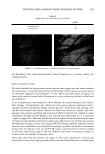
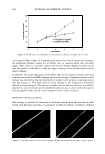
594 JOURNAL OF COSMETIC SCIENCE STRATEGIES FOR CONTROLLING MOISTURE FLUX IN SKIN CELLS James V. Gruber, Ph.D., Lisa Bouldin, Suzanne Wilford and Robert Holtz Arch Personal Care Introduction It is well established that human skin, which comprises about 70 microns of the outer protective cover for humans, is the principal barrier against the body's dehydration. Within the confines of the stratum comeum, epidermis and dermis lies a water gradient that is low at the surface of the skin and increases quickly as one probes deeper into the skin [ 1]. This water gradient can be modified by topical applications of various moisturizers and occlusive barrier enhancers, glycerin and water being the most fundamentally basic [2]. However, to actually control water flux, i.e., the movement of water across cellular membranes, a more detailed strategy of water control is required. For instance, keratinocyte cellular membranes contain proteins called aquaporins which control the movement of the highly polar water and glycerol molecules through the non-polar lipid membrane. Inside the cell, osmolytes are created that bind water and hold it inside the cell, particularly during highly dehydrative events [3-5]. A strategy for controlling water flux must address elements of all of these events. Methods Human Keratinocvte Cell Culture Human epidermal keratinocytes were seeded into culture flasks and grown at 37±2 ° C and 5±1% CO2 using Epilife media supplemented as recommended by the manufacturer. When a sufficient number of cells had been grown they were seeded into 12-well plates at a low cell density and cultured for a minimum of 24 hours to allow the cells to adhere to the well plates. Treatment ofKeratinocvtes The test materials were prepared in Epilife media and filter sterilized. The media was then removed from the culture plates and replaced with one ml of media supplemented with test material. Epilife media alone served as the untreated control. After the application of the cell culture media, the plates were incubated for 24 hours at 37±2 ° C and 5±1%CO2. At the end of the incubation period the culture media was replaced with one ml of fresh media without test materials. Keratinocvte Dehydration For the dehydration process, the 12-well plate was secured to a microscope stage and positioned such that a field of clearly defined cells was visible through the microscope (250x magnification). Compressed room air was then channeled through a tube such that the air flow was directed at the surface of the culture media. The air flow through the tube was set to a flow rate of 10 liters per minute. At this flow rate the air current was sufficient to evaporate the water in the media without visibly disturbing the surface of the culture media. Digital images of the cells and samples of culture media (10 µ1) were obtained immediately prior to starting the airflow (time = 0) and after 5, 10, 15 and 20 minutes of airflow.
Purchased for the exclusive use of nofirst nolast (unknown)
From: SCC Media Library & Resource Center (library.scconline.org)