550 JOURNAL OF COSMETIC SCIENCE Reasons are very simple: the solid materials behaviour strictly depends on the combination of its surface properties, its crystalline lattice characteristics (bulk properties) and of the chemical nature of such a substance, while for traditional non-solid cosmetic raw materials only the last one is important. Originally published in SOFW-Joumal 133 (3) 2007 Skin Irritation During Use OfHomecare Products properties. Manufacturers of homecare products try to counteract the possibility of the undesired side-effects by different means so that the formulations were milder to the skin. Thus, mild surfactants of both good properties in use as well as low irritant potential are used. For example, a blend of Sodium Lauryl Sulfate (SLS) and Sodium Lauryl Sulfosuccinate has lower irritant potential than the pure SLS solution. Moreover, refatting agents or proteins hydrolysates are added to those preparations more and more often. The ingredients assist skin barrier renewal and protect the skin from undesired activity of surfactants. Karolina Lelen 1 , Katarzyna Pytkowska 1 • Slawomir Originally presented on the CHI Personal Care & Majewski 1 , Jacek Arct 1•2 Homecare Ingredients Exhibition & Conference 2006, Warsaw-Poland, October 25-26, 2006 1 Academy of Cosmetics and Health Care, Warsaw, Poland 2 Faculty of Chemistry, Warsaw University of Technology, Poland Homecare products are commonly used in most of the households. Their formulations contain many raw materials which should, on the one hand, remove effectively all sorts of dirt and on the other - should not have a harmful effect on the skin or in any other way influence adversely the human organism. It has been proved that the substances present in household products can interfere the biochemical balance and barrier capacity of skin, thus contribute to skin irritations and allergies. What is more, the pH value of the formulation is a factor that can influence this barrier functioning as well. The main ingredients of homecare products are surfactants, which can exhibit high irritant potential. They affect the skin in a multidirectional way. They solubilise and wash out the lipids of the stratum comeum, they can also penetrate into the intercellular cement structures and change its physico-chemical Polish Legal Regulations On Advertising Of Cosmetics Joanna Bulinska, Jacek Arct, Katarzyna Pytkowska Academy of Cosmetics and Health Care, Warsaw, Poland Before getting into to the core subject of this paper it is necessary to get through general regulations on advertising in Poland. All the regulations present in Poland at the moment divide into two categories, primarily, legal regulations, secondary selfregulations of the advertising market. The most important from the first group is bill issued on 16th April 1993 'On dealing against unfair competition'. In the second group the most comprehensive regulation is 'Code on plain dealing in advertising', prepared by International Association of Advertising in Poland.

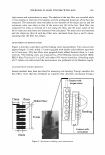
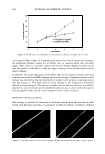
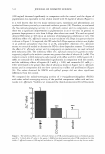
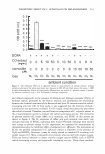
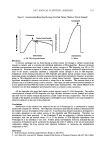
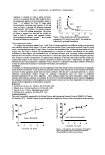
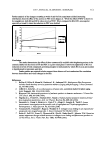
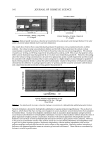
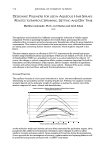
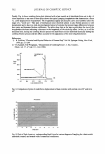
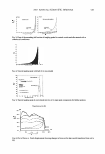
552 JOURNAL OF COSMETIC SCIENCE THE ROLE OF SURFACE ACTIVE, ACTIVE INGREDIENTS ON CREAM STABILITY Introduction Lorraine E. Pena, Ph.D. and Pamela J. Secreast Pfizer Pharmaceutical Sciences Research Formulations Emulsion stability is dependent upon formation of a close-packed interfacial film composed of fally amphiphiles. However, this is an overly simplistic view of the interfacial interactions and only accounts for a fraction of the fatty amphiphile composition of the emulsion. The gel network theory provides a more complex view. According to this theory, a gel network forms from interpenetration of the emulsifier into the fatty amphiphile (1). This comprises the balance of the formulation fatty amphipbile. Emulsion consistency is defined by the extent and integrity of the gel network. Emulsions based on nonionic emulsifiers develop consistency at a slower rate than those based on anionic emulsifiers. This is attributable to slower diffusion of the larger polymeric nonionic emulsifier into the fatty amphiphile. Some surface-active, active ingredients (e.g. drugs and preservatives) are known to adversely affect emulsion stability. Their impact on stability increases wilh concentration. Instability is manifested by conversion to a tllinner cream or lotion, development of a stringy, elastic consistency and formation of a highly pearlescent appearance. The consistency development and destabilization process of a model cream containing a surface-active drug was previously presented (2). The active ingredient, TEA-ibuprofen, being highly surface active, was identified as the primary factor in the phase separation and delayed viscosity development of the cream tormulations. The mechanism by which Lhis surface-active, active ingredient destabilizes the model cream is the subject of this study. Experimental An objective of the study was to find a suitable surfactant with a lower surface tension and stronger interfacial activity than TEA-ibuprofen. The surfactants to be tested were chosen based on the following criteria: supplier literature indicating low surface tension, water solubility, structural similarities or different functional groups. Different counterions for the ibuprofen salt were also tested. A Fisher Autotensiomat Model 215 employing the duNouy ring detachment method was used. All measuremenL'i were performed at room temperature. Resulu Two important pieces of information can be obtained using the duNouy ring detachment method: 1) the surface tension y above tl1e critical micelle concentration and 2) an indication of the tensile strength of the interfacial film, which is related to surface viscosity. These two parameters became the target of the investigation. Most solvents and surfactant solutions undergo only a slight deformation of the meniscus before breaking. However, the TEA-ibuprofen solution exhibits an extraordinary amount of deformation and resiliency and a gradual necking-off of the meniscus prior to breaking. This resiliency is suspected to be related to the surface viscosity and elasticity. The resiliency of tl1e 5% TEA-ibuprofen solution meniscus appears in the autotensiomat recording as a post-peak tailing that has been termed the "relative tensile strength". Figure la illustrates the post-peak tailing. The recording for water in Figure lh shows a typical surface tension measurement associated with solutions having low surface viscosities. The 5% TEA ibuprofen aqueous solution had a surface tension 'Y of 31.5 dynes/cm at the peak of the curve and a relative tensile strength of 48 chart divisions. 111e experiments were performed in three phases: 1) nonionic surfactants were tested as aqueous solutions and in combination with 5% TEA-ibuprofen to find an emulsifier with a lower surface tension to overcome the dominance of TEA-ibuprofen at the interface, 2) solutions of anionic surfactants were tested in order to observe possible similarities to 5% TEA-ibuprofen and 3) TEA was replaced with several different compounds, maintaining a I: I molar ratio with ibuprofen, to compare the surface activity of various ibuprofen salts. The surface tension and relative tensile strengths for each of these entities will be presented but are not included here due to spatial constraints.
Purchased for the exclusive use of nofirst nolast (unknown)
From: SCC Media Library & Resource Center (library.scconline.org)