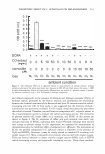
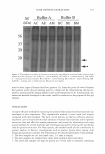
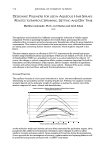
510 JOURNAL OF COSMETIC SCIENCE SUPEROXIDE SCAVENGING ACTIVITY Radical production by the reaction with xanthine and xanthine oxidase was detected by a superoxide dismutase (SOD) assay kit, WST (Dojindo Molecular Technologies, Inc.). Briefly, after adding 0.02 ml of compounds from C. officinalis extract to 0.2 ml of WST working solution, each well was mixed. The mixture was incubated at 3 7°C for 20 min. The optical density (OD) at 450 nm was measured as an index of superoxide quantity. INHIBITION OF L-DOPA AUTO-OXIDATION C. officinalis extract was added to 10 µl of 1.4 mg/ml of L-Dopa (Kishida Chemical Co) aqueous solution at room atmosphere to obtain final concentrations of 5, 10, and 50 mg/ml in 50-ml centrifuge tubes. The same volume of 1.4 mg/ml of L-Dopa solution (10 µl) without C. officinalis extract bottled at an ambient atmosphere or under N2 gas in a 50-ml centrifuge tube was used as a control (C. officinalis extract, 0 mg/ml, 02 ambient condition). The absorbances of the mixtures were measured at 405 nm, after being incubated at 3 7°C for one week. MELANIN BIOSYNTHESIS IN CULTURED MELANOMA CELLS B 16 melanoma cells were purchased from Riken Cell Bank. Cells were seeded at 5 x 10⁴ cells/well and cultured for 24 h in minimal essential medium supplemented with 10% fetal bovine serum (Gibco BRL). After changing the medium to fresh medium, com ponents in C. officinalis and arbutin (Merck) dissolved in 30% EtOH where applied, and the cells were incubated for three days. The final concentration of the components in C. officinalis and arbutin was 0.1 mM, and from C. officinalis extract it was 0.025 mg/ml. The same volume of 30% EtOH was used as a control. Cells were harvested by treatment with trypsin, dissolved in 1 ml of 1 N NaOH and 10% dimethyl sulfoxide (DMSO Kishida Chemical Co, Ltd), and then OD at 420 nm was measured as an index of melanin quantity. Cytotoxicity was examined by the MTT method in a colorimetric assay system that measures the reduction of a tetrazolium component into an insoluble forma zan product by the mitochondria of viable cells. After incubation of the cells with the MTT reagent for approximately two to four hours, a detergent solution was added to lyse the cells and solubilize the colored crystals. The samples were read using an ELISA plate reader at a wavelength of 5 70 nm. The amount of color produced was directly propor tional to the number of viable cells. INHIBITION OF DVB-INDUCED PIGMENTATION IN GUINEA PIG Five guinea pigs with brownish pigmentation were used in this experiment. Four separate areas (2 cm x 2 cm) on the back of each animal were irradiated with UVB (250 mJ/cm2 per day) for three consecutive days. On the fourth day through the 14th day, 0.02 ml of arbutin (30 mg/ml), C. officinalis extract (100 mg/ml), or vehicle (50% EtOH) as a control, were topically applied before the daily UVB radiation. The degree of pigmentation was assessed as the delta L * value, that is, the means of L * value differences (before and after the UVB irradiation), with a chromometer (CR-200, Konica Minolta, Inc.).

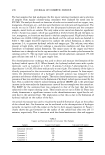
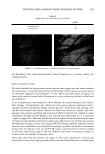
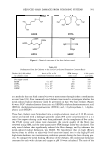
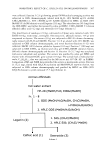
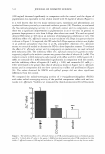
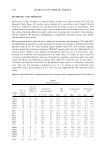
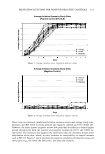
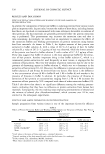
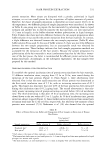
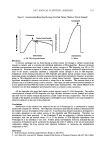
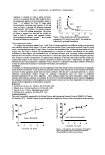
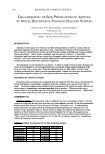
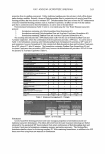
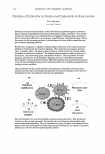
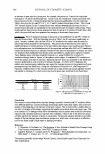
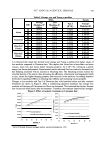
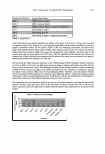
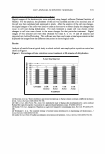
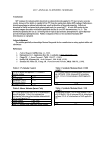
INHIBITORY EFFECT OF C. OFFICINALIS ON MELANOGENESIS 511 RESULTS AND DISCUSSION Two C. officinalis extracts were prepared, one with hot water and the other with 50% ethanol (EtOH). The antioxdative activities of extracts were determined by the DPPH radical-scavenging method. The extracts were subjected to HP-20, silica gel, and ODS column chromatography, and then to ODS HPLC to purify cornuside (11), together with caffeic acid (12), loganin (13), sweroside (14,15), and morroniside acetate. Caffeic acid and cornuside, strong anti-oxidants, were isolated, respectively, from the hot water extract and the 50% EtOH extract. DPPH radical scavenging activities of cornuside, caffeic acid, loganin, sweroside, and morroniside acetate are shown in Table I. The activities of caffeic acid and cornuside are quite different from those of the other compounds. Major components, loganin, swero side, and morroniside, in C. officinalis do not show the potent radical scavenging of DPPH as does caffeic acid and cornuside. We have confirmed that among these ingre dients, caffeic acid and cornuside are the main components as far as DPPH radical scavenging activity is concerned. Skin forms melanin in order to protect its tissues from UV rays, and excessive exposure to UV rays causes freckles. UV-induced pigmentation influences melanogenesis by melanocyte-stimulating factors, such as iNOS (9). We evaluated the inhibitory effect of DVB-induced skin pigmentation in C. officinalis extract through its radical-scavenging activity. In addition, the melanin synthesis pathway in melanocytosis is an oxidative reaction, and this polymerization reaction continues automatically in the presence of free radicals. Therefore, it is understood that improvement of DVB-induced skin pigmen tation by C. officinalis extract is due to its potent free-radical-scavenging activity. We used arbutin as a positive control to evaluate its influence on UV-induced skin pig mentation. We conducted the following experiment to evaluate the inhibitory effect of C. officinalis extract on DVB-induced skin pigmentation. The dorsal skin of guinea pigs (N = 5) was irradiated with a constant level· of UVB and C. officinalis extract applied during two weeks. Dorsal skin lightness was compared before and after this experiment. The DVB-induced pigmentation in brownish guinea pigs treated with C. officinalis extract Table I DPPH Radical Scavenging Activity of Components in C. officinalis Extract and component Hot water extract EtOH extract Caffeic acid Loganin Sweroside Morroniside acetate Cornuside Ascorbic acid Each value is the mean of three determinations. 0.1 mg/ml 21.3 28.4 21.0 16.6 13.2 1.1 12.0 79.2 Inhibition rate (%) 1.0 mg/ml 83.7 97.5 97.0 30.7 10.1 1.8 96.4 97.0
Purchased for the exclusive use of nofirst nolast (unknown)
From: SCC Media Library & Resource Center (library.scconline.org)