REDUCED HAIR DAMAGE FROM COLORING SYSTEMS 497 solution 3 0 % , and 1-012 ( 8-amino-5-chloro-7-phenylpyrido {3 ,4-d}pyridazine-1,4- ( 2 H, 3 H) dione sodium salt) supplied by Wako Chemicals. All solutions were made in Tris buffer saline (pH 7). The 1012 solution was made by dissolving 5 mg in SO ml of Tris buffer (pH 7). The H 2 O2 solution was made by diluting 2.0 g of peroxide in SO ml of Tris buffer. The samples of the starting substrate and the colored hair were cut up with ceramic scissors into small pieces (4 mg per sample) and placed in the bottom of the wells of the microtiter plate. To visualize the gas formation on the hair fibers, a commercial permanent colorant was mixed and applied to the same hair samples used for the chemiluminescence measurements (4 g/g dose) and left at room temperature. At intervals up to an hour the hair was imaged on a Zeiss Stemi SVII M2Bio stereoscope, using an Olympus MagnaFire 8-bit camera in monochrome mode. DAMAGE MEASUREMENTS A Perkin-Elmer Spectrum® 1 Fourier transform infrared (FTIR) system equipped with a diamond attenuated total internal reflection (ATR) cell was used to measure the surface cysteic acid concentration in human hair. The swatches were plaited (~ 1 plait per cm) in order to minimize variations in the surface area of contact between readings, and four readings per swatch were taken. The second derivative of the absorbance at 1040 cm - l was taken as the relative concentration of cysteic acid after normalization of the spectra to the 1450 cm- 1 protein CH2 stretch peak. This figure was multiplied by -1 x 10- 4 to recast it into suitable units. It was found that untreated human hair produced a value of ~20 cysteic acid units and that heavily oxidized hair produced values of 170 units. A Jeol 5200 scanning electron microscope was used to visually assess the cuticle quality of the fibers. To measure the SEM damage index, at least SO fibers were rated on a four-point scale: 1 = low damage 2 = medium damage 3 = high damage 4 = completely stripped cuticle. The SEM damage index was calculated from ((1 x score = 2) + (3 x score = 3) + (5 x score = 4))/5. Caucasian untreated mixed hair (medium brown), obtained from a commercial source (IHIP, New York), was formed into swatches (16 cm, 1.5 g). The hair swatches were subjected to five repeat coloring cycles with a commercial blonde permanent hair col orant. Between each cycle the hair was washed four times with a commercial clarifying shampoo in controlled water conditions. The flow rate was adjusted to 61/min, the water was dosed with 275-300 ppm water hardness ions (3:1 calcium:magnesium), and optionally, copper ions were dosed in at a controlled rate (typically 1 ppm). RESULTS AND DISCUSSION RADICAL FOMATION ON HAIR The initial experiments were designed to determine whether redox metals are present in hair that has been colored using a permanent level 3 hair colorant and whether metal induced radical formation is occurring during the coloring process. A hair substrate was produced in the laboratory to mimic hair samples from consumers that are using col oring products on a regular basis. Untreated hair was taken through five repeat coloring cycles with 12 shampoo washes in-between.

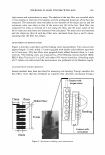
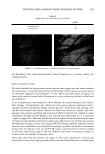
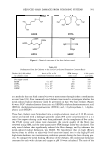
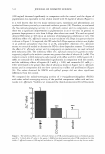
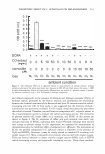
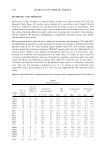
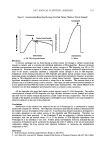
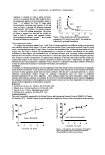
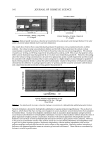
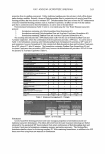
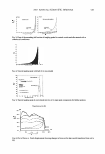
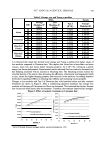
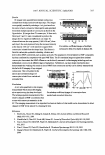
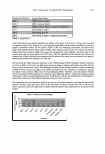
498 JOURNAL OF COSMETIC SCIENCE The hair samples that had undergone the five repeat coloring treatments and a selection of samples from regular colorant-using consumers were analyzed for metal ions by ICP-MS. The analysis focused on detection of redox active metals such as copper, iron, manganese, chromium, etc., and also water hardness ions (calcium and magnesium). The results set out in Table I show that for the lab-prepared substrate and the consumer samples, metal levels are similar. The only redox active metal ion found at significant levels ( 5 ppm) was copper, which was quantified at levels between 66 and 240 ppm no iron, manganese, or chromium was found in the hair samples tested. High levels of water hardness ions (4,000-8,000 ppm) were also found, and the calcium levels are detailed in Table I. The copper would be expected to catalyze the radical formation, as shown in equations 2--4, to generate hydroxyl radicals and oxygen gas. The calcium, even when present at high levels, will not undergo a one-electron oxidation and thus will not contribute to hydroxyl radical formation. The major source of the copper and water hardness ions is thought to be the tap water that is used for the wash cycles between the coloring cycles (7). The tap water used to prepare the lab substrates contained 275-300 ppm calcium ions and 0.1-0.2 ppm copper ions. The chemiluminescence technique was used to detect and measure the formation of the hydroxyl radical species (8,9). When formed, the hydroxyl radicals react with a probe molecule such as luminol or L-O12 (8-amino-5-chloro-7-phenylpyrido [3 ,4- d}pyridazine-l ,4-(2H,3H) dione sodium salt) to emit light. The intensity of the light is directly proportional to the concentration of hydroxyl radicals present. In these experi ments the chemiluminesence of a hydrogen peroxide solution was measured in the presence and absence of the hair sample. The excess chemiluminescence signal seen in the presence of hair was attributed to the formation of hydroxyl radical species caused by the hair. This is called the relative radical forming potential (RRFP) and is the percentage increase in the area under the luminescence curve of the test sample over the control set. The RRFP for the untreated hair was compared to that of the hair that had been subjected to five repeat coloring cycles. These results are set out in Table II. These data clearly demonstrate a significant increase in the chemiluminescence signal for the col ored hair vs the untreated hair. The implication is that this is due to the formation of hydroxyl radicals on the surface of the hair. An optical microscope was used to visualize the possible formation of gas on the surface of the colored hair. Gas formation can be attributed to the decomposition of hydrogen peroxide via reaction with the copper on the hair to form oxygen (equation 4). Figure 1 clearly shows the gas formation on the surface of the colored hair after two and 3 5 minutes, respectively. This is consistent with the chemiluminescence data and supports Table I Copper and Calcium Levels in Consumer Hair Samples Sample Copper level (ppm) Calcium level (ppm) Laboratory substrate 120 8750 Consumer 1 140 5300 Consumer 2 100 6000 Consumer 3 66 3900 Consumer 4 67 8100 Consumer 5 240 6200
Purchased for the exclusive use of nofirst nolast (unknown)
From: SCC Media Library & Resource Center (library.scconline.org)