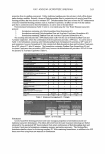
2007 ANNUAL SCIENTIFIC SEMINAR 577 Unfortunately, we still do not have such a tool available today. Standard accelerated stability tests used at present, including placing samples in varying environments, are useful but not completely reliable unless sufficient time is allowed for the tests. For practical purposes, sufficient time here can be several weeks to several months. In addition, the stability and physical properties of emulsion products are not only affected by the ingredients in the formulation, but also by process variables such as intensity of mixing, cooling rate, emulsification temperature. Carefully-planned process studies can be very important in assuring trouble-free manufacturing. Low-Energy Emulsification In the past, the cost of energy used in manufacturing cosmetics has not been an important economic issue. With energy costs expected to increase along with the continuing global warming trend, many large manufacturers of consumer products are already facing strong pressure to reduce their energy consumption. Although cosmetic manufacturing is not an energy-intensive industry, it can be expected that we will also be required to reduce energy usage. Shortly after the 1970 's oil crisis I published a series of papers in SCC Journal on an energy-saving method of processing cosmetic emulsions, called "Low-Energy Emulsification, LEE (1). In addition to reducing energy consumption, LEE offers the advantage of significantly reduced processing time. In some cases, it is possible to reduce both the energy consumption and emulsion processing time by as much as 50%. The principle of LEE is based on the fact that conventional processing of cosmetic emulsion uses far more energy than is theoretically required or practically needed. By using energy when needed and where needed, we can reduce its consumption significantly. In addition, by using less energy to start, we can also vastly reduce the process time required for removing the energy. In making cosmetic emulsions, often the most time-consuming step is cooling of the batch, which can take several hours for large batches. Cooling is, of course, removal or discarding of energy, which takes time. Reducing the need for cooling can not only reduce energy costs but also shorten production time. Proper application of LEE saves energy and increases production efficiency without compromising product quality (2). In fact, in some cases, emulsions with finer droplet size distribution can be made using LEE than can be with a conventional method (3). This means that sometimes less really can produce inore. Less Is More The LEE principle can be applied, besides in processing of emulsions, to reduce costs and enhance production efficiency or product performance in other areas. An example is the use of surfactants in formulating skin care products. While surfactants are indispensable in assuring emulsion stability, it does not follow that the use of more surfactants will always ensure more stability and better product performance. What is important here is not just the quantity, but also obtaining a good balance. Excessive amounts of certain surfactants can not only reduce stability and shelf life but can also contribute to higher irritation potential in some skin care products. Thus, the best strategy for stabilizing an emulsion may not be simply adding more surfactants, but could rather be a reduction of a certain surfactant in the formulation to obtain the correct hydrophile-lipophile balance (filB) and hence better stability and lowered irritation potential ( 4 ). References (1) T. J. Lin, "Low-Energy Emulsification-I Principles and Applications" J. Soc. Cosme!. Chem., 29, 117 (March, 1978) (2) T. J. Lin, T. Akabori, S. Tanaka and K. Shimura "Low-Energy Emulsification-II Evaluation of Emulsion Quality'' J. Soc. Cosme!. Chem., 29, 745 (Dec.,1978) (3) T. J. Lin, T. Akabori, S. Tanaka and K. Shimura "Low-Energy Emulsification V, Mechanism of Enhanced Emulsification" Cosmetics and Toiletries 98, 67 (Oct. 1983) (4) T. J. Lin, "Low-Surfactant Emulsification" JSoc. Cosmet. Chem., 30, 167 (May,1979)

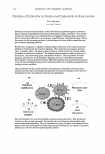
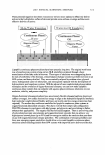
578 JOURNAL OF COSMETIC SCIENCE THE USE OF POLYMERS IN EMULSIONS Robert Y. Lochhead, Ph.D. The Institution for Formulation Science The University of Southern Mississippi, Hattiesbu13, MS 39406-0076 Emulsion skin treatments have been around for a very long time. For example, about 400 AD, the emperor Nero's physician, Galen, prepared an emulsion that would be recognized as a cold cream. The introduction of purified stearic acid in the first half of the twentieth century gave rise to an impressive increase and both quality and quantity of cold creams. We now know that these cold creams and are stabilized against emulsion creaming and coalescence, by the emulsifying action and also by the formation of a larnellar gel structure of the stearate. The lamellar phase can exist as multiple colloid-stabilizing layers around each droplet and in extended "oily streaks" which are cholesteric phases with a helical pitch between each layer, or as myelins which are multi-walled cylinders similar to nerve fibers or as multi-walled vesicles which are observed as maltese crosses in the polarizing microscope. In cold creams the lamellar phase is below the gel temperature. The gel temperature corresponds to the temperature at which the hydrophobic tails melt. Above this transition temperature, the lamellar order persists but the individual tail groups are mobile rather than crystalline. That Cosmetic oil-in-water lotion emulsions have conventionally depended LameHar Gel Stabilization of Cold Creams upon primary emulsion stabilization by surfactants and have relied upon polymeric rheology modifiers, such as Carbomers, to prevent creaming, sedimentation, and syneresis, during storage. In cosmetic lotions, correct choice of rheology modifier is necessary to optimize sensory properties and proper functioning of the product. Hydrophobic modification of hydrophilic polymers gave rise to polymeric emulsifiers that served the dual function of both primary and secondary emulsifiers and made it possible to design rugged, stable systems that could be triggered to release their oil phase when they were applied to the substrate. Associative thickeners are also hydrophobically-modified hydrophilic polymers. There are three basic types of associative thickeners namely, hydrophobically - modified alkali-swellable thickeners, hydrophobically modified ethoxylated urethanes and aminoplast, and hydrophobically-modified cellulose ethers and polysaccharides. All known polymeric emulsifies are associative thickeners, but the reverse statement is not necessarily true. This type of chemistry can be tailored to produce systems that are fluid at room temperature but which exhibit thermo-gelation when they rise above a critical temperature. Such stimuli-responsive systems have been disclosed as useful for the formation of multiple emulsions. Water- in-oil emulsions can be sterically-stabilized by amphipathic polymers. Polymers are also used in color-cosmetic emulsions to structure the oil-phase, to act as film-formers and to confer transfer-resistant qualities. Polymers are essential components of the emulsion formulator's toolkit and today's formulator has an impressive and diverse array of polymers from which to choose, to deliver the appropriate desired product attributes from cosmetic emulsions.
Purchased for the exclusive use of nofirst nolast (unknown)
From: SCC Media Library & Resource Center (library.scconline.org)