548 JOURNAL OF COSMETIC SCIENCE Effect of Microalgal Extracts on Thioredoxin Expression in on the protection against polluting agents by measuring Human Skin Cells and Their Protection of Skin cellular vitality and on the protection of Langerhans cells Pierre-Yves Morvan and Romuald Vallee against UV exposure. By stimulating the thioredoxin level, the micro-algal extracts protect skin cells against several Life Science Research Department, Codiflntemational, BP types of free radical generating systems. l , 35610 Roz-sur-Couesnon, France Skin is the constant target of active forms of oxygen Combing Damage to Hair Cuticle Structure generated by UV radiation exposure. It needs to reinforce anti-oxidant defense mechanisms to protect itself against K. Ram Ramaprasad, Sigrid B. Ruetsch, Hans-Dietrich cell damage. Thioredoxin is a protein found extensively in Weigmann and Yash K. Karnath animals, plants and marine bacteria. It protects cells against TRI/Princeton, 601 Prospect Avenue, Princeton, NJ 08542, the cytotoxicity produced by free radicals. An increase in USA thioredoxin production could be thus an interesting way to improve skin cell protection. We studied thioredoxin expression in human skin cells by minichips, and the results were confirmed by RT-PCR. Protein expression was quantified by Western blot. Thioredoxin mRNA is expressed by human dermal fibroblasts and epidermal keratinocytes. The thioredoxin protein was detected in both types of human skin cells and visualized in human reconstituted epidermis. Some stress-resistant micro-algae also express protective proteins. We tested the effect of two micro-algal extracts on the level of thioredoxin expression in human skin cells and on the protection against free radicals by measuring the inhibition of superoxide anion, Optical probing of hair fibers is an elegant, non-invasive method to monitor the fiber surface and its changes with various grooming protocols. In this paper, a goniophotometer with a He-Ne light source was used to study reflection profiles from single hair fibers in both the root-to-tip and tip-to-root orientations of the fiber. The calculated scale angle (the inclination of the cuticle to the fiber axis) was used as a monitor to study combing damage in hair to demonstrate the usefulness of the method. It was shown that progressive dry combing of hair leads to cuticle thinning or abrasive damage, and wet combing results in cuticle breaking or ablative damage. Further, the use of a conditioner active like a polyquatemium-10 largely mitigates both types of damage. These findings were supported by the results of a parallel scanning electron microscopic study.

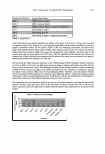
J. Cosmet. Sci.! 58, 549-550 (September/October 2007) Abstracts Journal of the Polish Society of Cosmetic Science, "Wiadomosci PTK" Vol. 10, No. 1, 2007* The Use Of Electric Field And Ultrasounds In The the kinetics of penetration in particular skin layers as Enhanced Transepiderrnal Transport well as cumulating effect, susceptibility to skin enzymes activity, the rate of passing into blood system Jacek Arct, Katarzyna Pytkowska and many others. Academy of Cosmetics and Health Care, Warsaw, Poland Boron Nitride - The Active,,lnert" With A Velvety Feel The activity of skin care cosmetics is a complex Luigi Rigano 1, Adriana Bonfigli 2, Ralf Damach 3, process. The basis of its action is forming an occlusion Martin Engler 3 layer on the skin surface. This leads to decrease in transepiderrnal water loss (TEWL) following an 1 Rigano Laboratories, 2 ISPE Labroatories, 3 ESK increase in horny layer (stratum corneum) Ceramics GMBH & Co. K moisturisation. As it is known, water concentration gradient in the horny layer is essential for the proper Not so many solid raw materials are used in cosmetics course of biochemical processes in living layers of and those few mainly in make-up products: epidermis, including these ones linked with restoring • Talc barriers inhibiting water loss and hindering permeation • of xenobiotic compounds. Another level of skin care activity is associated with physical and chemical • processes related to action of the actives on stratum • comeum structures, i.e. exfoliating activity of • hydroxyacids. Inhibitors of radical reactions (not very • precisely called anti-oxidants) or UV filters can be • included into the same group. The third scope of the • activity concerns the compounds reaching the viable epidermis, dermis and subcutaneous tissue. In this case, • they act directly on specific biological receptors - • enzymatic or cellular ones. Most substances described • as the active compounds of cosmetics belong to this • group, i.e.: retinol and its derivatives, arbutin, bisabolol, glycyrrhizinic acid and others. In case of majority of • substances of physico-chemical activity and, • particularly, all compounds capable of binding with receptors in viable layers - the factor deciding of • compound's activity is its bioavailability. This term • includes both, capability of reaching the action area and • Pigments Sericite Kaolin Mica Precipitated Calcium Carbonate Light Magnesi_um Carbonate Pyrogenic silica Di-calcium and Mono-calcium phosphate Calcium stearate Alumina Pearls (Titanium dioxide and other pigments on Mica Bismute oxychloride Nylon Polymethylmethacrylate Zinc oxide Calamine * These abstracts appear as they were originally published. They have not been edited by the Journal of Cosmetic Science. 549
Purchased for the exclusive use of nofirst nolast (unknown)
From: SCC Media Library & Resource Center (library.scconline.org)