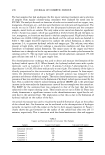
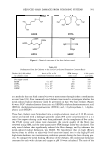
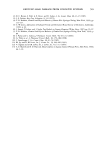
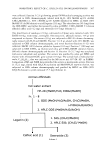
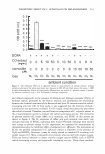
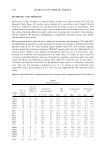
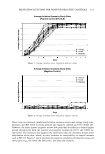
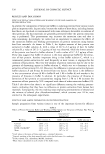
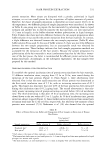
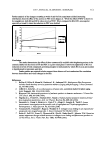
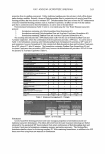
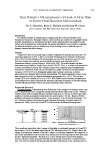
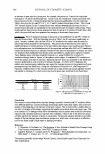
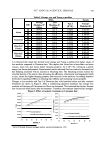
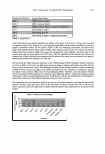
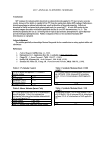
2007 ANNUAL SCIENTIFIC SEMINAR 569 properties from its xanthan gum parent. Unlike traditional xanthan gum, this polymer is both a film-former and a rheology modifier. Recently, the use of Dehydroxanthan Gum in conjunction with acrylic based film forming polymers has been shown to enhance SPF. Dehydroxanthan Gum acts to boost the SPF enhancement of acrylic based film-forming polymers such as Acrylates Copolymer, an effect not seen with the xanthan gum that is commonly used in these formulations, as can be seen in the data below. Three emulsion formulations (Table 3) were in-vivo tested using the Very Water Resistant SWlscreen protocol: 1. formulation containing only Dehydroxanthan Gum (formulation #1) 2. formulation containing Dehydroxanthan Gum and Acrylates Copolymer (formulation #2) 3. formulation containing Xanthan Gum and Acrylates Copolymer (formulation #3) The resulting data indicates that a SPF enhancement exists with the use of Dehydroxanthan Gum and Acrylates Copolymer, where the combination of the two polymers provides a SPF boost. As can be seen in Table 3, the formulation containing only Dehydroxanthan Gum (formulation #1) provides a SPF value of 9 post immersion, however formulation #2, that contains both Dehydroxanthan Gum and Acrylates Copolymer, has a SPF value of 27 after 80 minutes. The formulation containing Xanthan Gum (formulation #3) and Acrylates Copolymer does not exhibit a SPF boost, however the formulation still provides a SPF of 19 from the presence of Acrylates Copolymer (Table 4 ). tn,vtvo 1'�ed Em1.1tslon PolfflUlatkn fl t 2 �11,ranlhan Ott1V!fro:uwfw1 Gum and Ac:,yl.iln IWCiD.8� :G.umoni.v Copo!)'mff Phase A lsohexadecane 1.5 1.5 C12-15 Alkvl Benzoate 3 3 Cvclooentasiloxane 2.25 2.25 Sorbitan Stearate 1 1 Glvcervl Stearate and PEG-100 Stearate 2 2 Octocrvlene 2 2 Ethvlhexvl Methoxvcinnamate 7.5 7.5 Benzoohenone-3 3 3 Zinc Oxide and C12-15 Alkyl Benzoate and Polvhvdroxvstearic Acid 6 6 Phase B Water 58.65 54.25 Dehvdroxanthan Gum 0.5 0.5 Xanthan Gum o o Acrvlates Cooolvmer o 4.4 Glvcerin 3 3 Titanium Dioxide and Alumina and Silica and Sodium Polvacrvlate 7 7 Phase C Com Starch Modified 2 2 DMDM Hydantoin and lodopropynyl Butvlcarbamate 0.6 0.6 Citric Acid as to oH 7 as tooH7 Total 100 100 Table 3. Emulsion Formulation #1-3 Details Table 4. In-vivo Data Conclusion 3 ,'{llfltllan oum a,,d A�!)'!�� Co�nwr 1.5 3 2.25 1 2 2 7.5 3 6 54 25 0 0.5 4.4 3 7 2 0.6 as tooH7 100 Acrylic-based film-forming polymers lend water resistance properties to both traditional and non traditional sunscreen formulations. The effects delivered from the water resistance technology are further enhanced by the unexpected SPF boost produced from select combinations of Dehydroxanthan Gum and Acrylates Copolymer in formulations containing inorganic particulate sunscreens. This finding offers formulators another choice for thickening inorganic UV filter-containing formulations, in addition to the SPF boost seen when using these raw materials in combination.

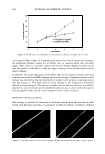
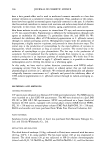
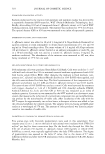
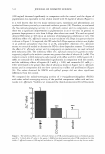
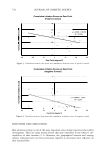
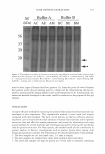
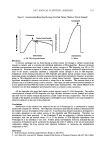
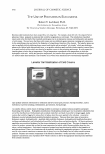
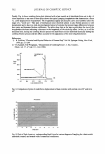
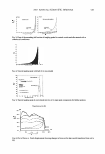
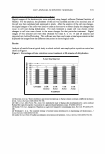
570 JOURNAL OF COSMETIC SCIENCE DESIGNING POLYMERS FOR USE IN AQUEOUS HAIR SPRAYS ROUTES TO IMPROVE SPRAYING, SETTING AND DR Y TIME Matthias Laubender, Ph.D., Joel Basilan and Gerd Schuh BASF The regulatory trend initiated in California concerning the reduction of volatile organic compounds (VOCs) is spreading throughout the United States, generating the need to understand how to prepare aerosol and pump spray formulations within the given legislative requirements. This seems to have become even more important since additional discussions are taking place concerning further emission reductions, which might be required in the future. The most common practice in adhering to 55% VOC requirements for aerosol hair sprays, besides using hydrofluorocarbons as propellants (which are not defined as VOCs), is the use of dimethylether (DME) as a propellant and water as a partial substitute for ethanol. Of course, this change in solvent composition affects various parameters important for both the formulation and the performance of hair sprays, like for example: solubility of ingredients, viscosity and surface tension of the solution, spray pattern, foaming of the spray, wetting and adhesion to the hair fibers and lastly the drying behavior on hair. Spraying Properties The capillary viscosity of a hair spray formulation is, by far, the most influential parameter determining its sprayability and the resulting droplet size. Whereas, the capillary viscosity strongly depends on the molecular weight of a polymer as well as the solvent ratio of the mixture composed of: water, ethanol and dimethylether. Capillary Viscosity of Aqueous Polymer Solution at Different Etanol Contents (5% polymer solution at 25 °C) 10 20 ' ' Ethanol Content in Aqueous Polymer Solution rt,] As the molecular weight and solvent ratio are often constrained by application targets, other parameters like additives or formulation techniques can be changed in order to adjust capillary viscosity and spray pattern. Some examples will be given during the presentation. A new approach for the investigation of viscosity, surface tension and spraying behavior will be presented using results produced with a CaBER® instrument.
Purchased for the exclusive use of nofirst nolast (unknown)
From: SCC Media Library & Resource Center (library.scconline.org)