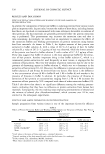
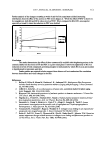
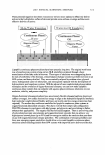
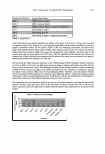
2007 ANNUAL SCIENTIFIC SEMINAR 559 Color effect and substrate The most widely used substrate is mica. In recent years, a variety of platy materials having a smoother and cleaner surface than mica have been proposed and developed for use as a substrate for complex effect pigments. For example, new levels of shimmer and shine can be produced through the use of a very smooth and transparent borosilicate glass base. Borosilicate-based pigments, which are designed with excellent color purity, brightness, transparency and reflectivity can create a brilliant sparkle effect with a strong feeling of depth. Blending borosilicate-based pigments will generate true multicolored polychrome effects. (4) Color effect and particle size Different coloring effects can be achieved by the right choice of pigments depending on their particle size. Small particles create a smooth silky and satiny luster. They enhance the hiding power of formulations and provide a high coverage as well. Large particles provide high luster effects of sparkling or glittering. Furthermore, interference colors on large flakes are particularly interesting in formulations because they deliver a dramatic overtone that stands out, but without masking the continuous masstone. Large particles of borosilicate-based pigments will give the product deep intensive sparkling highlights with a 3- dimensional appearance. Formulation with effect pigment The following formulations allow formulators to create different colors and appearances to meet the current beauty and fashion trends: • Formulation of interference pigment (10 microns) mixed with organic-colors/interference pigment (30 microns) will create a subtle and luminous calm effect with soft and neutral look. • Formulation of intense absorption-interference pigment (30 microns) mixed with highly smooth interference pigment ( 40 microns) will create a lustrous and shimmering narration effect with distinctive two-color look for the narration theme. • Formulation oflarge smooth interference pigment (60 microns) mixed with large size intense smooth black absorption-interference pigment (60 microns) will create a vibrant sparkling and iridescent resonance effect with intense accents. • Formulation of non-quarter wavelength multi-layer color changing interference pigment will create a goniochromatic polychrome color travel effect. CONCLUSION The unique optical characteristics of complex effect pigments can provide eye-catching appearances. The pigments have helped capture the appearance of the fashion trends and convert them into color cosmetics and personal care products. REFERENCES 1. L. M. Greenstein, Pigment Handbook, New York, John Wiley & Sons (1988). 2. L. Armanini, "Basic Optics and Pearlescent Pigments", Paint and Coatings Industry, 5 (8) (1989). 3. C. J. Zimmermann and D. S. Fuller, "Multi-layer effect Pigment'', US Patent 6,875,264 (2005). 4. G. E. Uzunian and L. S. Song, " The Borosilicate Platform'' Personal Care Ingredients Asia, 53 (2004).

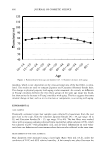
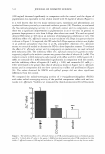
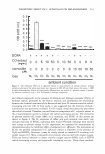
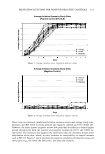
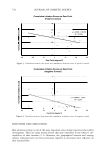
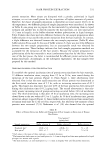
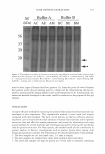
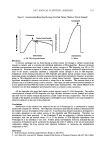
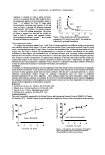
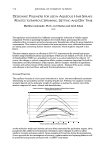
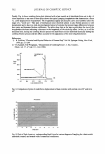
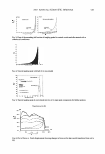
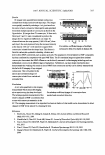
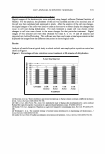
560 JOURNAL OF COSMETIC SCIENCE SKIN TRYPTOPHAN AND CROSSED-LINKED COLLAGEN LEVELS ARE SIGNJFICA TLY REDUCED BY 4-HYDROXYCJNNAMIC ACID Nava Dayan, Ph.D. Lipo Chemicals, Inc. Introduction Exposure of the skin to ultraviolet (UV) radiation can induce changes in the intensity of different native fluorophors, both at the epidennis and dermis levels. These variations allow tracking changes related to chronological aging and photo aging, as well as to differentiate between healthy and disordered skin ( 1 ). Using spectrofluorometric instrumc11tation one can distinguish between a 295nm band that originates from the amino acid tryptophan (TP) in the epidermis, and a 340nm band that corresponds with levels of pepsin --digestible cross-linked collagen (PDC) in the dermis. It was demonstrated that while TP levels may be elevated due to exposure to UVB radiation (photo-aging), PDC levels will increase with time due to chronological aging. In this study we followed changes in levels of TP and PDC in Asian skin, over a period of 8 weeks, following an application of an emulsion containing either hydroxycinnamic acid (HCA), magnesium ascorbyl phosphate (MAP) or hydroquinone (HQ). Methodology A panel of nine female subjects of Asian decent applied an emulsion containing one of the above active compounds on the foreann twice daily for 8 weeks. Measurements of baseline, 2, 4, 6 and 8 weeks, were taken using Spex SkinSkan® spectroflurometer (Jobin Yvon, Edison, NJ). This instrument is a highly sensitive fiber-optic spectrofluorometer designed for a non-invasive in vivo measurement on skin. The excitation spectrum with a peak maximum at 295nm has been correlated with the levels ofTP and the 340nm peak was correlated with the PDC. Data was calculated by subtracting the peak height value of the untreated site from the value of the treated site. Results and disevssion The mechanism by which ultraviolet radiation ages the skin and its relation to chronological aging is known to involve the generation of reactive oxygen species (ROS's) that can be neulr.llized by anti oxidants. One of the methodologies to follow biochemical alterations in the skin that result from photo exposure and chronological aging is the measurement of skin auto fluorescence (2). Selected molecules in the skin will absorb light al one wavelength and emit it at a higher wavelength. Tryptophan, which has auto fluorescence, is an important precursor for melanin biosynthesis, as well as other pigment intermediates in the skin (J, 4, 5). Cross-linked collagen is elevated in mature skin and is related to chronological aging (6). It was also shown that topical application of anti-oxidants, such as green tea extract and vitamins E and C c:an block the generation of fluorescent molecules in the skin, and this obstruction was correlated with the delay of skin aging related to changes in collagen (7). The results plotted in figure I include variations in TP levels in response to treatment. While al week two there is no significant difference in reduction in TP levels between the three actives, by week 4, MAP and HQ are shown to decrease TP levels significantly more then HCA. This trend, however, is reversed at weeks 6 and 8, when HCA surpasses both MAP and HQ to create a major reduction in the TP peak. 1,0,,, .,,,.. !!I ..... . 5 - � '°"' � 2 ... ... Woolr2 ...... . ... , ll,,
Purchased for the exclusive use of nofirst nolast (unknown)
From: SCC Media Library & Resource Center (library.scconline.org)