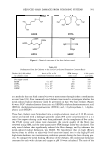
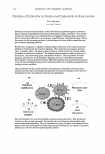
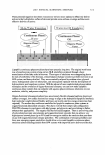
2007 ANNUAL SCIENTIFIC SEMINAR These potential negatives have been overcome so we have more options to effectively deliver actives to the hydrophobic surface of skin and provide more uniform coverage and thus more effective delivery of actives. \\ ater-in-Oi ion 573 Lipophilic-continuous phase emulsions have been around a long time. The original work horse was a borax/beeswax system relying on low lll.B emulsifiers produced through a basic neutralization of the fatty acids in beeswax. These types of emulsions were unappealing due to the lack of uniformity of the beeswax, critical balance of phase volume to prohibit inversion to an O/W system, and heavy skin feel. They were eventually eclipsed by sorbitan esters, glycerol esters, hydrogenated castor oil ethoxylates, and subsequently replaced with the development of hydroxystearic acid copolymer systems. With the advent of more sophisticated polymerization techniques and the evolution of organo-functional siloxanes, one can now make lipophilic continuous phase systems that can compete with aqueous phase continuous emulsions on cost, aesthetics, stability, and process simplicity. Organo-functional siloxane polyethers have an extremely flexible siloxane backbone (improved surface coverage), low surface tension (less energy to align at the hydrophilic/lipophilic interface), high molecular weight (retained fluidity and lower use levels), and low energy process (no shear required). The modem day workhorse emulsifier for lipophilic-continuous phase systems is organo-functional alkoxylated siloxanes. They have evolved from simple rake configuration PEG/PPG siloxanes to copolymers with alkyl groups, polyglycerin, and crosslinking to further enhance their applicability. The organic field has not stayed stagnant. There is an evolving class of polyisobutylsuccinate esters/amides and organo-functional xylosides that can achieve very high aqueous internal phase (up to 95%) and low energy to stabilize the emulsion that puts them on par with organo-functional siloxane polyethers. The combination of siloxane polyethers and these new emerging organic emulsifiers should allow us to create lipophilic-continuous phase emulsions almost indistinguishable from O/W systems with improved active delivery to the skin.

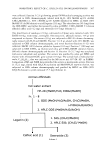
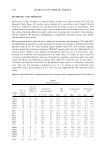
574 JOURNAL OF COSMETIC SCIENCE BACK TO BASICS: So You W"ANT TO PRESERVE YOUR EMULSION Introduction David C. Steinberg Steinberg & Associates, Inc. One critical step in developing emulsions is dealing with preserving the product from microbial contamination. You need to look at this to insure that your product complies with regulations and as a form of "insurance" for your product. Nothing will turn a consumer into a non-customer faster, than when she opens the jar of your cream and she finds fuzzy green stuff growing in it! US Regulations The FDA does not require cosmetics ( or topical pharmaceuticals) to be sterile, as they are not applied to sterile surfaces. However, they may not be contaminated with pathogenic microorganisms and total counts must be low. Cosmetics are intended to remain in this condition under reasonable and foreseeable consumer use. Further all cosmetics should be tested for adequacy of preservation, during their development and each batch must be tested before it is released. All recalls for contamination have been made because companies released contaminated products! Preservatives are chemicals added to products to prevent the growth and destroy these contaminants. In theory, we add these to "clean" products to prevent consumer contamination. In reality we use preservatives to correct contamination during the manufacturing of our products along with protection against consumer contaimination. EU Regulations The European Union requires that all cosmetics must have microbiological specifications. All raw materials are also required to have these and both must be part of your Product Information Package (incorrectly referred to as a "dossier"). All products with more than 30 months stability must have a "Period After Opening" symbol with a number and "M" to indicate how many months after the product is open, it will not cause harm to the user. The most common type of harm is due to microbial contamination. Getting Started The most important first step is to see what is the external phase of your emulsion. Most emulsions have water as the external phase but you never can be sure, so check! When water is the external phase, we call these typical products. When water is not the external phase, these are considered atypical. For typical cosmetics you need to run the pH. Atypical products do not really exhibit pH although you can invert this to see what the pH is of your internal phase. Water Activity The next step is to run the water activity (Aw)- This is defined as the vapor pressure of your product at a constant temperature divided by the vapor pressure of pure water at the same temperature. In reality, just measure it. Water activity is a scale of 1. 0 which is pure water to 0. 0 which is bone dry. By knowing the water activity, you can see what will grow in your product. For example, most Gram negative bacteria need a range 0. 91 to 0. 96 for growth, while mold require 0.7 to 0.98 for growth.
Purchased for the exclusive use of nofirst nolast (unknown)
From: SCC Media Library & Resource Center (library.scconline.org)