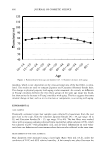
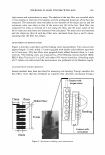
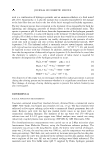
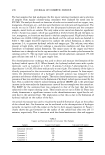
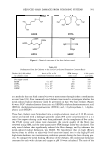
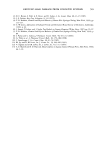
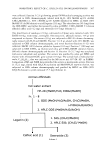
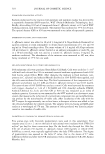
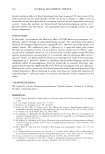
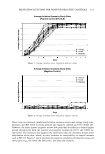
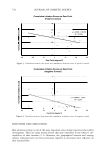
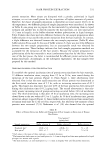
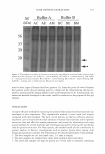
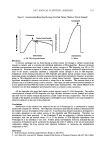
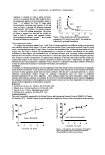
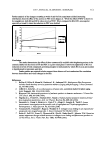
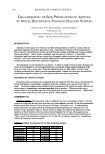
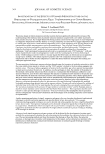
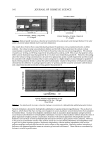
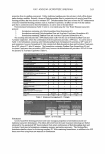
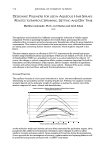
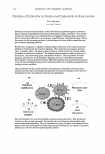
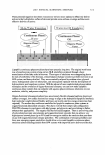
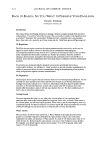
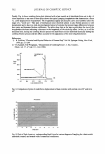
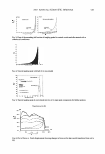
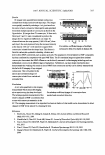
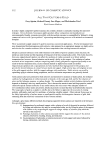
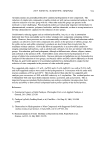
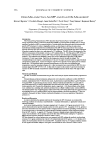
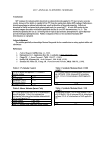
532 300 250 ·= 200 -� 150 C: C: 100 ·m 0 50 0 0 JOURNAL OF COSMETIC SCIENCE 241.8± 8.1 10 20 30 Time(hour) 249.5± 2,3 (ug/rng hair) 254.3± 4.7 252.6± 4.0 40 50 Figure 1. Temporal progress of incubation time for extracting protein from human head hair materials. Twelve incubation times were 2.5 hr, 5.0 hr, 7.5 hr, 10 hr, 15 hr, 20 hr, 25 hr, 30 hr, 35 hr, 40 hr, 45 hr, and 50 hr. The values shown above are the mean of three replicates ± standard deviation. incubation time for extracting proteins from both human hairs and mammalian hairs could be 48 hr to 72 hr for sufficient amounts of the hair proteins. Although they recommended different incubation times for extracting the proteins from the human head hairs or other mammalian hairs, our results demonstrate that the reasonable incu bation time for extracting the protein from human head hairs is 24 hr. SDS-P AGE ANALYSIS OF HUMAN HEAD HAIR PROTEIN An experiment of SDS-PAGE was conducted in 5% stacking and 15% separating acrylamide gel to examine the electrophoretic patterns of the proteins extracted from human hair materials by preparing small pieces of hair materials with 3 x washings in distilled water and then incubating them for 24 hr in buffer solutions A or B (buffer solution C is omitted because of inappropriate protein extraction from human head hairs). Figure 2 shows that the hair proteins extracted in both buffer solutions can be clearly analyzed on the gel. In general, the proteins extracted from various hair sources are resolved into several bands with different sizes of molecular weights on the gel (7,8,10,11), as shown in Figure 2. Most of the hair proteins consist of keratin protein families, which are classified into eight types of different molecular weights (7). Of them, two types of keratin families are predominant, type I and type II, with molecular weights of 44-48 kilodaltons (kDa) and 55-60 kDa, respectively (1,2,7). Figure 2 shows that the presence of two larger sizes of protein signals, which can be classified into type I and type II keratin protein families, was identified. In addition, two smaller sizes (arrow signs) of unidentified human hair proteins appeared on the gel (Figure 2), which

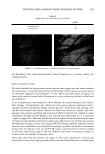
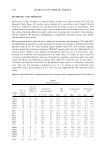
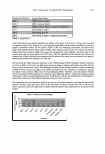
56 37 29 20 M (kDa) HAIR PROTEIN EXTRACTION 533 Buffer A Buffer B AC AE AM BC BE BM Figure 2. Electrophoretic profiles of the protein extracted in two different extraction buffer solutions from human head hair materials. AC: buffer A + control washing. AE: buffer A + ethanol washing. AM: buffer A + washing with a mixed solution. BC: buffer B + control washing. BE: buffer B + ethanol washing. BM: buffer B + washing with a mixed solution. M: protein size marker. may be other types of human head hair proteins (3). From the point of view of human hair protein study, this gel analysis may be a useful tool for characterizing the electro phoretic protein profiles among different sources of human hairs ( 4,9). Consequently, the extraction method developed in this study could be conducive to the purpose of this gel analysis. CONCLUSIONS A simple efficient method for extracting the protein from human head hair materials was developed in this experiment. This reproducible method is more rapid and simpler compared with other methods. The most crucial features are that (a) sufficient amounts of protein can be obtained from small amounts of human hair materials and (b) protein extraction time and effort for sample preparation can be saved by eliminating such steps as pretreatment by several washings and centrifugations and by reducing the incubation time for protein extraction. For these reasons, this method could also be contributive to protein analysis in forensic investigations such as protein typing when testing with human hair proteins is needed. The following are the detailed procedures of this method: 1. The hair samples are cut into small sizes, 1-2 mm in length. 2. The hair samples are washed three times with distilled water and dried. 3. The dried hair samples (20 mg) are placed in a 50-ml tube or container containing
Purchased for the exclusive use of nofirst nolast (unknown)
From: SCC Media Library & Resource Center (library.scconline.org)