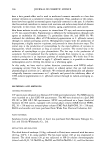
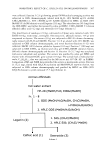
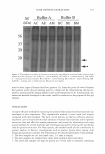
534 JOURNAL OF COSMETIC SCIENCE 5 ml of a buffer solution consisting of 25 mM Tris-HCl (pH 8.5), 2.6 M thiourea, 5 M urea, and 5 % 2-mercaptoethanol. 4. The tube or container is incubated at 50°C for 24 hr. 5. The mixture is filtered through three layers of nylon mesh (200-mesh size). 6. The contents of the protein are measured spectrophotometrically, or SDS-PAGE analysis is performed by concentrating the protein as described in Materials and Meth ods. ACKNOWLEDGMENTS J.-A. Chun and W.-H. Lee were partially supported by BK21 Programs. REFERENCES (1) L. Langbein, M.A.Rogers,H.Wintert,S. Praetzelt, U. Beckhaust, H. R. Rackwitz, and]. Schweizert, The catalog of human hair keratins. I. Expression of the nine type I members in the hair follicle,]. Biol. Chem., 274(28), 19874-19884 (1999). (2) L. Langbein, M. A. Rogers, H. Wintert, S. Praetzelt, and J. Schweizert, The catalog of human hair keratins. II. Expression of the six type II members in the hair follicle and the combined catalog of human type I and II keratins,]. Biol. Chem., 276(37), 35123-35132 (2001). (3) Y. J. Lee, R. H. Rice, and Y. M. Lee, Proteome analysis of human hair shaft, Mol. Cell. Proteomics, 5, 789-800 (2006). (4) S. P. Goyal and V. Sahajpal, Wildlife forensic cell: Activities and development of a novel approach for identifying species from hair using keratin protein profiles, XVI Annual Research Seminar, Wildlife Institute of India (abstract) (2002). (5) T. Inoue, I. Sasaki, M. Yamaguchi, and K. Kizawa, Elution of S100A3 from hair fiber: New model for hair damage emphasizing the loss of S 100A3 from cuticle,]. Cosmet. Sci., 51, 15-2 5 (2000). (6) J. Gray, The world of hair, The P&G Hair Care Research Center an online reference, pp. 4-150 (1997). (7) M. Gerhard, Electrophoretic variability in human head hair: Polyacrylamide gel electrophoresis of hair proteins in the presence of sodium dodecyl sulfate and urea, Electrophoresis, 8, 153-157 (1987). (8) M. Gerhard and M. Hermes, Electrophoretic variability in human hair: Comparative sodium dodecyl sulfate-polyacrylamide gel electrophoresis of body and head hair proteins, Electrophoresis, 8, 490--492 (1987). (9) Y. Shimomura, N. Aoki, J. Schweizer, L. Langbein, M. A. Rogers, H. Winters, and M. Ito, Polymor phisms in the human high sulfur hair keratin-associated protein I, KAPl, gene family,]. Biol. Chem., 277(47), 45493--45501 (2002). (10) A. M. Nakamura, K. Arimoto, K. Takeuchi, and K. Fujii, A rapid extraction procedure of human hair proteins and identification of phosphorylated species, Biol. Pharm., Bull., 25(5), 569-572 (2002). (11) K. Yamaguchi, A. Yamaguchi, T. Kusunoki, A. Kohda, and Y. Konishi, Preparation of stable aqueous solution of keratins, and physicochemical and biodegradational properties of films,]. Biomed. Mater. Res., 31, 439--444 (1996). (12) P. Steinert, R. D. Zackroff, M. Ynardi-Whitman, and R. D. Goldman, Isolation and characterization of intermediate filaments, Methods Cell. Biol., 24, 399-419 (1982). (13) M. M. Bradford, A rapid and sensitive method for the quantification of microgram quantities of protein utilizing the principle of protein-dye binding, Anal. Biochem., 72, 248-254 (1979).

]. Cosmet. Sci.) 58, 535-537 (September/October 2007) Abstracts Journal of the Society of Cosmetic Chemists Japan Vol. 41, No. 1, 2007* Development of Nanomaterials by Using Supercritical perfonnance nanomaterials for medicines, cosmetics, Carbon Dioxide -Establishment of New Preparation foods, etc., with an environment-friendly alternative Method ofNiosomes- Kinka Ri NIKKOL GROUP, Cosmos Technical Center Co., Ltd . 3-24-3, Hasune, Itabashi-ku, Tokyo 174-0046, Japan solvent, supercritical CO2. Non-Invasive Methods for Assessment of Dermal UV Damage (II) Ai Oba*, Takumichi Sugiyama** Niosomes (Nonionic surfactant vesicles)just like liposomes Skin Research and Technology Department*, Skin Care have the potential to be used as carriers of active Products R&D Department**, POLA Chemical Industries, ingredients for topical usage, such as cosmetics and Inc., *560, Kashio-cho, Totsuka-ku, Yokohama 244-0812, medicines. The conventional methods for preparing Japan, **27-1, Takashimadai, Kanagawa-ku, Yokohama vesicles have been briefly reviewed. Vesicles are, however, 221-0833, Japan prepared basically by using organic solvents, such as chloroform, ethers, etc., which are harmful to the human One of the important approaches in cosmetics to prevent body. The object of this study was to optimize the process the development of skin aging symptoms such as wrinkles for preparing one kind of nanomaterials, niosomes, by is to treat the skin in the early photoaging stage. However, using a supercritical reverse phase evaporation method it is difficult for most cosmetic users to perceive the degree (scRPE method) without using any co-solvents. Formation of their skin damage caused by chronic UV exposure, of niosomes of nonionic surfactants has been studied based especially in the dermis, Therefore, the establishment of on the solubility behavior of nonionic surfactants in non-invasive methods for the assessment of dennal UV supercritical CO2 (scCO2). The formation ability of damage is to be expected. In this study, we measured the niosomes was evaluated by trapping efficiency measured facial skin of 127 healthy Japanese women (aged 25-38) by the glucose dialysis technique. Furthermore, the using the Cutometer, and Resiliometer which we invented. structure of niosomes was of a large unilamellar vesicle as Mechanical parameters obtained by the Cutometer, Ur and revealed by freeze-fracture transmission electron Ur/Uf, which are correlated with the accumulation of microscopy (FF-TEM) images and DSC measurement. This denatured elastic fibers in our previous study, linearly new method is considered to be able to encapsulate decreased with age, and correlated with water content of different useful active ingredients easily and gain high the stratum corneum. On the other hand, a Resiliometer * These abstracts appear as they were originally published. They have not been edited by the Journal of Cosmetic Science. 535
Purchased for the exclusive use of nofirst nolast (unknown)
From: SCC Media Library & Resource Center (library.scconline.org)