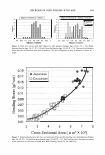
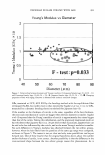
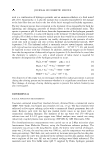
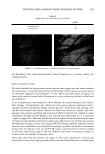
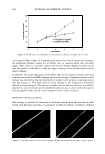
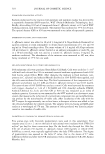
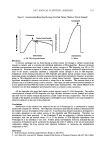
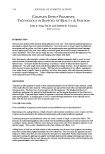
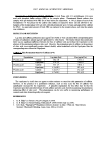
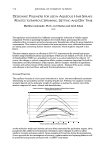
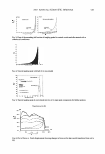
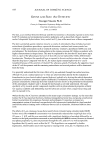
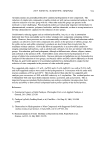
DECREASE IN HAIR VOLUME WITH AGE 491 Young's Modulus vs Diameter 2 0 ........4 X 1.5 ♦ 1 Cl.) 0.5 F - test : p=0.033 0 40 50 60 70 80 90 Diameter ( µ. m) Figure 7. Relationship between diameter and Young's modulus (2). Japanese females (age: 26-39, N = 21) and Caucasian females (age: 20-40, N = 35): ♦. Japanese females (age: 45-51, N = 17): e. Changing properties of hair with aging. Decrease in diameter and intrinsic structural changes. GPa, measured at 24°C, 62% RH by the bending method with the equilibrium fiber technique) (8a,8b), but rather close to that reported by Sogabe et al. (ca. 11 to 12 GPa, measured by a dynamic bending elasticity method) for Japanese hair (4). If the number or the thickness of cuticles is the same, regardless of the hair thickness, the ratio and contribution of cuticle are bigger when the hair diameter is smaller. Sogabe et al. (4) reported that the Young's modulus of cuticle is approximately four times bigger than that of the cortex. Taking this information, and the previously mentioned result on hair thickness (that Japanese hair is ca. 20 µm thicker than Caucasian), Japanese hair can be said to be less influenced by the cuticle, and so the mean Young's modulus is smaller. No such difference in Young's modulus was observed between the two ethnic groups, however, when the hair fibers from the panelists of the same age range were compared, as shown in Figure 5. The reason is not yet clear and only some possibilities can be put forward now. One of these may be that the original hypothesis above, about the number and/or thickness of cuticle, is not correct. Another possibility is that the difference in the cross-sectional shape between the two ethnic groups causes this phenomenon. As is

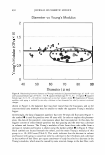
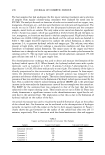
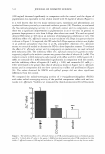
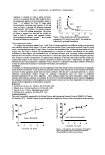
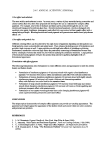
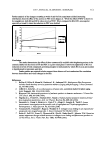
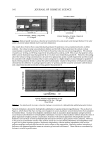
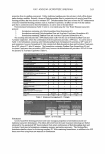
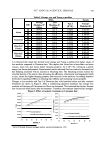
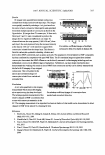
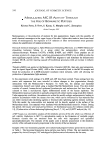
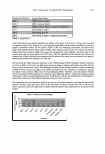
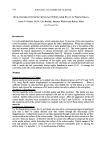
492 JOURNAL OF COSMETIC SCIENCE Diameter vs Young's Modulus 2 0 ,.......! X 1.5 • 0 40 50 60 70 80 90 Diameter ( µ m) Figure 8. Relationship between diameter and Young's modulus (3). Japanese females (age: 26--39, N = 21) and Caucasian females (age: 20--40, N == 35): ♦. Japanese females (age: 45-51, N = 17): lighter•· Japanese females (age: 45-51, N = 9) with hair trouble such as less hair volume: darker e. Degradation of Young's modulus with aging is induced by not only a decrease in hair diameter bur also by intrinsic structural changes. shown in Figure 4, the Japanese hair was more round than the Caucasian, and so the cross-sectional area moment may be smaller to make the apparent Young's modulus bigger. Interestingly, the data of Japanese panelists' hair over 40 years old fluctuates (Figure 7: the symbol e is used for panelists over 40 years old). In order to explain this phenom enon, the data of the panelists' consciousness about hair was analyzed. In this data, the biggest concern of senior female panelists was hair graying and the next was a decrease in volume and bounce. The Young's modulus of hair from those who suffer from a decrease in volume and bounce is shown using the darker symbol • in Figure 8. These black symbols are located beneath the others, and the mean Young's modulus of this group is ca. 10-30% lower (Table I). This result indicates that the decrease in volume and bounce with aging is caused not only by a decrease in hair thickness and a decrease in the number of hair fibers per square centimeter of scalp but also by a decrease in the Young's modulus, which must be caused by some internal change in the hair fiber, such
Purchased for the exclusive use of nofirst nolast (unknown)
From: SCC Media Library & Resource Center (library.scconline.org)