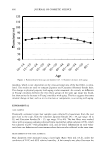
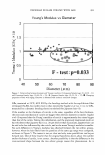
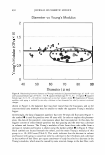
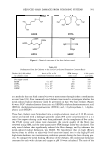
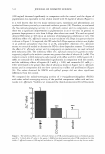
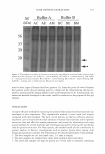
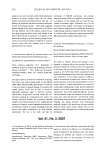
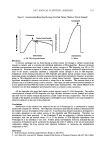
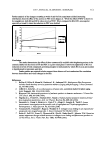
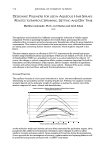
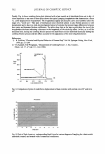
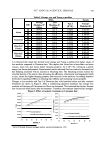
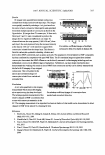
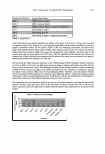
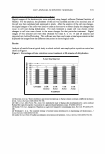
2007 ANNUAL SCIENTIFIC SEMINAR 561 Further analysis of the changes occurring at weeks 6 and 8 of the experiment yielded interesting information about the effect of the actives on PDC levels (figure 2). While the effect of MAP is shown to be insignificant, both HQ and HCA reduce levels of PDC. When compared to HQ, HCA was superior especially at week 8, where the reduction in PDC was doubled. Weeks Conclusion ,,,,-:-,••••,HCA _...,_MAP ---HQ This study demonstrates the effect of three commercially available skin-brightening actives in the cosmetic market on skin levels of TP and PDC in a pilot Asian panel. It shows the superiority of HCA in reduction in levels of both compounds, providing insights to mechanisms by which HCA as an anti-oxidant is hypothesized to rejuvenate aged skin. Further studies are required to better support these data as well as to understand the correlation between these effects and visual changes in the skin. References I. Kollias N, Gillies R, Moran M., Kochevar I.E., Anderson R.R., Endogenous Skin fluorescence includes bands that may serve as quantitive markers of aging and photoaging J. invest Dermatol. 11, 776-780 (1998). 2. Leffel D.J., Stetz M.L. In vivo fluorescence of human skin- a potential marker for photo aging. Arch. Dermatol. 124, 1514-1518 (1988). 3. Blagovea P.M. Aminoacids-precursors of melanin synthesis in hamster melanoma. J. Cancer Res. Clin. Oneal. 108, 366-368 (1984). 4. Hegedus Z.L., Frank H.A. Altschule M.D., Nayak u Human plasma /ipofuscin melanins formed from tryptophan metabolites. Arch. Int. Physiol. Biochim. 94, 339-348 (1986). 5. Smaniotto A., Comai S., Bertazzo A., Costa C.V., Allegri G., Seraglia R., Traldi P. A mass spectrometric investigation on the possible role of tryptophan and 7-hydroxytryptophan in melanogenesis. J. Mass Specrom. 41, 921-930 (2006). 6. Yamanuchi M., Prisayanh P., Haque Z. Woodley D.T. Collagen cross-linking in sun exposed and unexposed sites of aged human skin. J. Invest. Dermatol 97, 938-941 (1991). 7. Rutter K., Sell D.R., Fraser N., Obrenovich M., Zito M., Starke-Reed P., Monnier V.M Green tea extract suppresses the age related increase in collagen cross-linking and fluorescent products in C578U6 mice. Intl. J. Vitam. Nutr. Res. 73(6), 453-460 (2003).

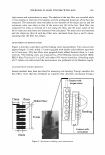
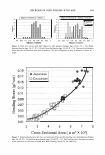
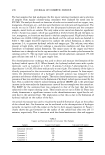
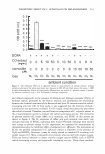
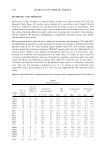
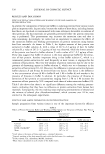
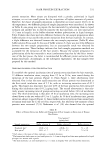
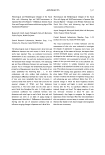
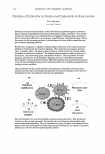
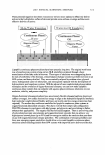
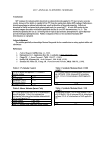
562 JOURNAL OF COSMETIC SCIENCE ENHANCEMENT OF SKIN PERMEATION OF ACTIVES BY NOVEL BIOADHESIVE POLYMER DELIVERY SYSTEM INTRODUCTION Kishore R. Shore, Ph.D.1, Bozena Michniak2) and Rashmi Thakur" 1 Polytherapeutics) Inc. 2 Department of Pharmaceutics, Ernest Mario School of Pharmacy Rutgers - The State University of New Jersey Although it would appear to be obvious to use film-forming polymers as delivery systems, there are significant challenges facing their application to skin. Unsatisfactory retention of the formed polymeric film on skin for a desired duration of time, uncomfortable feel, peeling, and flaking are common problems that are encountered. The net result is inadequate wear time and loss of efficacy. A hydrophilic hydrophobic graft copolymer delivery system that is designed to address these and other issues has been reported1•2, and is now commercially available under the INCi name dimethylacylamide/acrylic acid/polystyrene ethyl methacrylate copolymer (Copolymer). The Copolymer is water insoluble but can absorb ~ 20 times its weight of water to form a hydrogel, and can be easily formulated by conventional methods into cosmetically elegant dennal formulations in the form of a cream, lotion, serum or gel. When the formulation dries on a skin surface, it forms a water insoluble bioadherent film, which is invisible and imperceptible. Human use studies have shown that the formed film is retained on skin for 24+ hours unless washed away with soap and water. DELIVERY OF ACTIVES TO SKIN Dissolution studies of model active compounds from the Copolymer film have shown controlled release of both hydrophobic and hydrophilic compounds under sink conditions over a period of more than 24 hours3 • Excellent bioadhesion and controlled release of properties of the Copolymer make it attractive for use in cosmetic, dermatological, and transdermal drug delivery products. The present study was to evaluate effect of the Copolymer upon rate of skin permeation of actives contained therein. Caffeine was used as a model compound and oleic acid was used as a model enhancer. EXPERIMENTAL FORMULATIONS: Skin permeation studies of caffeine from various formulations (Table 1) with and without the Copolymer and oleic acid were done using Franz diffusion cells and 500-µm thick dermatomed human cadaver skin (National Disease Research Interchange, Philadelphia PA). A clear polymeric dispersion/solution was prepared by first hydrating and then homogenizing 2% Copolymer in a 92 :8 mixture of water and ethoxy diglycol. Excess amount of caffeine was added to the dispersion to ensure saturation of the formulation, which was kept at room temperature for 24 hours. The suspension was shaken well using a vortex mixer every hour for 10 hours. Oleic acid was added to the formulations 3-6 (Table 1) prior to the experiment to prepare its 2% v/v and 5% v/v solutions, respectively. Formulations without the Copolymer served as control. TABLE 1: Caffeine Formulations for the Skin Permeation Studies Copolymer w/v Caffeine Oleic acid v/v Formulation 1 0 Saturation 0 Formulation 2 2% Saturation 0 Formulation 3 0 Saturation 2% Formulation 4 2% Saturation 2% Formulation 5 0 Saturation 5% Formulation 6 2% Saturation 5%
Purchased for the exclusive use of nofirst nolast (unknown)
From: SCC Media Library & Resource Center (library.scconline.org)