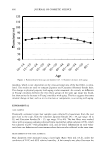
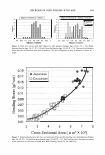
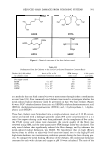
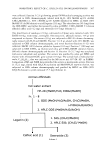
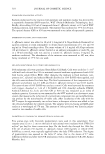
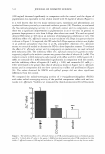
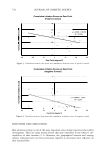
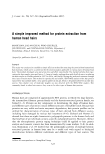
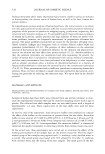
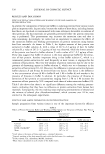
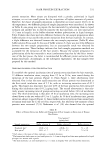
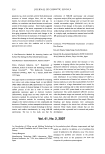
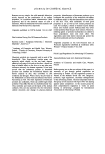
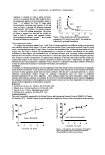
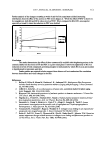
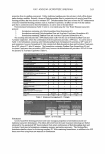
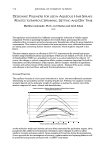
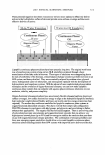
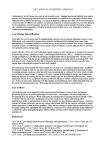
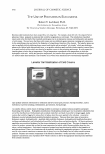
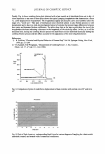
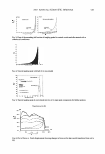
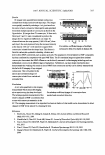
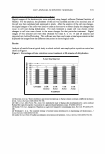
512 JOURNAL OF COSMETIC SCIENCE (100 mg/ml) decreased significantly in comparison with the control, and the degree of pigmentation was equivalent to that of skin treated with 30 mg/ml of arbutin (Figure 1). It is well known that the two major melanin types, eumelanin and pheomelanin, are synthesized from tyrosine by a continued oxidative process (10). Therefore, we evaluated the free-radical-scavenging activity in C. officinalis extract and its components, since there was a significant improvement in pigmentation in an in vivo test. In general, to generate dopaquinone in vitro from 1-Dopa takes about one week. We used an optical density (OD) value at 405 nm as an indicator of melanogenesis inhibition in vitro. The inhibitory effect of C. officinalis extract on auto-oxidation of 1-Dopa in aqueous solution is shown in Figure 2. As expected, the OD value for 1-Dopa aqueous solution was higher in an ambient atmosphere than that in an N2 atmosphere. Addition of C. officinalis extract or cornuside tended to decrease the OD in a dose-dependent manner. To evaluate the effect of C. officinalis extract and its components on melanocytes, we used cultured B16 melanoma cells. The inhibitory effect of C. officinalis extract (25 µg/ml) on mela nogenesis judged by the melanin content was greater than that of arbutin (0.1 mM). The melanin content in B 16 melanoma cells treated with caffeic acid (0.1 mM), loganin (0.1 mM), or cornuside (0.1 mM) diminished significantly in comparison with the control, and the inhibitory effects of loganin (0.1 mM p 0.01) and cornuside (0.1 mM p 0.01) were found to be greater than that of arbutin as shown in Figure 3a). C. officinalis extract and its components did not show cytotoxicity or affect cell proliferation (Figure 36). The values obtained for EGCG with galloyl groups did not show significant differences from the control. We compared the radical-scavenging activity of (-)-epigallocatechingallate (EGCG) with other radical-scavenging activity of the purified components caffeic acid and cor nuside in C. officinalis. Yoshiki et al. measured the chemiluminescence (CL) of flavonoids 12 10 Q) :::, 8 6 l 4 2 0 a C: a 0 0 (_) *** C: :::, -e C'O Figure 1. The inhibitory effects of C. officinalis extract on DVB-induced pigmentation in brownish guinea pig (N = 5). Each delta L* value is the mean+/-SEM of ten determinations after UVB irradiation for two weeks. C. officinalis extract: (100 mg/ml) and arbutin: (30 mg/ml) were applied twice a day for two weeks.

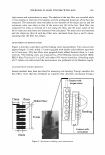
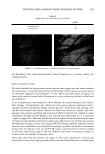
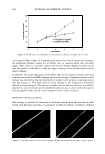
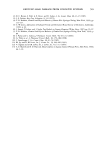
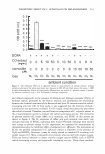
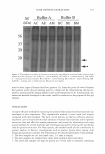
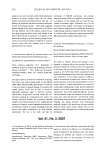
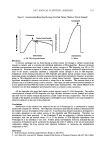
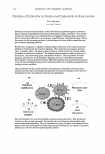
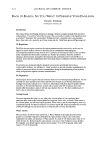
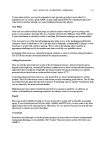
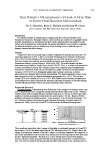
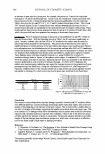
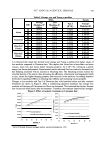
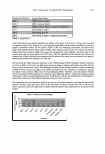
INHIBITORY EFFECT OF C. OFFICINALIS ON MELANOGENESIS 513 0.8 0. 7 .-. E 0.6 C LO 0. 5 0 V 0.4 ._, 0 0.3 0 0.2 0. 1 0.0 DOPA + + + + + + + CO extract 0 0 5 10 50 5 10 50 0 0 a 0 (mg/ml) cornuside 0 0 0 0 0 0 0 a 10 50 10 50 (µM) Gas N2 02 02 02 02 02 02 02 02 02 02 02 ambient condition Figure 2. The inhibitory effects of C. o/ficinalis extract in auto-oxidation of 1-Dopa solution. 1-Dopa oxidative substrate of the whole experiment was measured at OD 405 nm. Each value is the mean+/-SEM of eight determinations. Values are significantly different from the control (C. officinalis extract, 0 mg/ml, 02 ambient condition). ***p 0.01 by Dunnett's multiple comparison. and related compounds in the presence of aldehyde and hydrogen peroxide (H 2 O 2 ) or hydroxyl radical, generated by the Fenton reaction, and determined the relationship between the chemical structures of the flavonoids and their CL intensities and/or radical scavenging activities (16). In their study, it was suggested that the intensity of chemi luminescence was positively correlated. It will visually reveal more about the area where the radical is located. Therefore, we used bioactive components of C. originalis extract in this visual evaluation system to measure the radical-scavenging activity. The intensities of photons emitted (CL) from caffeic acid, cornuside, and EGCG in this system are shown in Figure 4. The CL intensities of caffeic acid and cornuside were much very stronger than that of EGCG, indicating they would efficiently exchange their excited state energy to photon energy. In this experiment, we examined by measurement of chemiluminescence the inhibitory effect of oxidation by C. officinalis. The mechanism of CL for the purified compounds in C. officinalis extract is unknown in the presence of H 2 O 2 and KHCO3' However, it may be closely related to common CL occurring with singlet oxygen (17). Many compounds emit photons when excited with singlet oxygen. There are several methods to detect reactive oxygen species (ROS), such as DPPH radical-scavenging activity and superoxide scavenging activity. Using those methods,
Purchased for the exclusive use of nofirst nolast (unknown)
From: SCC Media Library & Resource Center (library.scconline.org)