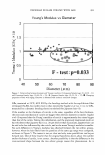
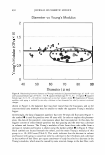
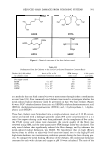
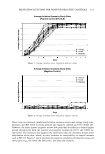
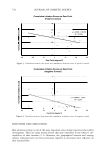
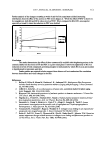
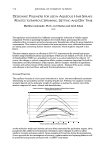
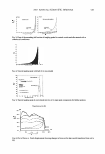
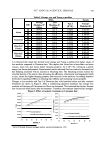
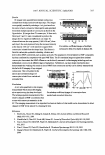
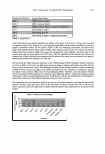
IRRITATION OUTCOME FOR POSITIVE/NEGATIVE CONTROLS 525 Based on the results of this analysis, climate conditions such as average study tempera ture and relative humidity did not significantly impact the irritation outcome for either 0.1 % SLS and saline. However, the dryer climate may have a tendency to induce a higher level of irritation, particularly in the negative control. Overall, the different study centers produced similar results for both the positive and the negative controls regardless of geographic location. ACKNOWLEDGMENT The authors thank Yassaman Najmabadi, Joanne Browne, and Joelle Potrebka for their assistance during the data collection process. REFERENCES (1) R. S. Berger and J. P. Bowman, A reappraisal of the 21-day cumulative irritation test in man, J. Toxicol. Cut. Ocul. Toxicol., 1, 109-115 (1982). (2) S. Weltfriend, M. Ramon, and H. I. Maibach, "Irritant Dermatitis (Irritation)," in Dermatotoxicology, 6th ed., H. Zhai and H. I. Maibach, Eds. (CRC Press, Boca Raton, FL, 2000), pp. 181-228. (3) C.H. Lee and H. I. Maibach, "Sodium Lauryl Sulfate in Dermatotoxicology," in Dermatotoxicology, 6th ed., H. Zhai and H. I. Maibach, Eds. (CRC Press, Boca Raton, FL, 2000), pp. 479-506. (4) N. Golda and H. I. Maibach, Occlusion as an active agent, Cosmet. Toiletr., 121(5), 36 (2006).

]. Cosmet. Sci., 58, 527-534 (September/October 2007) A simple improved method for protein extraction from human head hairs MI-OK HAN, JAE-AN CHUN, WOO-HYUP LEE, JIN-WOO LEE, and CHUNG-HAN CHUNG, Department of Biotechnology, Dong-A University, Busan 604-714, South Korea. Accepted for publication March 9, 2007. Synopsis This study was conducted to establish a simple efficient method for extracting the protein from human head hair materials, which can be a useful tool for the protein analysis applicable to various types of human head hairs. The method developed saves extraction time and effort considerably. The method includes four steps: cutting the hair samples into small pieces 1-2 mm in length, washing them with distilled water, incubating the hair samples in a buffer solution at 50 ° C for 24 hr, and finally filtering the incubated mixtures through three layers of nylon mesh. This method is reproducible and reliable. SDS-PAGE analysis of the hair protein extracted by this method shows a clear protein profile on the gel, which is frequently observed in other hair sources. Two smaller sizes of molecular weights are also detected with the SDS-PAGE analysis. Not commonly found in other hair sources, they seem to be other types of human hair proteins. INTRODUCTION Human hairs are comprised of approximately 80% protein, in which two large families, the intermediate filament protein family and the keratin-associated protein family, are formed (1-3). Proteins are key components in determining the shape of human hairs, and different types of proteins contain different amounts of disulfide bonds. Because hair proteins are very stable and resist enzymatic degradation, hair protein profiles can be utilized for characterization of various types of hairs derived from different sources, including hairs damaged by various hair treatments (4-6). Gerhard and Hermes (7) showed that there are eight characteristic polypeptide patterns in the human body and that head hair of an individual contains a specific polypeptide pattern. Moreover, the fact that the electrophoretic protein typing technique could be applied to hair genetic analysis and cosmetic sciences has been demonstrated by some workers (5-8). In addi tion, Shimomura et al. (9) showed that the polymorphic patterns of multiple keratin associated proteins in human hairs may be a useful tool with regard to biological identification between different individuals and different types of hair sources. The Address all correspondence to Chung-Han Chung. 527
Purchased for the exclusive use of nofirst nolast (unknown)
From: SCC Media Library & Resource Center (library.scconline.org)