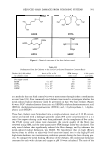
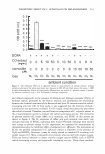
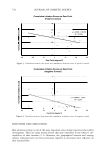
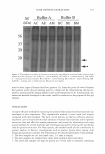
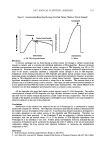
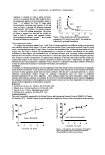
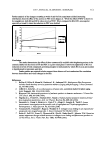
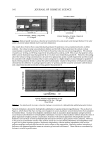
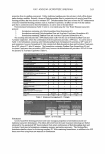
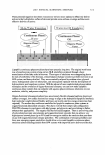
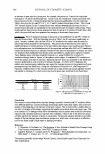
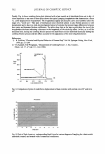
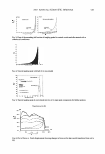
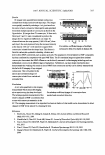
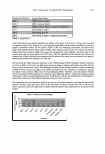
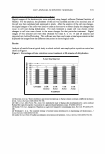
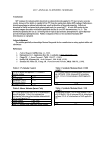
516 JOURNAL OF COSMETIC SCIENCE the anti-oxidative effects of plant ingredients have been measured. CL may be one of the useful methods for the measurement of ROS. As shown in Figure 5, caffeic acid and cornuside not only have free-radical-scavenging activity but also superoxide-scavenging activity. Using this method, we demonstrated free-radical-scavenging activity in C. officinalis extract and free-radical- and superoxide-radical-scavenging activity in some extract components. CONCLUSIONS In this study, we evaluated the inhibitory effect of DVB-induced pigmentation in C. o/ficinalis extract through its radical-scavenging activity. We investigated the photo chemical and pharmacological active compounds of C. officinalis hot water extract and ethanol extract. We understood that C. officinalis is a medicinal plant with potent free-radical-scavenging activity not only against reactive oxygen species (H2O 2 , super oxiside anion, hydroxyl radical etc.) in a narrow sense, but also against many other free radicals (peroxynitrate, peroxyradical). It is estimated that the reduction effect with C. officinalis extract can block oxidative reaction on melanogenesis. Loganin and cornuside, components in C. officinalis, showed a significant free-radical-scavenging activity and inhibitory effects on melanogenesis. Thus we would like to conclude that these com ponents would show the inhibitory effect of DVB-induced pigmentation in C. officinalis. However, we could not carry out clinical evaluations because of the small quantity of the isolated ingredients. We are planning to isolate more bioactive compounds (loganin and cornuside) from C. officinalis extract to continue with further clinical evaluation in the future. ACKNOWLEDGMENTS We thank Dr. Junichi Hasegawa and Professor Takasahi Osumi, University of Hyogo, for their continuing advice. REFERENCES (1) H.-C. Yeung, Handbook of Chinese Herbs and Formulas (Institute of Chinese Medicine, Los Angeles 1985). (2) T. Ito, Nippon Yakurigaku Zasshi, 57, 15 (1961). (3) T. Endo et al., Yakugaku Zasshi, 93, 30 (1973). (4) H. Q. Xu, H.P. Hao, X. Zhang, and Y. Pan, Morroniside protects cultured human umbilical vein endothelial cells from damage by high ambient glucose, Acta. Pharmacol. Sin., 25, 412-415 (2004). (5) T. Okuda et al., Chem. Phann. Bull., 32, 4662 (1984). (6) G. Imokawa, T. Kobayashi, M. Miyagishi, K. Higashi, and Y. Yada, The role of endothelin-1 in epidermal hyperpigmentation and signaling mechanisms of mitogenesis and merlanogenesis, Pigment. Cell. Res., 10, 218-228 (1997). (7) M. Yoshida, Y. Takahashi, and S. Inoue, Histamine induces melanogenesis and morphological changes by protein kinase A activation via H2 recepters in human normal melanocytes,j. Invest. Dermatol., 114, 334-342 (2000). (8) M. S. Eller, M. Yaar, and B. A. Gilchrest, DNA damage and melanogenesis, Nature, 372, 413-414 (1994). (9) C. Romeo-Graillet, E. Aberdam, M. Clement, J.P. Ortonne, and R. Ballotti, Nitric oxide produced by ultraviolet-irradiated keratinocytes stimulates melanogenesis,j. Clin. Invest., 99, 635-642 (1997). (10) S. Ito, A chemist's view of melanogenesis, Pigment. Cell. Res., 16, 230-236 (2003). (11) T. Hatano, T. Yasuhara, R. Abe, and T. Okuda, A galloylated monoterpene glucoside and a dimeric hydrolysable tannin from Cornus officinalis, Phytochem., 29, 2975-2978 (1990).

INHIBITORY EFFECT OF C. OFFICINALIS ON MELANOGENESIS 517 (12) E. Lim, G. S. Higgins, Y. Li, and D. J. Bowles, Regioselectivity of glucosylation of caffeic acid by a UDP-glucose: Glucosyltransferase is maintained in plants, Biochem. ]., 373, 987-992 (2003). (13) H. Kawai, M. Kuroyanagi, and A. Ueno, Iridoid glucosides from Lonicera japonica Thunb., Chem. Pharm. Bull., 36, 3664-3666 (1988). (14) N. Keawpradub, H. Takayama, N. Aimi, and S. Sakai, Indole alkaloids from Alstonia glaucescens, Phytochem., 37, 1745-1749 (1994). (15) H. Inouye, S. Ueda, K. Inoue, and Y. Nakamura, Uber die monoterpenglucoside. X. Secoiridoid glucoside aus swertia japonica. Isolierung von funf secoiridoid-glucosiden sowie die struktuaufklarung des swerosides, des swertiamarins und des gentiopicrosids, Chem. Pharm. Bull., 18, 1856-1865 (1970) (16) Y. Yoshiki, K. Okubo, and M. Onuma, Chemiluminescence of benzoic and cinnamic acid, and flavonoids in the presence of aldhyde and hydrogen peroxide or hydroxyl radical by Fenton reaction, Phytochem., 39, 225-229 (1995). (17) A. U. Khan and M. Kasha, Singlet molecular oxygen evolution upon simple acidification of aqueous hypochlorite: Application to studies on the deleterious health effects of chlorinated drinking water, Proc. Natl. Acad. Sci., 91, 12365-12367 (1994). (18) H. Inouye, S. Ueda, K. Inoue, and Y. Takeda, Studies on monoterpene glucosides and related natural products. XXIII. Biosynthesis of the secoiridoid glucoside, gentiopicroside, morroniside, oleuropein, and jasminin, Chem. Pharm. Bull, 22, 676-686 (1974).
Purchased for the exclusive use of nofirst nolast (unknown)
From: SCC Media Library & Resource Center (library.scconline.org)