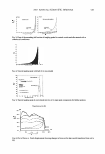
2007 ANNUAL SCIENTIFIC SEMINAR 567 Conclusions: The discovery and development of stimuli responsive hydrogels will be accelerated by the application of rapid methods of analysis that give insight into the hydrodynamic volumes of the micrograph and also methods that indicate the extent of microgel- microgel interaction as a function of concentration and physical conditions. We have shown that we can gain significant insight into then molecular mind parameter by straightforward measurement of the specific reduced viscosity, identification of the critical overlap concentration, the critical entanglement concentration, and the scaling exponents of reduced specific viscosity as a function of polymer concentration. References 1 Lochhead, R.Y. "Stimuli-Responsive Polymer Systems: A review of thermo-associative thickening", Cosmetics and Toiletries, 2 Suares Alan J. , Zhang Joanna H., 'Thickened cosmetic compositions', United States Patent 6,986,895, January 17, 2006, assigned to Unilever Home & Personal Care USA division of Conopco . 3 Ron Eyal S. Bromberg Lev Temchenko Marina End modified thermal responsive hydrogels United States Patent 6,316,011, November 13, 2001 assigned to Madash LLC 4 Olivieri Laetitia Ron Eyal S. Thermally reversible water in oil in water emulsions United States Patent 6,995,209 February 7, 2006 , assigned to Madash LLC 5 L'Alloret, Florence "Polymer comprising water-soluble units and lest units, and aqueous composition comprising same" United States Patent Application 20040214913 October 28, 2004 6 L'Alloret, Florence "Polymer comprising water-soluble units and LCST units, and aqueous composition comprising it" United States Patent Application 20060111518 May 25, 2006. 7 L'Alloret Florence "Heat-induced gelling foaming composition and foam obtained" United States Patent 6,878,754 April 12, 2005 assigned to L'Oreal. 8 Zhang, Yanjie Furyk Steven Bergbreiter David E Cramer, Paul S "Specific ion effects on the water solubility of macromolecules", J. Amer. Chem. Soc. 2005, 127, 14505 9 Sarrazin-Cartalas ,A. Iliopoulos, I. Audebert, R Olsson, U. "Association and thermal gelation in mixtures of hydrophobically modified polyelectrolytes and nonionic surfactants", Langmuir, 1994, 10, 1421. 10 Panai, S .Prud'homme, R.K Peiffer D.G. Colloids & Surfaces, 147, (1999), 3. 11 Loyen, K. Iliopoulos, I. Audebert, R Olsson, U. "Reversible thermal gelation in polymer/ surfactant system" Langmuir, 1995, 11, 1053. 12 Cameron, A N.S. . Corbierre, M.K and Eisenberg, A, 'Symmetric amphiphilic block copolymers in solution: A morphological wonderland", Can. J. Chem.,77: 1311-1326 (1999) 13 Dubie£, Claude Nicolas Morgantini, Luc Bernard Anne-Laure, Simonet, Frederic "Use of a combination of at least one associated polymer and at least one amphiphilic diblock copolymer for thickening cosmetic compositions" United States Patent Application 20060140898 June 29, 2006 14 Lochhead, R.Y Smith, V. "Polymers in Skin Care", HAPP!, April 2007. 15 Huang, X. Wu.Y. Wang, H "Peptide-based conditioners and colorants for hair, skin and nails", US Patent Application 20070048236 A1, March 1 , 2007. E.I. Du Pont De Nemours. 16 Ulijn, R.V. Bibi, N. Jayawarna, V. Thornton, P. Todd, S. Mart, R.J. .Smith, AM. Gough,J.E. "Bioresponsive hydrogels", Materials Today, 2007, 10, 40. 17 Kujawa, P. . Audibert-Hayet, A. Selb, J. Candau, F.: Macromolecules 2006, 39, 384.

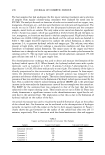
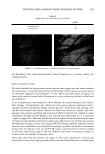
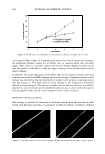
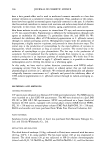
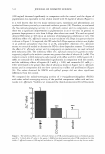
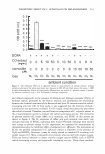
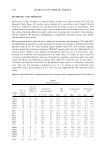
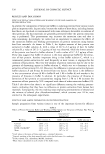
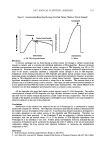
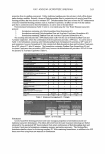
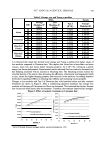
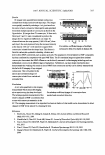
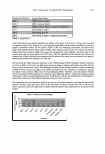
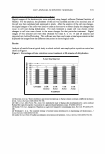
568 JOURNAL OF COSMETIC SCIENCE USE OF FILM-FORMING POLYMERSFOR INCREASED EFFICACY IN SUNSCREENS Jennifer A. Davis1, Doreen Petersen1 and Daniel Li2 'National Starch & Chemical Company, Bridgewater, NJ, USA 2 National Starch & Chemical Company, Shanghai, China It is well established that in order to optimize the efficacy of sunscreens and achieve higher SPF (Sun Protection Factor) values, the sunscreen film must be uniform on the skin as well as water resistant. Additionally, the sun protection market is now filled with a variety of product forms which requires the fihn forming technology to be utilized in a variety of fonnulation types and to be compatible with organic and inorganic UV filters as well as combinations of the two. Most recently, the explosion of alcohol-based aerosol and non-aerosol pwnps and sprays has posed an interesting challenge to formulators trying to waterproof these types of systems. Film-fanning polymers serve as ideal technologies when formulating sunscreens for water and rulHff resistance in both traditional and newer non-traditional products. This paper discusses how the water resistance capability of film-forming polymers is affected in a variety of vehicle types, including water and alcohol-based systems. Performance data including in-vitro and in-vivo SPF testing is given, demonstrating efficacy in emulsions with both organic and inorganic UV actives as well as alcohol-based systems. Of particular interest are combinations of film-forming polymers that show an unexpected boost in SPF. An example of this formulating approach will be descnbcd. Acrylic film-Forming Polymers to Enb nee SPF Water Resistance In addition to waxes and silicones, acrylic film-forming polymers also improve the SPF value 8Dd serve to enhance water and rub-off resistance. These types of polymers, including Acrylates Copolymer and Acrylates/Octylacrylamide Copolymer, have the advantage of forming a uniform film on the skin due to their hydrophobic nature, without an increase in product viscosity or a tacky afterfeel. The hydrophobic moieties on the polymers trap the UV filters into the film matrix upon dry-down. Water resistance performance and SPF enhancement is demonstrated using Aaylates Copolymer and Acrylates/Octylacrylamide Copolymer in a variety of formulation types, with both in-vitro and in-vivo testing methodologies. In-vitro SPF testing was conducted on an alcohol-based system with samples that contained either no film forming polymer or Acrylates/Octylacrylamide Copolymer. Results show that the formulation containing the film-forming polymer achieved higher SPF values, in additionto an increase in the % SPF retained after 80- minute water immersion (Tables 1-2). Ii ,,, ?, •, J fd, ,, If 1, 11 I rm1.l•'1 11 Total I I J • 1 � 1 ', 1, I T ! r 1 IN ! 11o 1,p111• •1 1111,, i 111n11, 48 46 0 10 10 3 6 6 4 4 24 24 100 100 Table 1. Alcohol-Based Formulation Details 11 t'• L.1 •'• ,",,1�•1,,f:�•.•••t.·11,r,1•• ... 1• 8 .1,1 .. '(.1·t•' 1 ,., •1'" r -- .. : �·-, ·:1 �� ,.�� ,,,, • � ,,,,\, ' ,, •••'I �� r : '. • ., �� Table 2. In-vitro Data Results Another example will be presented which describes in-vivo SPF testing performed according to the FDA final monograph for Very Water Resistant sunscreens. Testing was conducted on formulations that contained either no film-forming polymer or Acrylates Copolymer and was perfonncd using five hwnan panelists. Readings were taken before and after an 80-minute immersion in water. The results demonsttate that the formulation containing Acrylates Copolymer offers 97% SPF retention. Enhanced SPF via combinations of Debydro:unthan Gum and Acrylic Film-Forming Polymers Dehydroxanthan Gwn is a heat treated variant of xanthan gum that gives very different performance
Purchased for the exclusive use of nofirst nolast (unknown)
From: SCC Media Library & Resource Center (library.scconline.org)