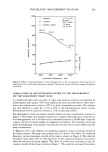
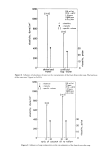
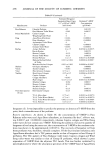
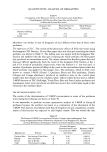
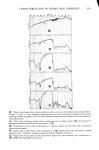
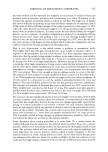
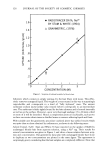
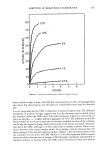
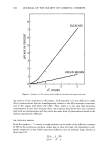
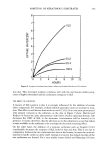
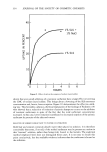
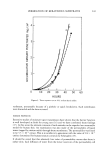
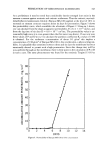
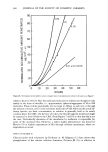
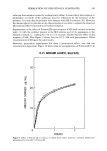
SORPTION OF KERATINOUS SUBSTRATES 333 Z SLS ES-2 ES-3 1 i• 130 E I I O0 2 4 6 8 10 12 HOURS Figure 8. Sorption of sodium lauryl ether sulfates by bleached hair from 10% solution tion also. This decreased sorption correlates well with the well known milder prop- erties of highly ethoxylated anionic surfactants compared to SLS. THE EFFECT OF ADDITIVES A feature of SLS sorption is that it is strongly influenced by the addition of certain other compounds. For example, sodium chloride generally causes an increase in sorp- tion. This effect is well known from work on wool (15,16). It is even more pronounced with stratum corneum as the substrate, as the data in Figure 9 show. Harrold and Pethica (4) found the same phenomenon with finely divided epidermal keratin. Salt decreases the CMC of SLS, so the monomer concentration will be lowered in its presence. It seems, therefore, that the salt must act on the substrate in a way that makes it more available to the surfactant or by a nonspecific electrical screening effect. On the other hand, the addition of a nonionic surfactant such as Tergitol 15-S-9 considerably decreases the sorption of SLS, both for hair and skin. This is not due to competition between the two surfactants for sites in the keratin, because the nonionic material is hardly sorbed at all by itself. Instead it is known that mixed micelies of the two surfactants are formed. For a very similar system Schick and Manning (18) have

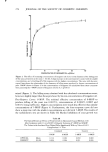
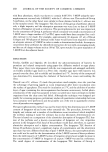
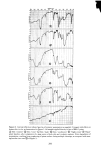
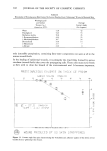
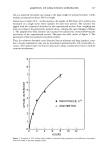
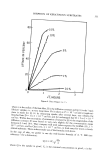
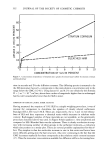
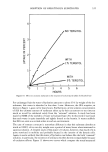
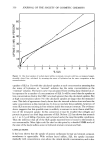
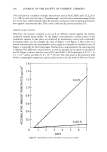
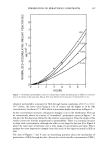
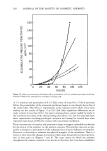
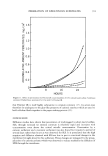
334 JOURNAL OF THE SOCIETY OF COSMETIC CHEMISTS 1% SLS + 1% NaCl 1% SLS 40 • 30- 20 lO I øo 1 2 3 4 5 HOURS Figure 9. Effect of salt on the sorption of sodium lauryl sulfate shown that even small additions of a nonionic surfactant have a large effect in lowering the CMC of sodium lauryl sulfate. This brings about a lowering of the SLS monomer concentration and, hence, lower sorption. Figure 10 demonstrates the effect in a strik- ing way. This furnishes a physico-chemical explanation of the findings of Finkstein (19) who showed that a reduction of irritation of anionic shampoos occurs on the addition of nonionic surfactants in spite of the fact that the total surfactant concentration increased. In this case, lower irritation is attributed to decreased sorption of the anionic surfactant by proteins of the skin and cornea. RELATION OF SORBED SURFACTANT TO WATER OF HYDRATION Both hair and stratum corneum absorb water when placed in solution. It is therefore conceivable that some, if not all, of the sotbed surfactant may be present as a solute in this "internal" solution, rather than being truly bound to the keratin. The analytical method employed here does not distinguish these cases. It is not easy to decide this point conclusively, but the available evidence indicates that the surfactant is bound to the substrate.
Purchased for the exclusive use of nofirst nolast (unknown)
From: SCC Media Library & Resource Center (library.scconline.org)