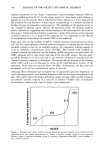
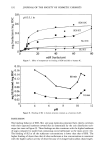
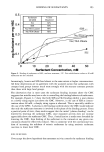
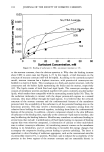
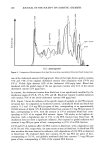
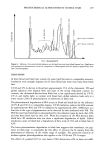
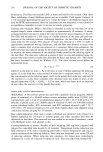
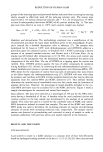
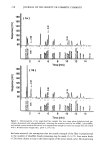
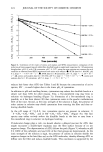
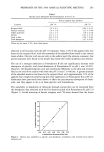
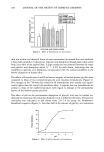
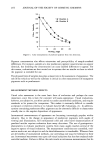
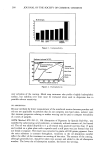
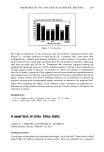
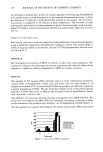
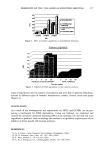
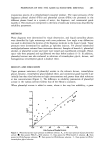
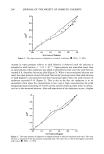
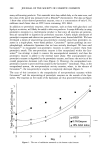
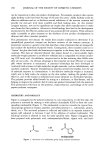
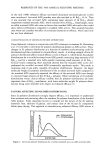
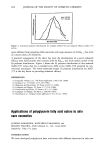
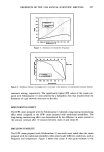
244 JOURNAL OF THE SOCIETY OF COSMETIC CHEMISTS 1.2 K 1.0 vz 0.8 0 u • o.6 -,I • 0ø4 uJ fi 0.:2 0.0 • Control • FORM A (pH3) / • ALOE EXFOLIAN]' • PONDS AGE DEF.Y • FORM A (pH [I-T-TI FORM B (pH 3) GLYCOLIC ACID FORMULATIONS Figure 2. Effect of formulations on skin barrier. skin was within our historical limits of water permeation for normal skin and exhibited a three-fold variability in absorption. Glycolic acid absorption through donor skin varied from 24 to 44% of the applied dose. A high correlation was observed between the water and glycolic acid absorption values (r 2 = 0.92) for each donor, indicating that the variability in glycolic acid absorption was associated with the normal variability in the barrier properties of human skin. The effects of Formulations A and B on barrier integrity of hairless guinea pig skin were compared to those of two commercial glycolic acid emulsion formulations (Figure 2). The averages of the 3H-water Kp values for all formulations were similar and signifi- cantly higher than the control (no emulsion) value. It appears that our formulations are similar to those of the marketed products with regard to damage to the permeability barrier of the hairless guinea pig skin. The effect of pH on the percutaneous absorption of glycolic acid may be further un- derstood by examining the ionization of glycolic acid at different pH values. The percent ionization was calculated at pH values from 2.0-7.0 by using the Henderson- Hasselbach equation (Figure 3). Less than half of the amount of glycolic acid unionized lOO 80 l0 40 20 i 0 2

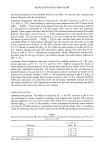
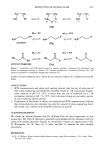
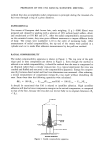
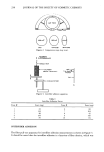
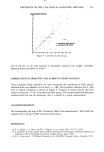
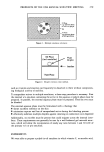
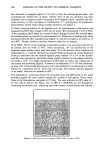
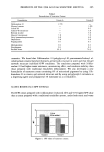
PREPRINTS OF THE 1996 ANNUAL SCIENTIFIC MEETING 245 at pH 3.0 remained unionized at pH 4.0, indicating that a decrease in penetration is likely for pH 4.0 formulations. Differential effects of pH on alpha-hydroxy acid-induced stimulation of epidermal desquamation and turnover DAVID THUESON, ELAINE CHAN, LAUREN OECHSLI, and GARY HAHN, Cosmederm Technologies Inc., La Jolla, CA 92037. INTRODUCTION The alpha-hydroxy acids (AHAs) can induce epidermal exfoliation. In addition, skin cell renewal induced by AHAs can reduce fine lines and wrinkles. The role of the concen- tration of specific acid(s) and pH of the product in producing these effects is contro- versial, but a lower (more acidic) pH and higher concentrations are purported to produce a faster onset of activity and to be more effective. We examined the effect on skin renewal rates of 10% lactic acid at a low pH (2.0), a moderate pH (3.0), and a high pH (4.0). METHODS The dansyl chloride labeling technique was used to measure stratum corneum renewal time. The stain was triturated at 5% (w/w) into white petrolatum, USP. A long wave ultraviolet lamp was used to visualize the stain. Baby Magic Baby Lotion & Aloe © (The Mennen Company) was used as the lotion vehicle. Lactic acid 10% was added to the lotion, and different samples were then partially neutralized using NaOH to adjust the pHs to 2.0, 3.0, and 4.0. The neet lotion vehicle (pH 4.0) served as the placebo control. SUBJECTS AND STRATUM CORNEUM STAINING WITH DANSYL CHLORIDE Nine female volunteers aged 29 to 52 years (mean 35 years) had two areas on the right and left volar forearms stained using Hill Top Chambers © (25-mm in diameter). After 24 hours, the patches were removed and the fluorescence was scored according to a subjective visual scale of 0-4 (0 = no fluoresence 1 = only small areas of fluorescence 2 = moderate areas of fluorescence with noticeable areas of fading 3 = large areas of fluorescence with small areas of fading present 4 = whole, even areas of fluorescence). INITIAL (ACUTE) TREATMENT--WEEKS 1-3 Subjects used three 1.5-ounce tubes of the 10% lactic acid lotions, one each at pH 2.0,
Purchased for the exclusive use of nofirst nolast (unknown)
From: SCC Media Library & Resource Center (library.scconline.org)