252 JOURNAL OF THE SOCIETY OF COSMETIC CHEMISTS other hand, some published results also suggest that the growth rate of nails gradually diminishes with age (about 0.5%/year). CHANGES IN HAIR PROPERTIES Whereas the effect of aging on the hair cycle and growth has been fairly extensively studied, only sporadic data are available on changes that occur in hair fiber properties due to aging. The few available published papers suggest that aging does not signifi- cantly affect the morphology of hair tissues, but that it influences the mechanical properties of newly grown hair. Fibers recovered from heads of older persons seem to be less strong and less elastic than those that grow on young persons' scalps. No data are available on changes of chemical composition of hair fibers owing to aging. Conse- quently, it is difficult to explain the reasons for the observed changes in mechanical properties. More recent work has not found significant differences between the properties of grayand pigmented fibers. Anecdotal evidence also suggests that the properties of body hair (pubic, chest, facial axillary hair) change with age, albeit in the opposite direction to those of scalp hair. GRAYING OF HAIR Hair graying is one of the major indicators of aging and as such has been extensively studied. The number of functioning melanocytes feeding melanin granules into the hair shaft gradually declines with age, bringing about the graying process. The rate of graying has been found to vary greatly from individual to individual and is probably determined by genetic factors. The extent of graying and that of alopecia appear to be weakly correlated, suggesting that both these phenomena are indicators for an under- lying general aging process. HAIR GRAYING, ALOPECIA, AND DISEASES A number of diseases lead to acute alopecia and also, possibly, premature graying. Danish workers found correlations between hair graying, male alopecia, and the inci- dence of coronary heart disease (2). According to these researchers, the relationships suggest that all three quantities are indicators of a general biological aging process. CONCLUSIONS Hair graying and hair loss are good indicators of the human aging process. Sporadic data suggest that the hair properties of older individuals differ from those of young and middle-aged persons. In view of the anticipated future increase in the proportion of older people among consumers that are expected to purchase hair grooming products, a better understanding of the properties of the hair of older persons would appear to be desirable. REFERENCES (1) M. Courtois, G. Loussouarn, C. Hourseau, and J. Grollier, Br. J. Dermatol., 132, 86 (1995). (2) P. Schnohr, P. Lange, J. Nyboe, M. Appelyard, and G. Jensen, Am. HeartJ., 130, 1003 (1995).

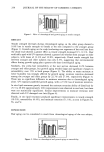
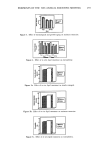
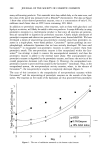
PREPRINTS OF THE 1996 ANNUAL SCIENTIFIC MEETING 255 Aging hair in vivo and in vitro: The effects of cosmetic ingredients DAVID E. CINCOTTA and BARRY KARPF, Natural & Marine Resources, Inc,, Paramus, New Jersey, INTRODUCTION The hair cuticle is important in maintaining a resistant barrier against the environment, controlling to a degree the transport of water into and out of the hair shaft. It is also important in maintaining the optimal cosmetic attributes of hair and protecting the cortex from structural damage. The cuticle is held together by lipids forming intercel- lular membranes between cuticle cells just as in the stratum corneum. METHODS Treatments containing ceramides, free fatty acids, triglycerides, and esters, mimicking the structure of skin and hair membrane lipids, were applied to the various hair samples, and properties were evaluated. An extract of North American wheat sphingolipids and oils expressed from Asian green olives was added to a simple shampoo (0.5%) and a simple conditioner (1%) and tested in vitro and in vivo. Individual hair strands were obtained for in vitro experiments and segregated into two groups with average ages of 22.6 and 58.0 years, respectively. To simulate UV aging in certain experiments, hair was irradiated with a combination UVA/UVB light source from Kratos. Hairs were soaked for five minutes in shampoo (25% dilution), rinsed thoroughly with water, soaked for five minutes in conditioner (25% dilution), rinsed thoroughly with water, and air-dried to simulate a typical hair cleansing cycle. This cycle was repeated ten times, and the hair strands were allowed to equilibrate at 40% RH for 24 hours prior to testing. Tests were performed in the root section (0-10 cm from the root) and distal section (20-30 cm from the root). In vivo experiments were conducted by instructing the test subjects to wash their hair (five times per week) and apply conditioner (at least three times per week) during a four-week period. Hair samples were taken from each subject prior to and after the test period. All hair strands were equilibrated at 40% RH for 24 hours prior to testing. Tests were performed in the root section (0-10 cm from the root). Tensile strength was measured with a mini-Instron. Segments were 10 cm in length, attached at both ends, and elongated at the rate of 2 cm/minute. Elongation was measured with the Gas Bearing Electrodynamometer (GBE) with low force elongation and relaxation cycles. Hair water content was also measured with the GBE. Strands were soaked in water after various treatments, and the change in hair elasticity was used as an indirect measure of water content to determine the length of time hair strands would hold on to externally added water.
Purchased for the exclusive use of nofirst nolast (unknown)
From: SCC Media Library & Resource Center (library.scconline.org)