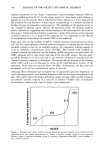
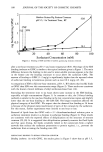
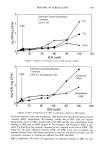
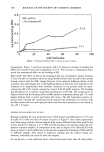
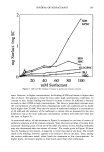
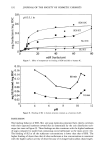
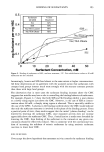
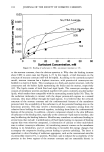
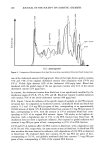
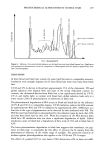
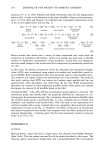
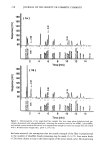
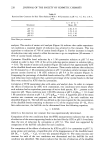
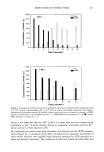
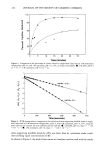
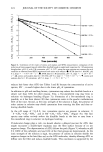
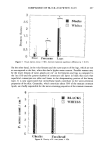
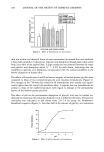
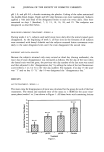
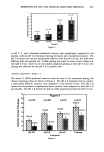
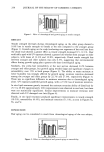
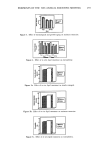
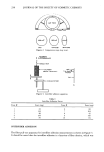
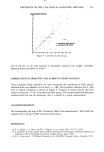
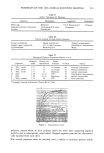
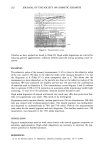
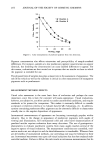
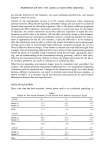
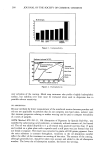
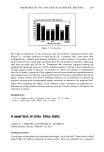
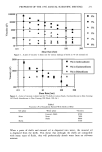
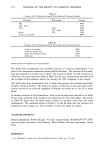
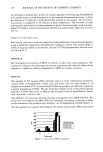
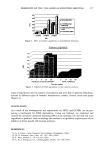
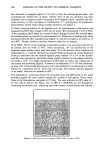
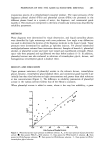
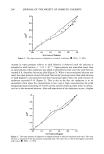
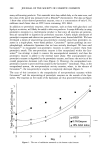
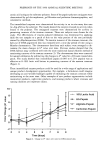
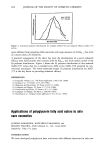
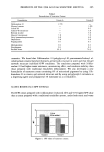
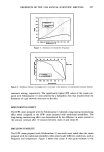
262 JOURNAL OF THE SOCIETY OF COSMETIC CHEMISTS Figure 2. Transmittance curves. Vehicles we have studied are listed in Table III. High solids dispersions are critical for reducing particle agglomerates: collisions between particles during grinding create at- trition. EXAMPLES The refractive index of the isononyl isononanoate (1.44) is closer to the refractive index of the zinc oxide (1.99) than to the refractive index futile titanium dioxide (2.71), but the dispersion in A (Table IV) is more transparent than in E. This shows that the transparency is more dependent on the particle size than on the refractive indices of the materials. We have measured the smallest particle size (70 nm) with the combination of materials used in dispersion A. The transmittance curves (Figures 1 and 2) indicate that to optimize UVB or UVA protection in sunscreens while minimizing visible light scattering, 15 and 35 or 50 nanometer titanium dioxide should be used. High solids dispersion of treated micronized zinc oxide may offer skin protection ben- efits over pigmentary zinc oxide. This needs to be investigated. Pigmentary futile titanium dioxide, median particle size 350 nm (distribution 180-800 nm) was treated with triethoxycaprylyl silane. The treated pigment was hydrophobic and dispersed in cyclomethicone as 70% and 75% solids. Particle size measurements were taken for the treated pigment and each dispersion. The smallest particle size, 240 nanometers, was measured in the 75% solids dispersion. CONCLUSION Pigment manufacturers need to work more closely with treated pigment companies to minimize agglomeration. High solids dispersions are necessary to optimize the pig- ments' potential in finished products. REFERENCES (1) D. H. Solomon and D. G. Hawthorne, Chemistry of Pigments and Fillers, 56-77 (1981).

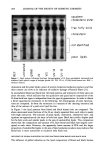
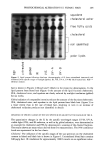
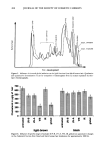
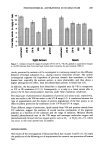
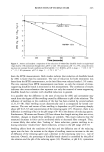
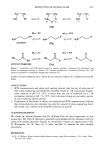
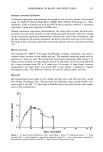
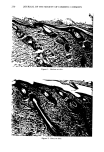
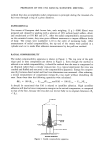
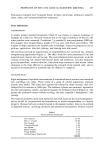
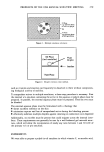
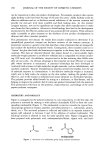
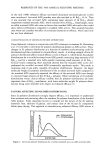
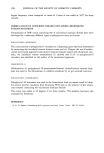
PREPRINTS OF THE 1996 ANNUAL SCIENTIFIC MEETING 263 (2) Personal communication with John Mazzaca Corporation, August 29, 1996. (3) Tayca Corporation, Micro Titanium Dioxide, product brochure. (4) Titan Kogyo, Ultrafine Titanium Dioxide, product brochure. (5) Sumitomo Osaka Cement Co., Ltd., Ultrafine Zinc Oxide, product brochure. (6) S. Monte, Ken-React Refirences Manual, 2 (1993). Measurement of the appearance of pearlescent effect systems JAMES B. CARROLL, JR., Engelhard Corporation. INTRODUCTION Instrumental measurements of the color and appearance of both pigments and products incorporating them are becoming more important as manufacturers strive to control raw material and final product quality. Pearlescent pigments, due to their unique optical properties, pose special problems to color evaluators in their effort to characterize and quantify pearlescent pigments, cosmetics, and packaging materials. The complexity of measuring pearlescent systems is further complicated by the variety of applications in which they are used, the diverse nature of the measurement apparatus, and its impact on the measurement results and the varying importance of the different color attributes. SAMPLE EFFECTS The evaluation of appearance can take many forms, both visual and instrumental. Each method can be applied to any sample, packaged or applied cosmetic products, and molded plastic items, or can be exemplary, existing not as a final product but rather as a surrogate form of the sample to demonstrate compliance to a specification in a simplified system such as a drawdown, stepchip, loose powder, etc. General require- ments exist for each sample type in order to make useful measurements of color. Understanding and meeting these requirements in a reproducible manner is a necessity for useful color measurements. Due to the fact that materials incorporating pearlescent pigments exhibit goniochro- maticity, obtaining useful appearance information goes beyond merely controlling com- position. The sample area being examined must be flat so as to present a fixed and defined angle of illumination and viewing. Sample production and application must also be controlled, especially factors that can alter pigment platelet orientation causing changes in color intensity and hue as well as color travel and flop. These effects are especially prevalent in package systems due to flow orientation (Figure 1 below), as well as in paste and pressed cosmetics. Failure to achieve these goals can result in ill-defined measurement conditions leading to non-reproducible or misleading measurements.
Purchased for the exclusive use of nofirst nolast (unknown)
From: SCC Media Library & Resource Center (library.scconline.org)